
A security engineer is configuring egress filtering on the corporate firewall. Which approach BEST represents a defensible egress policy?
Select an answer to reveal the explanation.
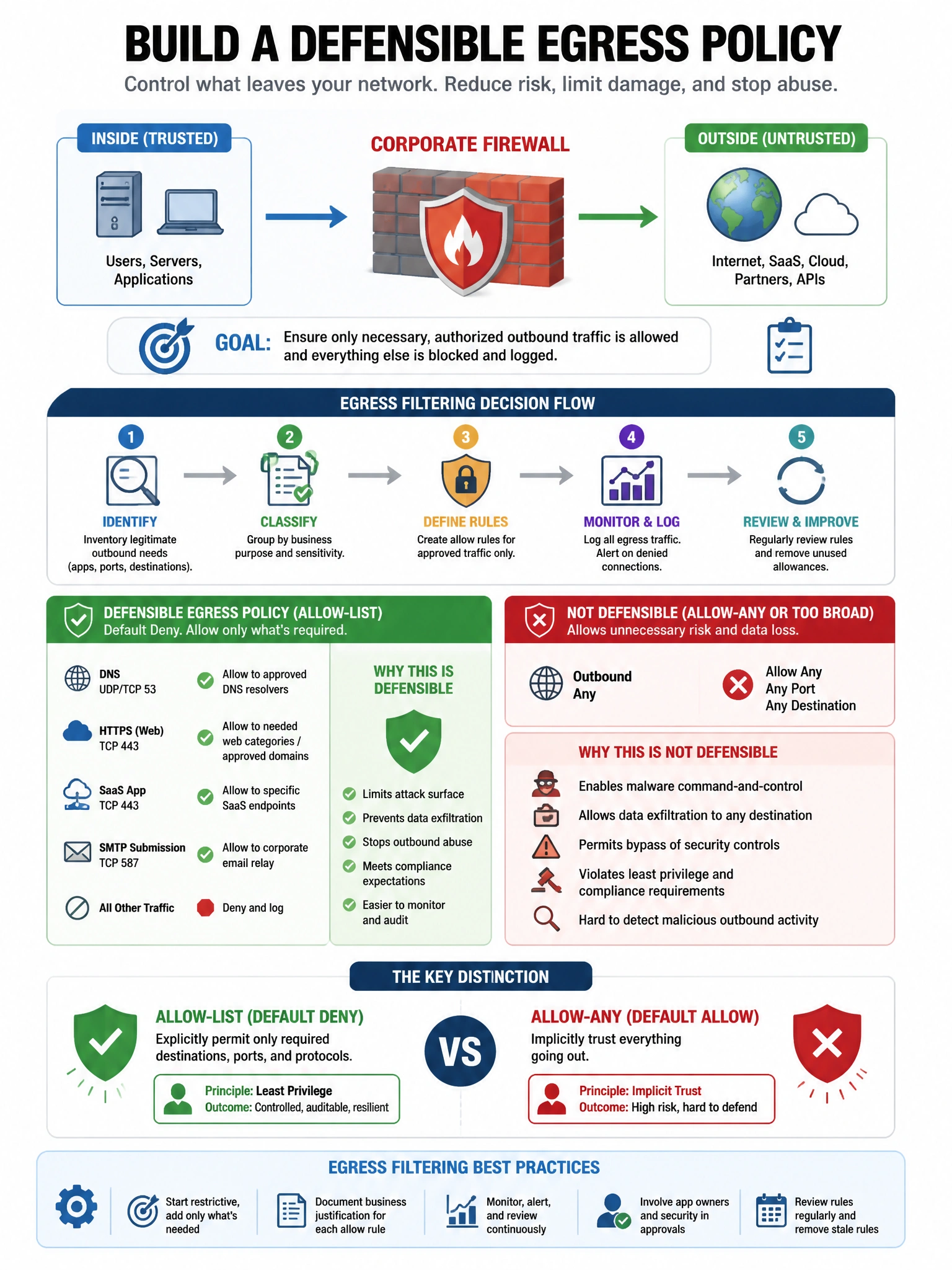
Short Explanation and Infographic
Here's the deal — c is correct because a default-deny egress policy with explicit allow rules for required protocols and destinations limits exfiltration opportunities and restricts C2 callback channels. A is wrong because allowing all outbound traffic provides no egress control and allows attackers to beacon out freely.
Full explanation below image
Full Explanation
C is correct because a default-deny egress policy with explicit allow rules for required protocols and destinations limits exfiltration opportunities and restricts C2 callback channels. A is wrong because allowing all outbound traffic provides no egress control and allows attackers to beacon out freely. B is wrong because inspecting only inbound traffic misses data exfiltration and outbound C2 communication. D is wrong because blocking high ports still allows most common attack C2 channels on ports 80 and 443.