
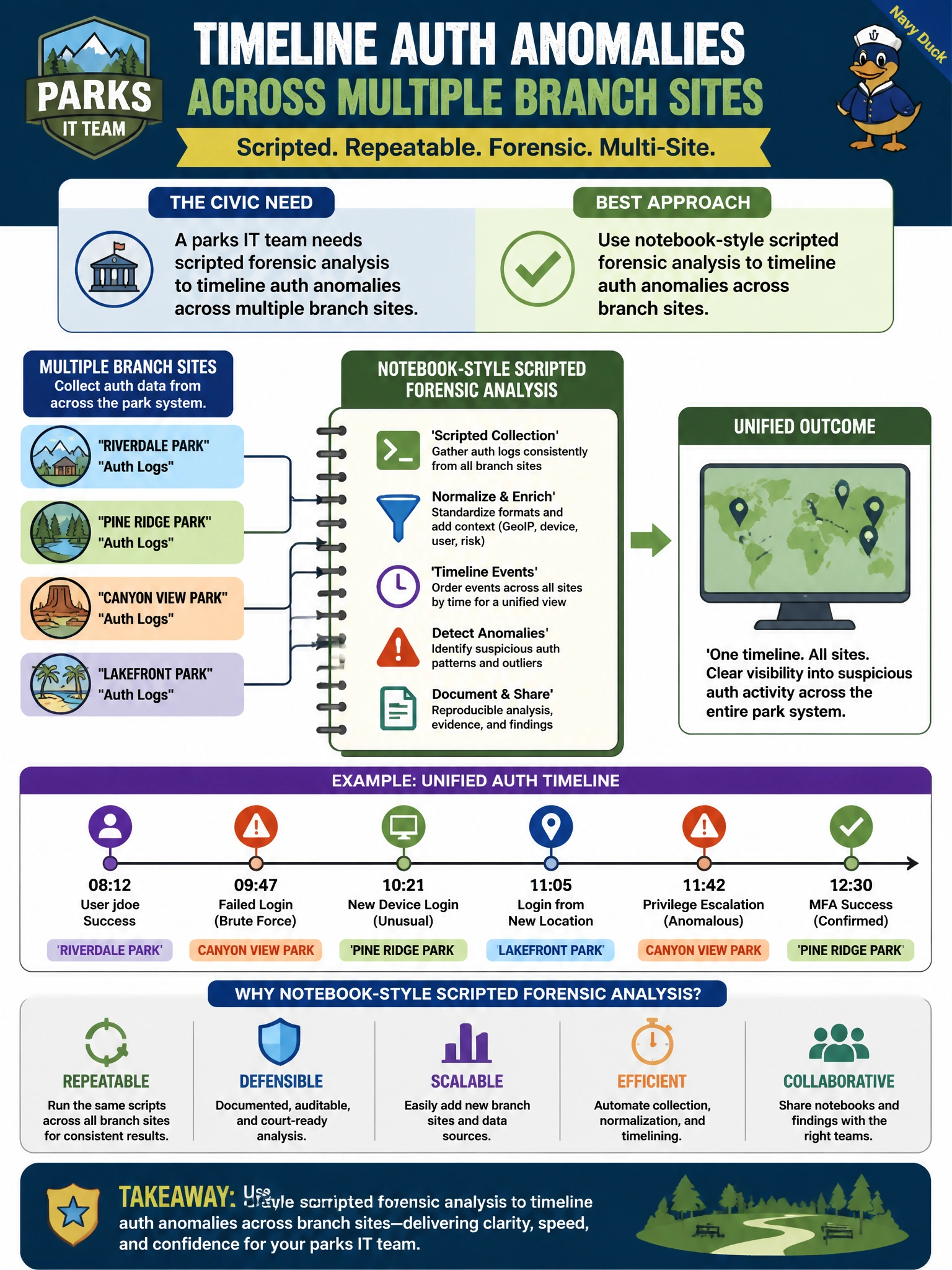
A parks IT team needs scripted forensic analysis to timeline auth anomalies across multiple branch sites. Which approach best fits that multi-site civic need?
Select an answer to reveal the explanation.
Short Explanation
Branch parks are a scattered trail, and notebooks and scripts stitch auth anomalies from every site into one timeline. You'll find collection only gathers logs, compliance reporting won't build investigative timelines, and alert timelines don't expose underlying anomalies. Scripted forensic analysis is how multi-site civic IT keeps the whole story straight.
Full Explanation
A parks IT team that needs scripted forensic analysis to timeline auth anomalies across multiple branch sites should use notebook-style scripted forensic analysis to timeline auth anomalies across those sites. Notebooks and scripts make multi-site correlation repeatable: the same joins, time windows, and anomaly features run against each branch's auth logs and produce a comparable timeline instead of one-off manual charts. Civic parks estates are geographically scattered; automation stitches branch evidence into a single investigative narrative the central team can act on. Why the other options fail by concept: Use notebook-style scripted forensic collection to timeline auth anomalies across branch sites uses the right sites and auth data but the wrong forensic function — it only gathers and preserves auth logs, so it does not run the analytic correlation and anomaly timelines the investigation needs. Use notebook-style scripted compliance reporting to timeline auth anomalies across branch sites covers multiple sites with scripts but serves compliance, not forensics; it produces standardized audit reports and does not reconstruct investigative anomaly timelines. Use notebook-style scripted forensic analysis to timeline auth alerts across branch sites uses the right scripted multi-site method but on the wrong object — it only orders already-fired alerts, not underlying auth anomalies from raw logs, so anomalous patterns that never triggered an alert stay invisible. Exam caveat: scripted notebooks still need validated time sync (NTP) and consistent log schemas across branches, or timelines will mis-order events. Operational check: run the auth-anomaly notebook against at least two branch sites plus HQ for a known test window, verify cross-site account correlation, and store the output under the municipal case ID before analyst conclusions are filed.
Prefer to study offline? Printable PDF study book + test engine ($7.50, unofficial). These questions stay free here.