
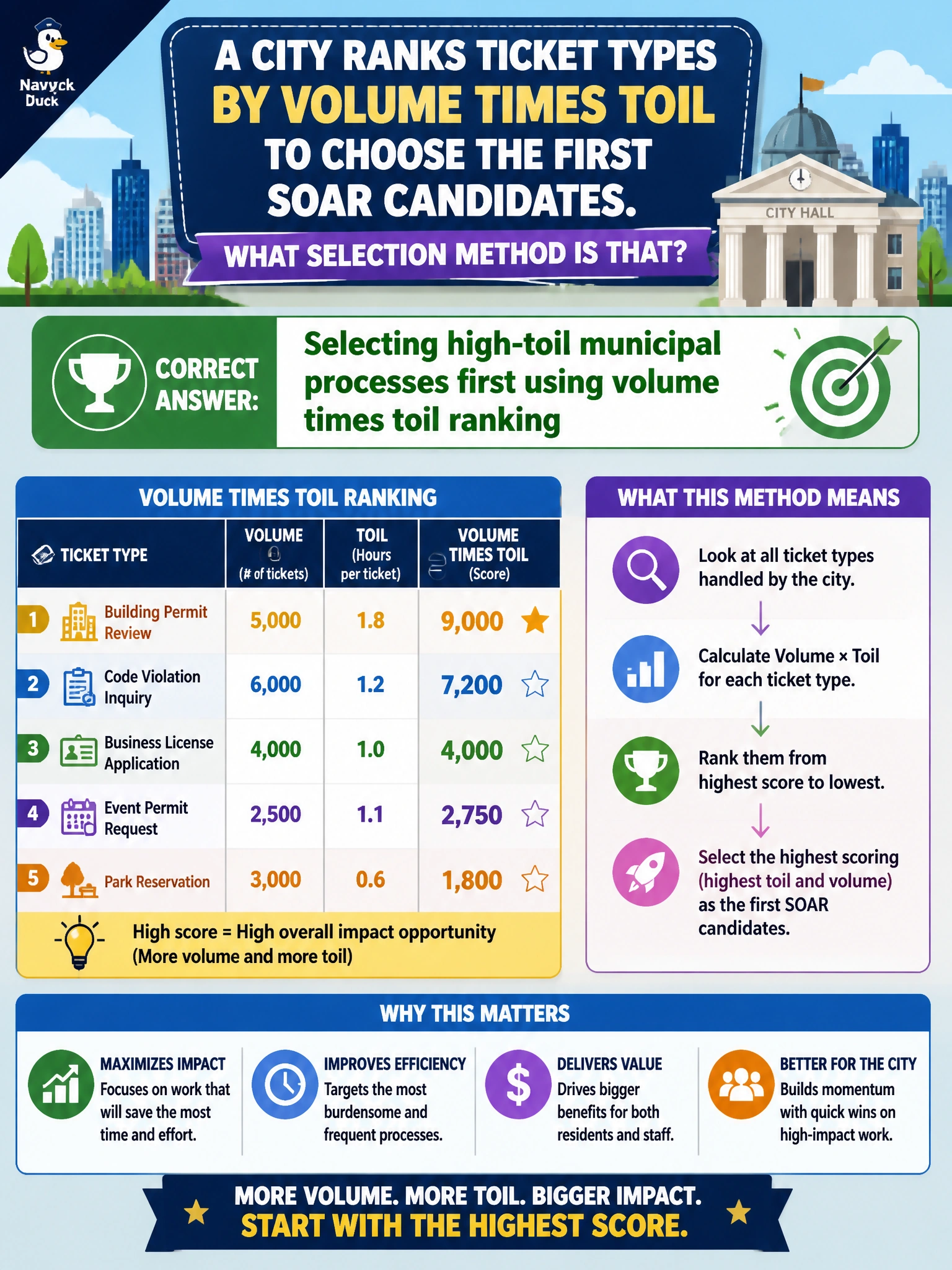
A city ranks ticket types by volume times toil to choose the first SOAR candidates. What selection method is that?
Select an answer to reveal the explanation.
Short Explanation
Multiply how often it shows up by how much it hurts—that's your SOAR shortlist. You'll select candidates for automation, so triaging, escalating, or enriching them don't name that selection step. Cities win by killing high-volume toil first.
Full Explanation
A city that ranks ticket types by volume times toil to choose the first SOAR candidates is selecting high-toil municipal processes first with a quantitative ranking. Volume captures how often the pain appears; toil captures how much repetitive human effort each ticket burns. The product surfaces boring, frequent civic work—phishing enrichment, account lock triage, indicator blocks—as selected automation candidates rather than triaging, escalating, or enriching work that happens after selection. Why the other options fail by concept: Triaging high-toil municipal processes first using volume times toil ranking describes sorting and prioritizing incoming tickets rather than the selecting of SOAR candidates the city's volume × toil score is meant to support. Escalating high-toil municipal processes first using volume times toil ranking describes raising tickets to a higher tier or team rather than selecting the high-volume, high-toil municipal processes for automation. Enriching high-toil municipal processes first using volume times toil ranking describes adding context as a specific automation action rather than selecting which high-toil processes become SOAR candidates first. Exam caveat: Volume × toil is a starting heuristic; risk and reversibility still gate whether a high-scoring candidate is safe to automate. Operational check: export three months of city ticket data, score candidate types by volume × toil, review the top five with SOC leads, and pick a reversible enrichment or notification candidate before any irreversible containment playbook.
Prefer to study offline? Printable PDF study book + test engine ($7.50, unofficial). These questions stay free here.