
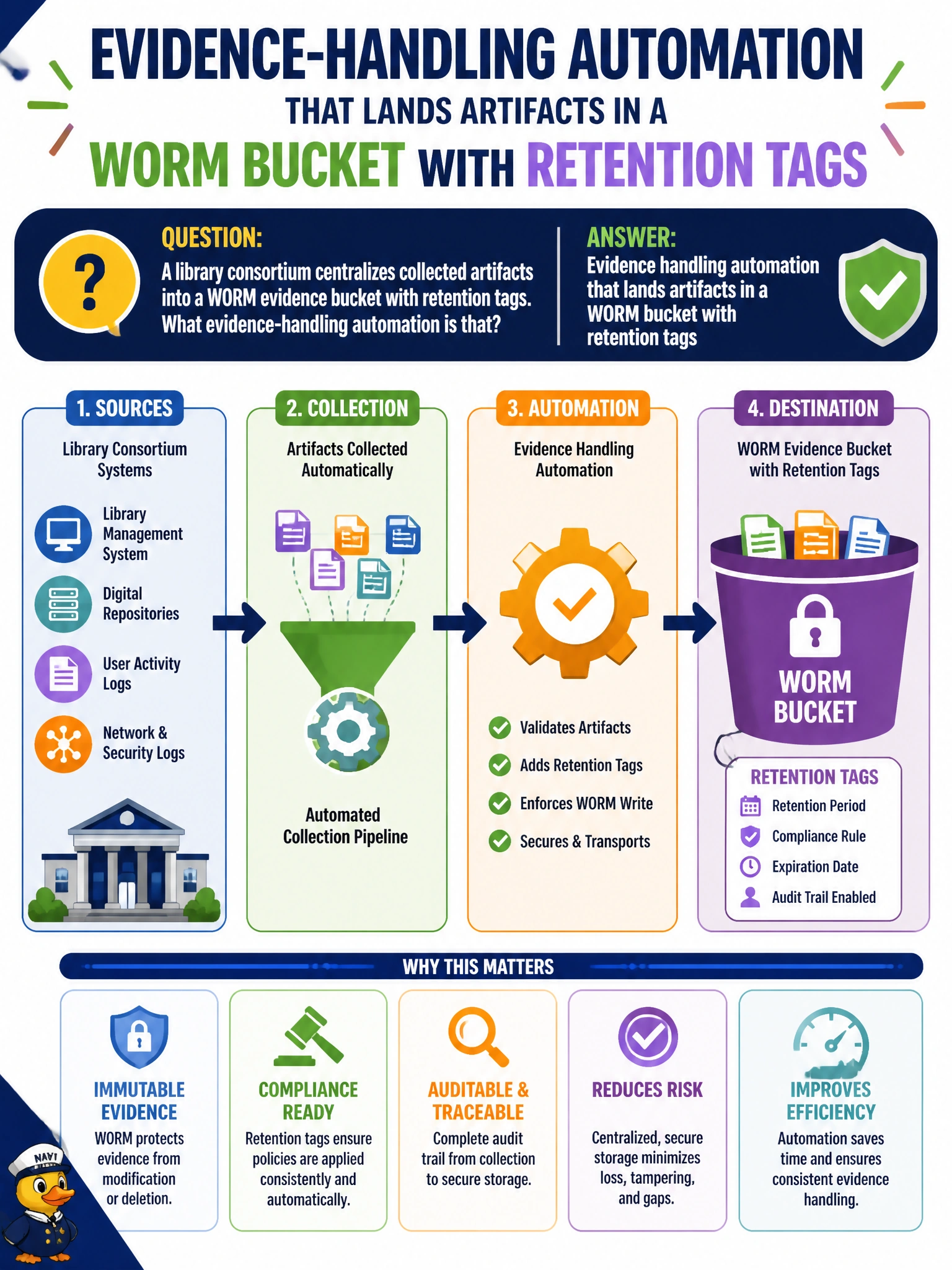
A library consortium centralizes collected artifacts into a WORM evidence bucket with retention tags. What evidence-handling automation is that?
Select an answer to reveal the explanation.
Short Explanation
WORM plus retention tags is the civic lockbox—write once, keep the label. You don't want a copy to, an index in, or a hold in that bucket — even with retention tags, copying duplicates without centralizing the landing you'll defend, indexing catalogs without performing the landing, and holding stages without centralizing the landing. Automate the landing zone so chain-of-custody isn't a scavenger hunt.
Full Explanation
A library consortium that centralizes collected artifacts into a WORM evidence bucket with retention tags is applying evidence-handling automation with immutable storage and retention metadata. Write-once media or object-lock semantics prevent silent overwrite of civic evidence, while retention tags encode how long each package must survive for legal hold, audit, or grant compliance. Centralizing into a shared consortium bucket also gives branch libraries one accountable landing zone instead of scattered removable media.
Why the other options fail by concept: Evidence handling automation that copies artifacts to a WORM bucket with retention tags gets the bucket and tags right but misses central landing — copying creates a duplicate to another location, while the question asks for centralizing collected artifacts into the consortium landing zone. Evidence handling automation that indexes artifacts in a WORM bucket with retention tags describes cataloging for search, not centralizing landed artifacts, and indexing assumes artifacts are already landed rather than performing the landing itself. Evidence handling automation that holds artifacts in a WORM bucket with retention tags is only temporary staging for sorting, not a centralized landing zone, and holding does not centralize collected artifacts into one accountable bucket for retention enforcement.
Exam caveat: WORM plus tags supports integrity and retention policy; it does not replace access controls, encryption at rest, or documented chain-of-custody workflows around who may read the bucket. Operational check: land a test artifact package into the WORM bucket, confirm object-lock or immutability is set, verify retention tags match the library IR policy, and attempt an overwrite that must fail.
Prefer to study offline? Printable PDF study book + test engine ($7.50, unofficial). These questions stay free here.