
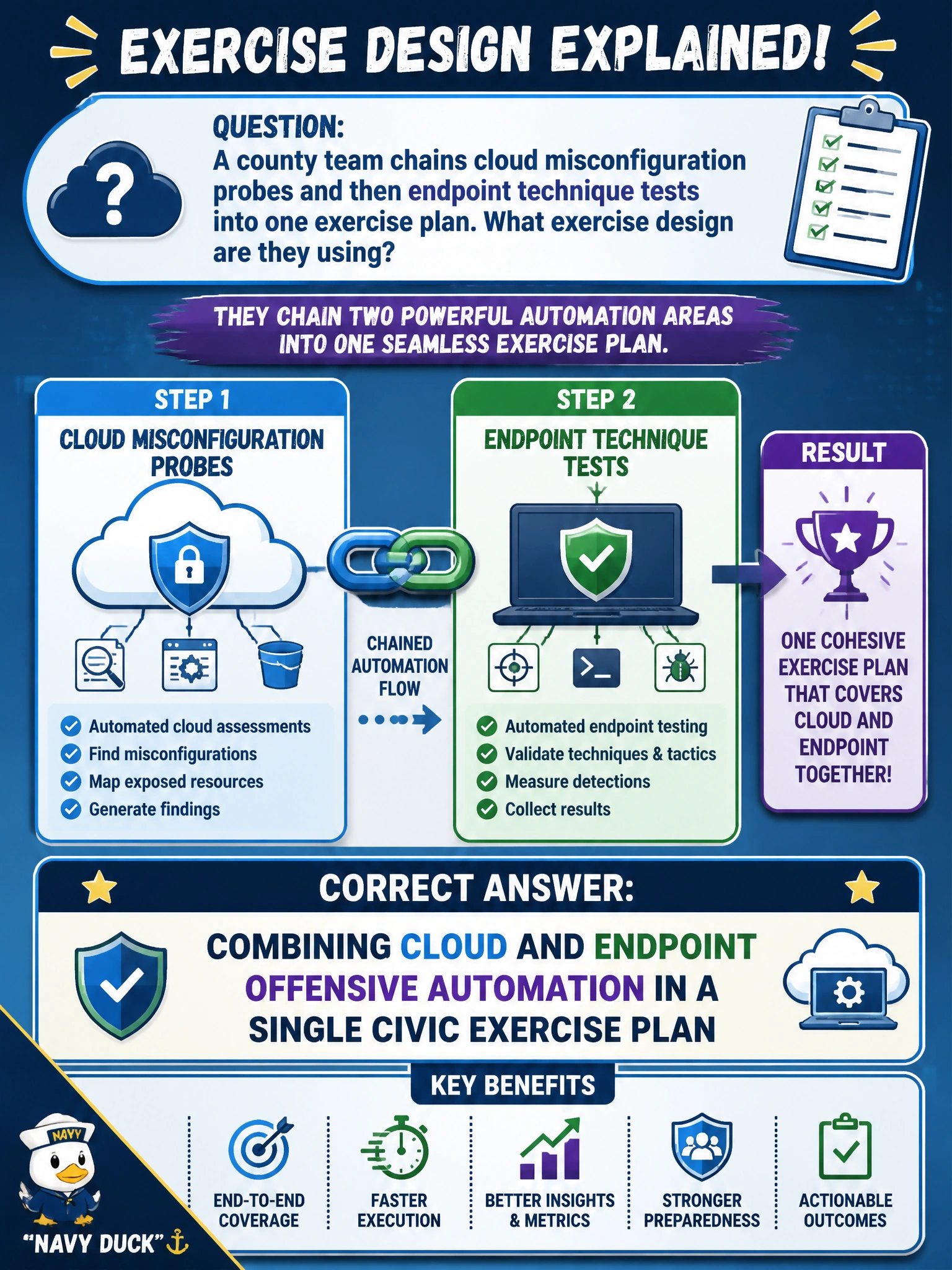
A county team chains cloud misconfiguration probes and then endpoint technique tests into one exercise plan. What exercise design are they using?
Select an answer to reveal the explanation.
Short Explanation
Real adversaries hop from cloudy misconfig into endpoints—so the county plan should chain those drills in one story. Defensive, compliance, or patch automation don't chain offensive cloud probes into endpoint tests for you. One exercise, both terrains.
Full Explanation
Combining cloud and endpoint offensive automation in a single civic exercise plan is the design a county team uses when it chains cloud misconfiguration probes into endpoint technique tests. Real adversaries often start with exposed cloud control-plane mistakes and then land on staff or server endpoints; one exercise ID across both terrains lets the county correlate detections, tickets, and remediation ownership. Unified planning also forces scheduling, approvals, and rollback criteria to cover the full path instead of treating cloud and endpoint as unrelated hobbies.
Combining cloud and endpoint defensive automation in a single civic exercise plan fails by concept: defensive automation runs detection and response controls, it doesn't launch offensive cloud misconfiguration probes chained into endpoint technique tests. Combining cloud and endpoint compliance automation in a single civic exercise plan fails by concept: compliance automation checks configurations against policy, it doesn't execute the offensive cloud-to-endpoint adversary path under one exercise ID. Combining cloud and endpoint patch automation in a single civic exercise plan fails by concept: patch automation remediates missing updates, it doesn't chain offensive probes and technique tests as an exercise.
Exam caveat: a combined plan still needs staged authorization—cloud probe approval does not automatically authorize domain-admin endpoint modules. Operational check: verify one exercise charter lists both cloud misconfiguration and endpoint techniques, shares a single exercise-ID in logs/alerts, and defines a stop condition if municipal citizen services or endpoints show unexpected impact.
Prefer to study offline? Printable PDF study book + test engine ($7.50, unofficial). These questions stay free here.