
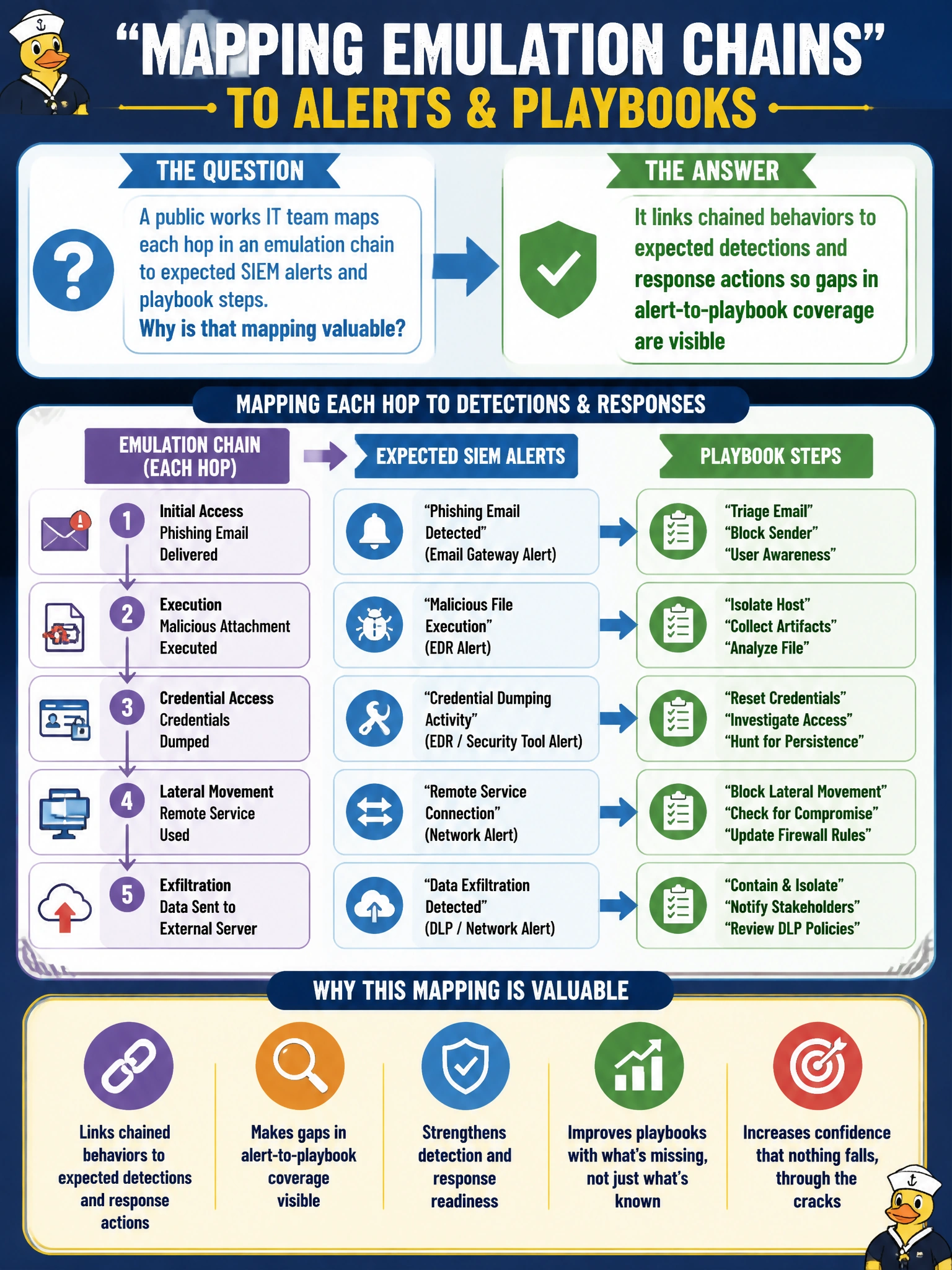
A public works IT team maps each hop in an emulation chain to expected SIEM alerts and playbook steps. Why is that mapping valuable?
Select an answer to reveal the explanation.
Short Explanation
Each hop should light a specific dashboard tile and kick a known playbook—like matching work-order steps to truck GPS pings. If a hop is silent, public works just found a coverage hole.
Full Explanation
A public works IT team that maps each hop in an emulation chain to expected SIEM alerts and IR playbook steps makes defensive gaps measurable: silent hops reveal missing detections, broken correlation, or playbooks that never fire. That hop-to-alert-to-playbook map turns a purple-team chain into a civic readiness instrument rather than a disconnected red exercise. Gaps become actionable tickets instead of anecdotes.
Why the other options fail by concept: Validating single-event SIEM rule fidelity against isolated telemetry before correlating alerts into chained sequences focuses on single-rule tuning rather than hop-to-alert-to-playbook coverage, so it cannot reveal where a chain silently bypasses detections or playbooks. Measuring dwell time between chained hops and playbook steps to report mean time to respond for SIEM alerts measures speed after the fact, not whether each emulation hop has an expected alert and playbook step mapped in advance. Confirming endpoint isolation and evidence collection activate correctly across chained hops and playbook responses tests whether specific containment actions fire rather than mapping chain hops to expected detections and response actions to expose coverage gaps.
Exam caveat: expected-alert maps must match the current detection content pack; stale mappings produce false “gaps” or false confidence after rule changes. Operational check: for each public-works chain hop, document expected SIEM alert names and playbook IDs, execute the chain, record which expectations fired, and open remediation for any silent hop before declaring readiness.
Prefer to study offline? Printable PDF study book + test engine ($7.50, unofficial). These questions stay free here.