
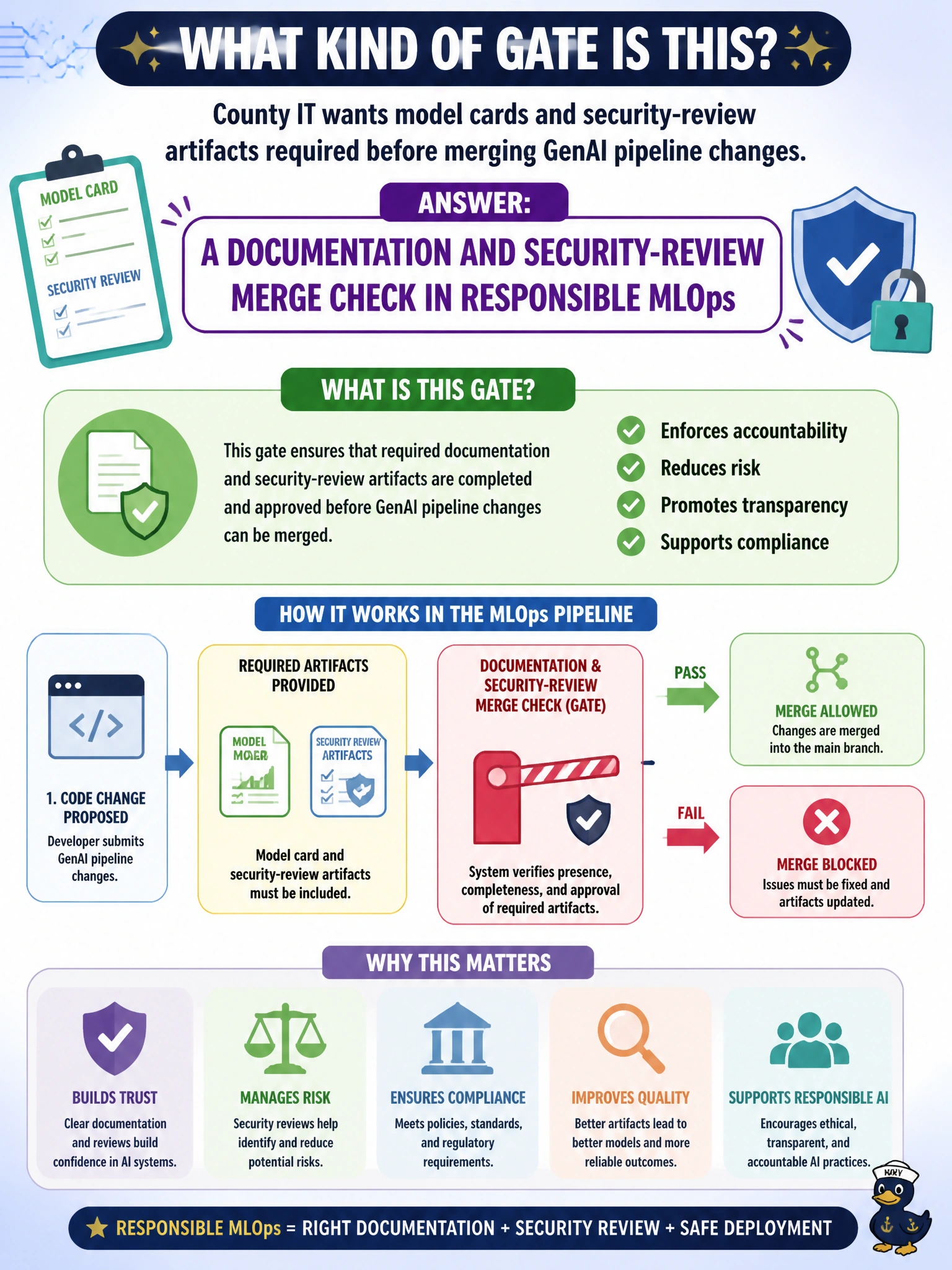
County IT wants model cards and security-review artifacts required before merging GenAI pipeline changes. What kind of gate is this?
Select an answer to reveal the explanation.
Short Explanation
No model card, no merge — that is how you keep mystery models out of county prod. Make cards and security review required checks. Speedy-test quirks, banning docs, and optional wiki notes are not real gates.
Full Explanation
When county IT wants model cards and security-review artifacts required before merging GenAI pipeline changes, that gate is a documentation and security-review merge check in responsible MLOps. Enforced checks block incomplete deliveries: models without intended-use documentation, threat considerations, or completed security review cannot land on the main pipeline branch. Optional notes do not change merge outcomes; required status checks do. For county GenAI services, this aligns model governance with the same discipline used for other high-impact software changes.
A gate that blocks merges only when unit tests pass too quickly fails because test duration is not a documentation or security criterion. A documentation ban that forbids model cards in government repos fails because it is the opposite of responsible practice. An optional wiki note with no merge enforcement fails because unenforced guidance does not stop mystery models from merging.
Exam caveat: responsible MLOps gates are enforceable merge checks—not wiki suggestions or paradoxical “ban the model card” distractors.
Operational check: configure CI required checks for model-card presence and security-review artifact links; refuse merge when checks fail; sample recent GenAI pipeline merges for attached cards and review tickets; train teams that “docs later” is not an accepted exception.