
A parks maintenance agent treats free-text “approve work order” chat messages as authoritative without signed commands. What should change?
Select an answer to reveal the explanation.
Short Explanation
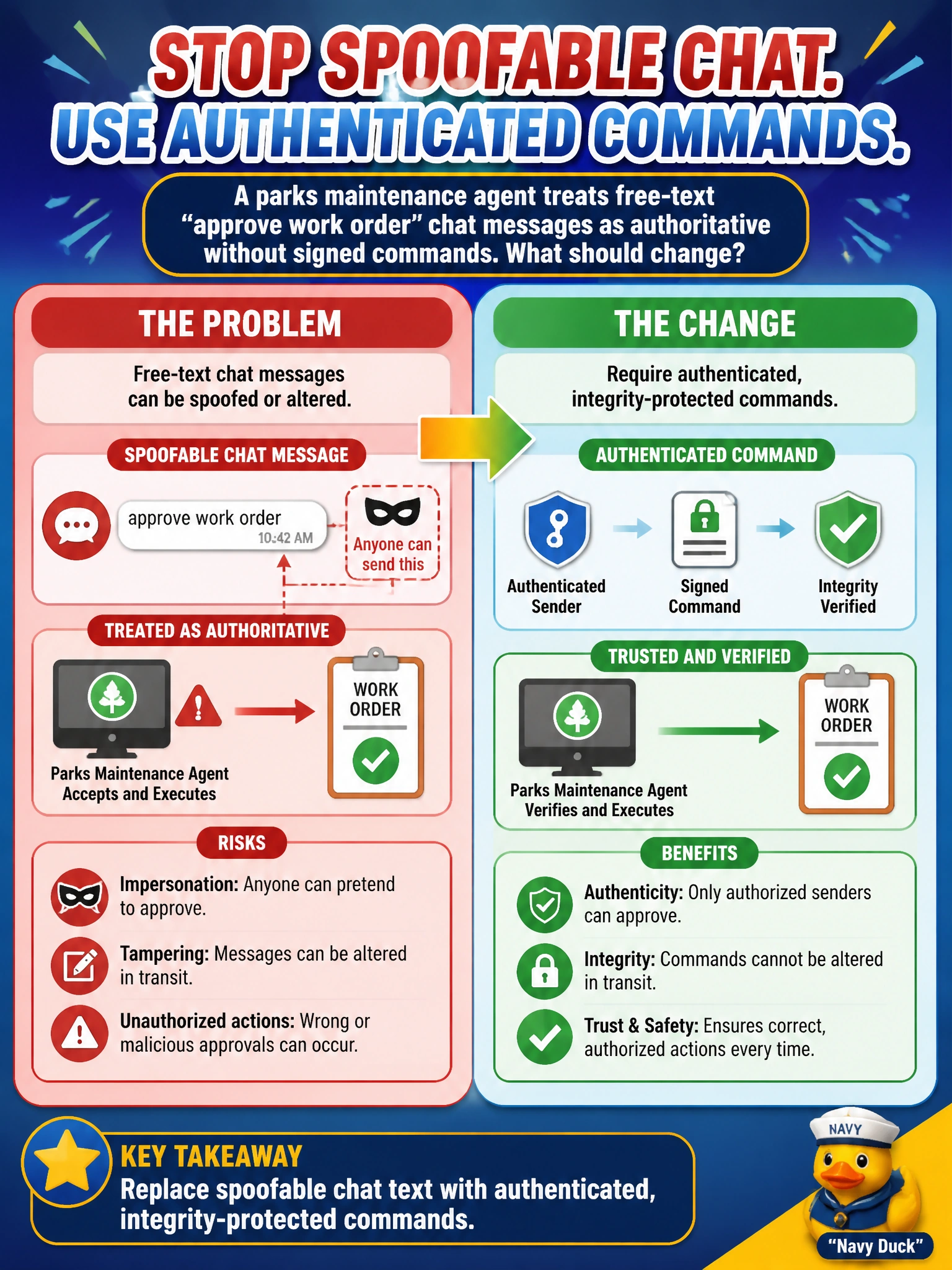
Anyone can type “approve work order” in a chat channel — that is not a signature. Make control messages authenticated and integrity-protected so spoofed free text cannot open the tool cabinet. Trusting chat slang as a command is social engineering with a maintenance badge.
Full Explanation
A parks maintenance agent that treats free-text “approve work order” chat messages as authoritative without signed commands accepts spoofable social or messaging content as a control plane. The required change is authenticated, integrity-protected commands instead of spoofable chat text so only authorized operators can approve civic work orders. In municipal parks operations, chat channels are convenient but easy to forge; cryptographic or SSO-backed command channels prevent forged approvals from opening tools or spending maintenance budgets.
Accepting approval phrases from any anonymous parks Facebook comment fails by concept: public social posts have no municipal authentication binding to an authorized maintainer. Disabling authentication on the work-order API during weekend overtime removes the control that should gate approvals precisely when staffing is thin. Training the agent to approve all work orders when chat volume is high automates approval under load and increases false-positive execution risk.
Exam caveat: integrity-protected commands address authenticity of the control message; the agent must still authorize the specific work-order action and log who approved it. Operational check: send an unsigned chat phrase “approve work order” in staging and confirm rejection; send a signed/authenticated approval from an authorized parks role and confirm success; verify weekend overtime still requires authentication on the work-order API.