
Emergency operations integrates an SMS gateway as a GenAI tool without signing outbound messages. What integration security gap should be closed?
Select an answer to reveal the explanation.
Short Explanation
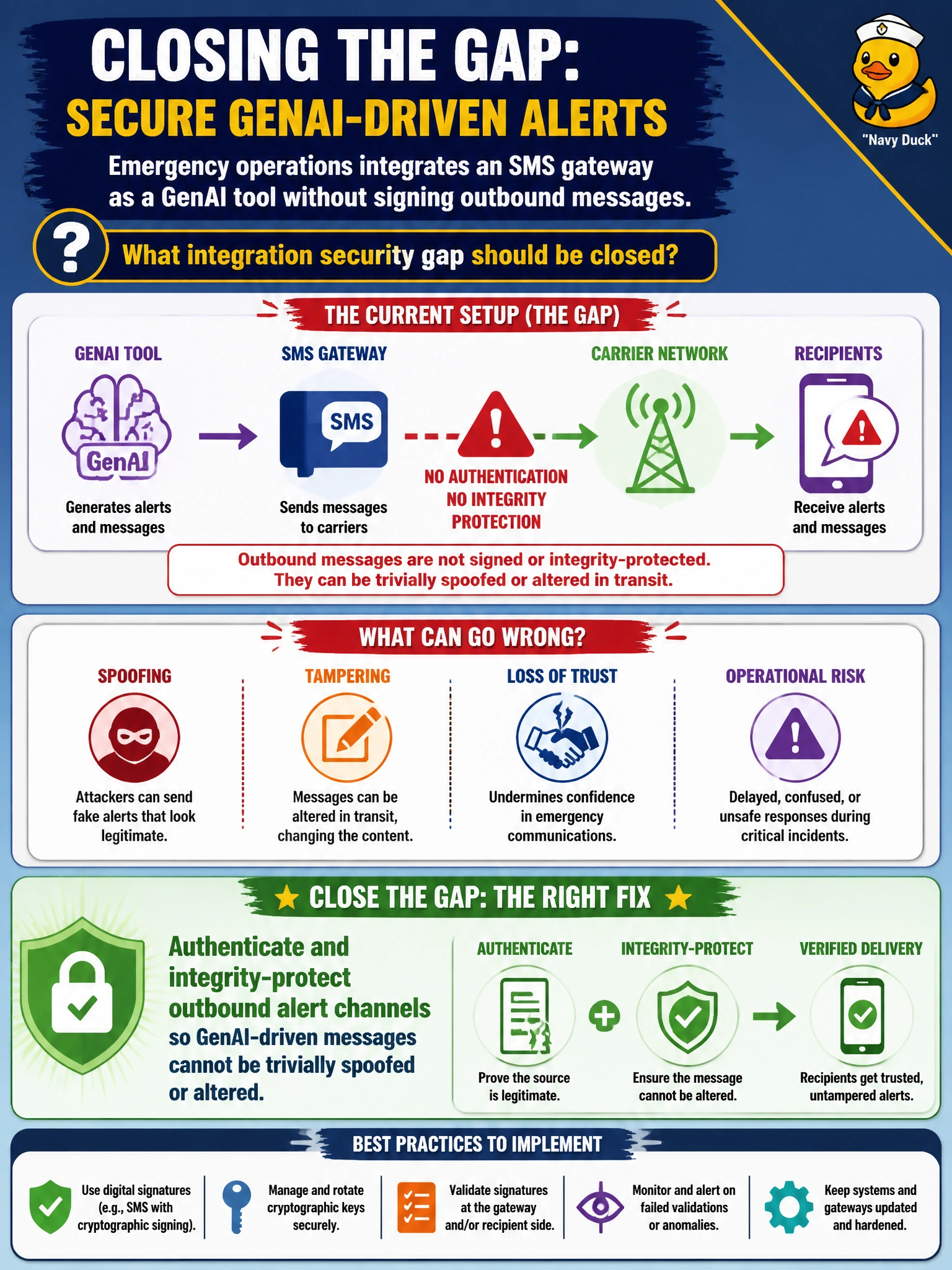
If the GenAI tool can text the county without a signed, trusted pipe, anyone who hijacks that path can cry wolf. Lock down outbound SMS with authentication and integrity checks before the assistant can blast residents. Emergency alerts need provenance, not improvisation.
Full Explanation
When emergency operations integrates an SMS gateway as a GenAI tool, outbound messaging becomes a high-impact trust boundary: forged or altered alerts can misdirect the public. Architecture must authenticate and integrity-protect outbound alert channels—signed or authenticated gateway APIs, constrained sender identities, and verifiable delivery paths—so GenAI-drafted messages cannot be trivially spoofed or modified in transit. Tool permissions should also limit who can invoke the SMS tool and with which templates.
Allowing the model to invent sender IDs to sound more official invites spoofing and erodes brand and trust controls that municipalities carefully register. Disabling delivery receipts so failed alerts cannot be audited removes operational feedback needed for emergency accountability. Routing all GenAI-drafted SMS through an unsigned public pastebin first adds an untrusted intermediary and disclosure path wholly unsuitable for emergency alerting.
Exam caveat: GenAI can draft content, but channel authentication and approved sender identity remain non-negotiable for public safety messaging. Operational check: require authenticated SMS gateway credentials scoped to emergency tooling, lock approved sender IDs, enable delivery receipts and audit logs, and penetration-test that unsigned or alternate sender paths are rejected.