
A Copilot agent is assigned to maintain the 'frontend' repository. Its MCP tools include create_branch, commit_file, and open_pull_request. A developer notices that when asked to 'apply the same fix to all affected repositories,' the agent successfully creates branches in the 'backend' and 'infrastructure' repositories, which it was never authorized to access. What control prevents cross-repository scope violations?
Select an answer to reveal the explanation.
Short Explanation and Infographic
Repository scope confinement at the GitHub App installation layer is like issuing an access badge that only opens one door. Even if the agent is convinced (by a user or prompt injection) to try another door, the badge simply doesn't work. Token-level enforcement beats application-level logic every time.
Full explanation below image
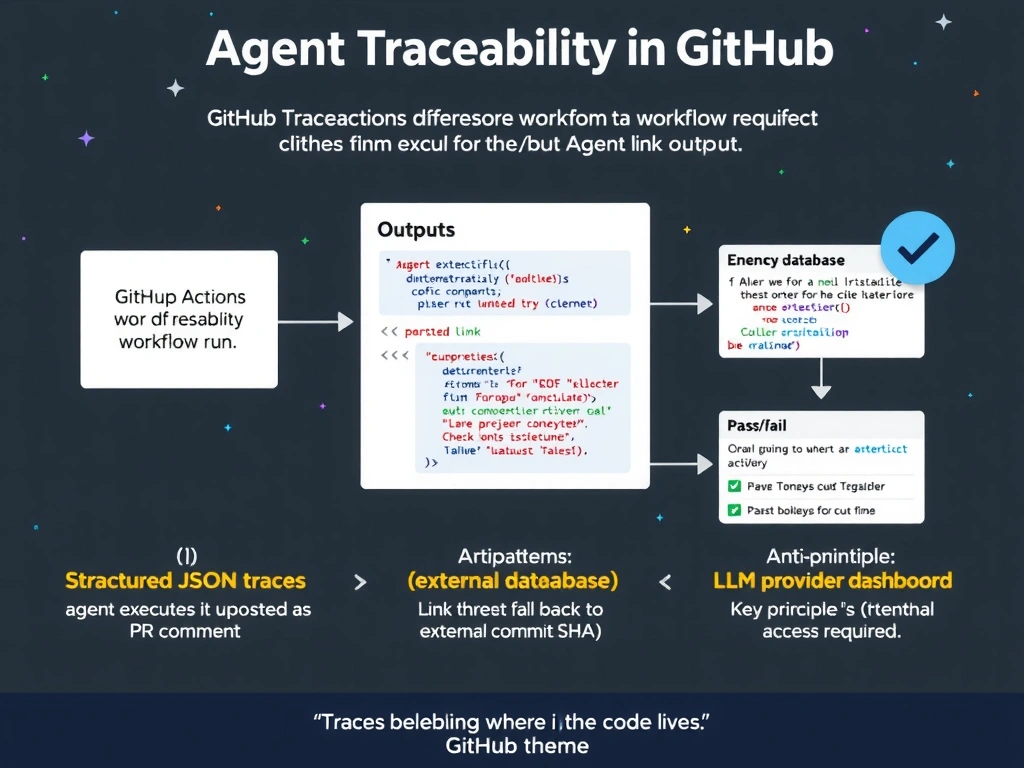
Full Explanation
The failure here is that the agent's GitHub App installation token has access to all repositories, so MCP tools calling the GitHub API with different repository names succeed. This is a scope confinement violation—the agent's effective access extends far beyond its intended mandate.
The correct fix is to configure the GitHub App installation with repository-level scoping. When you install a GitHub App, you can choose 'All repositories' or 'Only select repositories.' For this agent, the installation should be scoped to only the 'frontend' repository. When the MCP tool attempts to create a branch in 'backend', the API call returns a 404 (not found) or 403 (forbidden) because the App installation token is not valid for that repository.
This is an infrastructure-level enforcement that cannot be bypassed by user instructions, prompt injection, or application logic bugs.
Option A (system prompt rule) is the weakest control—user instructions like 'apply to all affected repositories' can override it, and prompt injection can manipulate it. It's guidance, not enforcement. Option C (logging warnings) is a detection control, not prevention—the unauthorized actions already happened. Option D (application-level validation) is better than a system prompt but worse than infrastructure enforcement: application logic can have bugs, can be bypassed during error handling, and creates maintenance burden. The GitHub App installation scope is the authoritative boundary.