
A security team needs to audit why an automated deployment agent approved and deployed a specific build last Tuesday at 2:17 AM. The agent produced no persistent artifacts during its run — it processed everything in memory and exited cleanly. The team cannot reconstruct the decision. What should the agent have produced to make this audit possible?
Select an answer to reveal the explanation.
Short Explanation and Infographic
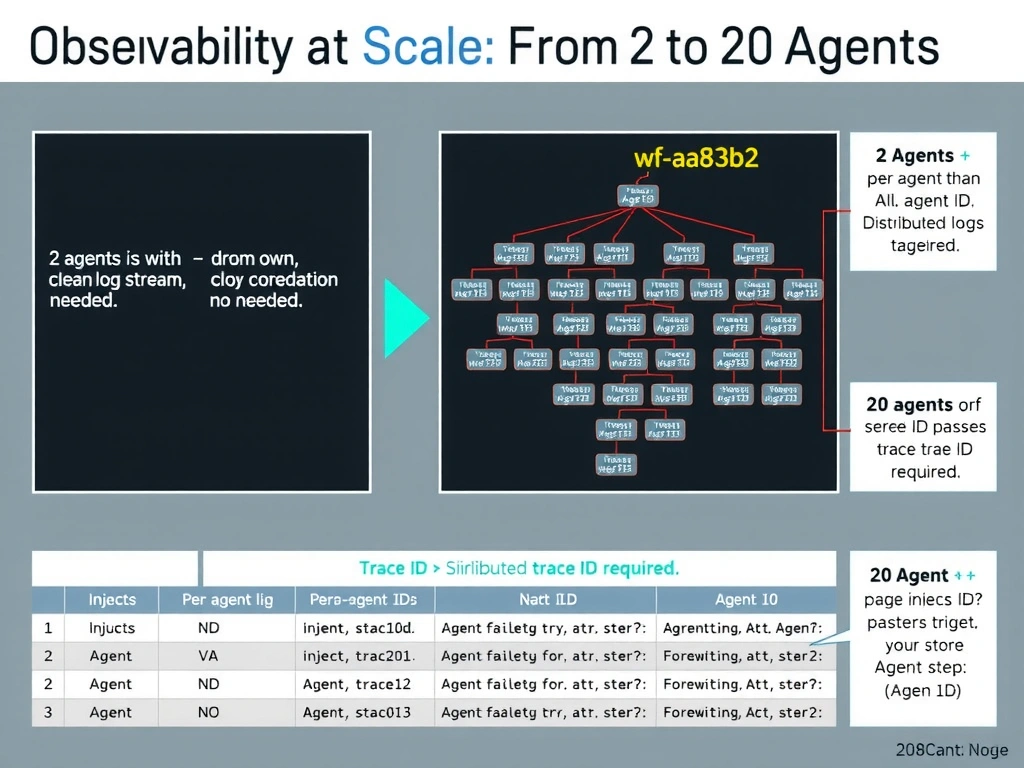
An audit without a trail is just a guess — and that's exactly the problem here. Answer B is correct: structured JSON decision artifacts written to durable storage are the right answer. They capture the complete decision context in machine-readable form: what the agent evaluated, which checks passed, what it decided, and when. System prompt logs, Slack pings, and PR comments are partial or ephemeral records that don't reconstruct reasoning.
Full explanation below image
Full Explanation
Agentic systems that make consequential decisions autonomously must externalize those decisions as inspectable, durable artifacts. An agent that 'exits cleanly' with no record is an opaque black box — fine when nothing goes wrong, catastrophic when accountability is required.
Why B is correct: Structured JSON decision artifacts are the gold standard for agent auditability. Each significant decision point (build evaluated, security checks run, approval granted) should produce a JSON record containing: the inputs evaluated (build ID, commit SHA, test results), the criteria applied (security policy version, required checks), the outcome (approved/rejected), the timestamp, and the agent identity. Written to a durable append-only store (S3, a database, GitHub Actions artifact), these records allow the security team to reconstruct exactly what the agent saw and decided — independently of whether the agent is still running or whether any downstream notification was received.
Why A is wrong: System prompt and context window contents are an implementation detail of how the model was initialized, not a structured record of what the agent decided. Context windows are large, unstructured, and contain much more than the decision — they include task instructions, tool schemas, and conversation history. They are neither designed for audit consumption nor scoped to the decision in question.
Why C is wrong: A Slack notification is a notification, not an audit record. Slack messages can be deleted, channels can be archived, and the notification itself contains only a summary — not the structured reasoning that would allow a security team to verify whether the correct checks were applied. Notifications are for awareness; artifacts are for accountability.
Why D is wrong: A PR comment has slightly better durability than a Slack message, but it still only captures a summary conclusion, not the decision-making chain. PR comments are also tied to the source repository and may be inaccessible or archived. More importantly, a comment saying 'automated deployment approved' tells the audit team nothing about which security checks were performed, which criteria were evaluated, or whether any check was skipped due to an error.