
A code migration agent is assigned the task of migrating a monolith to microservices. Within the first 3 tool calls, the agent begins modifying production configuration files before it has completed an analysis of the dependency graph, service boundaries, or data layer. Which anti-pattern does this behavior represent?
Select an answer to reveal the explanation.
Short Explanation and Infographic
This is the 'measure once, cut everything' problem — and Answer A nails it. Eager execution is the anti-pattern where an agent prioritizes taking action over understanding the situation first. Modifying production config on the third tool call of a complex migration is exactly this: acting before the analysis that would validate the action is even possible. The agent has no basis for those configuration changes yet.
Full explanation below image
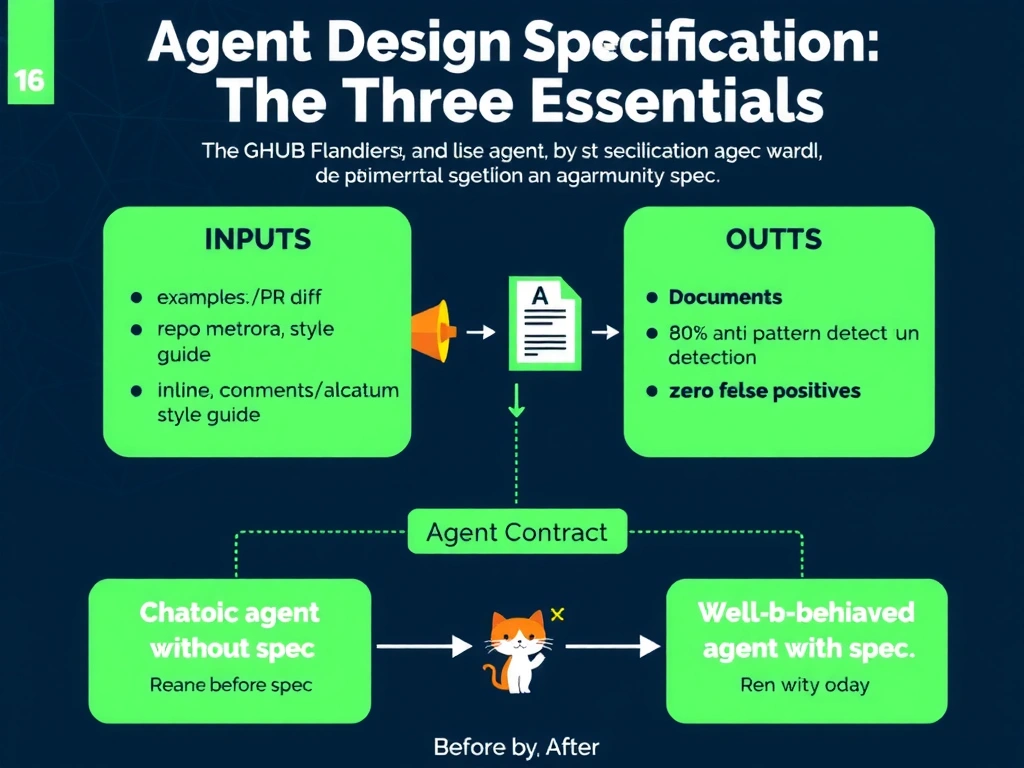
Full Explanation
Eager execution is one of the most dangerous anti-patterns in agentic AI design, particularly for complex, multi-phase tasks where early actions constrain or break later ones.
Why A is correct: Eager execution describes an agent that begins making changes before it has gathered the information necessary to make those changes safely. In a monolith-to-microservices migration, the dependency graph, data ownership boundaries, and cross-service call patterns must all be understood before a single production file is touched. Acting on tool call 3 of what should be a multi-hundred-step process means the agent is making structural changes based on surface-level task context, not on a validated understanding of the system. Production configuration files control live system behavior — modifying them without a complete picture is high-risk eager execution.
Why B is wrong: Over-planning is the opposite failure mode — an agent that generates endless analysis artifacts, plans, and sub-plans without ever taking action. The scenario describes the inverse: action taken far too early, not action taken after excessive deliberation. The agent never over-planned; it skipped planning almost entirely.
Why C is wrong: Context window overflow is a technical constraint issue that causes information loss when input exceeds the model's token capacity. While large dependency graphs can be challenging to process, the scenario describes a behavioral choice to act immediately rather than a technical failure to process available data. Even with a full context window, starting to write config changes on tool call 3 of a migration would still be eager execution.
Why D is wrong: Insufficient tool permissions is a least-privilege design pattern issue, not a description of the behavior exhibited. While it is true that the agent should ideally have been given read-only access during the analysis phase (and this is a valid separate concern), the anti-pattern being exhibited is about sequencing — acting before analyzing — not about which permissions were provisioned. Least-privilege is a mitigation, not the name of the failure mode observed.