
A long-running agent is working on a multi-week refactoring project. It needs to track which modules have been refactored, which are in progress, and which are pending, across multiple workflow runs and potentially multiple weeks. What is the best GitHub-native mechanism for this long-term task tracking?
Select an answer to reveal the explanation.
Short Explanation and Infographic
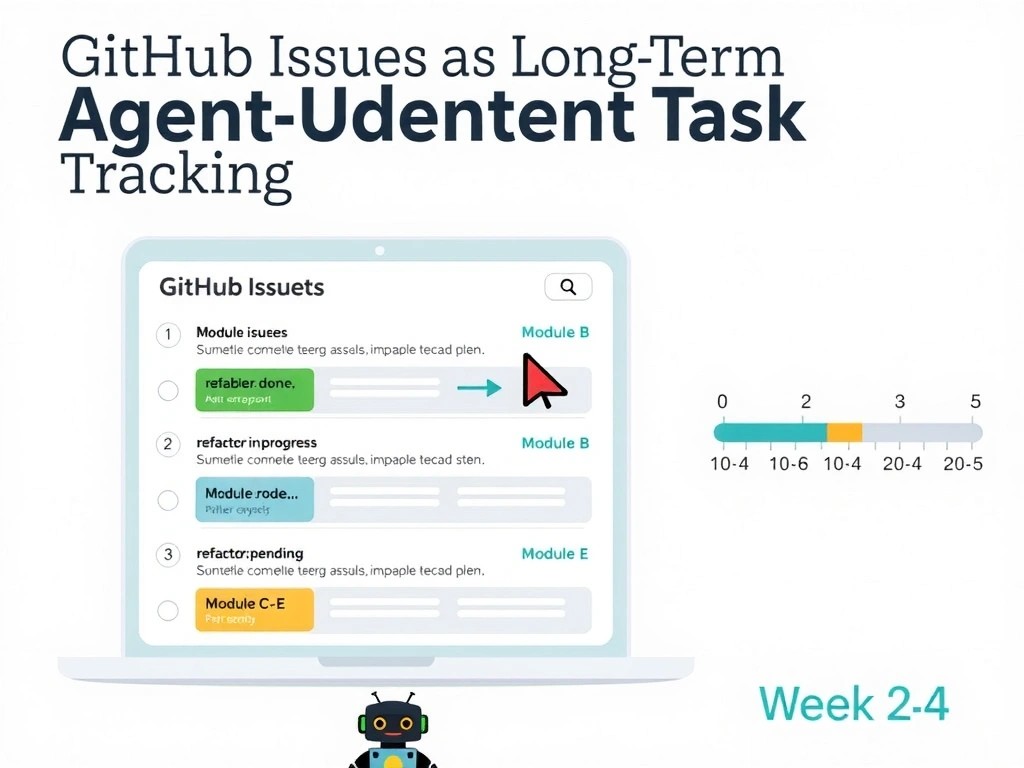
GitHub Issues are the project manager that never forgets. Labels encode machine-readable state, milestones group related work, and the Issues API lets the agent update status after each module — all stored in the repository's own infrastructure, visible to humans and queryable by automation.
Full explanation below image
Full Explanation
GitHub Issues are the correct long-term task tracking mechanism for multi-week agentic work. Each module gets its own Issue. The agent updates the issue's labels (e.g., refactor:done) and adds a comment with the result after processing each module. The GitHub API provides reliable CRUD operations on issues, and the state persists indefinitely (until the issue is closed or deleted). Humans can monitor progress through the GitHub UI, and automation can query issue state via the API.
Option A (JSON file committed to the repository) creates a commit for every state update, polluting repository history. It also creates write contention when multiple parallel agent runs try to update the same file simultaneously, potentially causing merge conflicts or lost updates.
Option C (GitHub Actions cache) is designed for short-term, within-run or same-branch caching. Cache entries expire after 7 days of inactivity and are not suitable for multi-week persistence. They also provide no human-readable progress view.
Option D (appending to system prompt) is not possible in a durable way. System prompts are defined at agent configuration time, not updated dynamically between workflow runs. Even if the system prompt were updated, it would grow unboundedly over weeks and eventually exceed context window limits, degrading agent performance.
GitHub Issues with structured labels provide human-readable, machine-queryable, durable long-term state that aligns with how GitHub-native teams track project work.