
A team wants to invoke a GitHub Copilot agent as part of their CI pipeline to analyze test failures and suggest fixes. How should this be configured?
Select an answer to reveal the explanation.
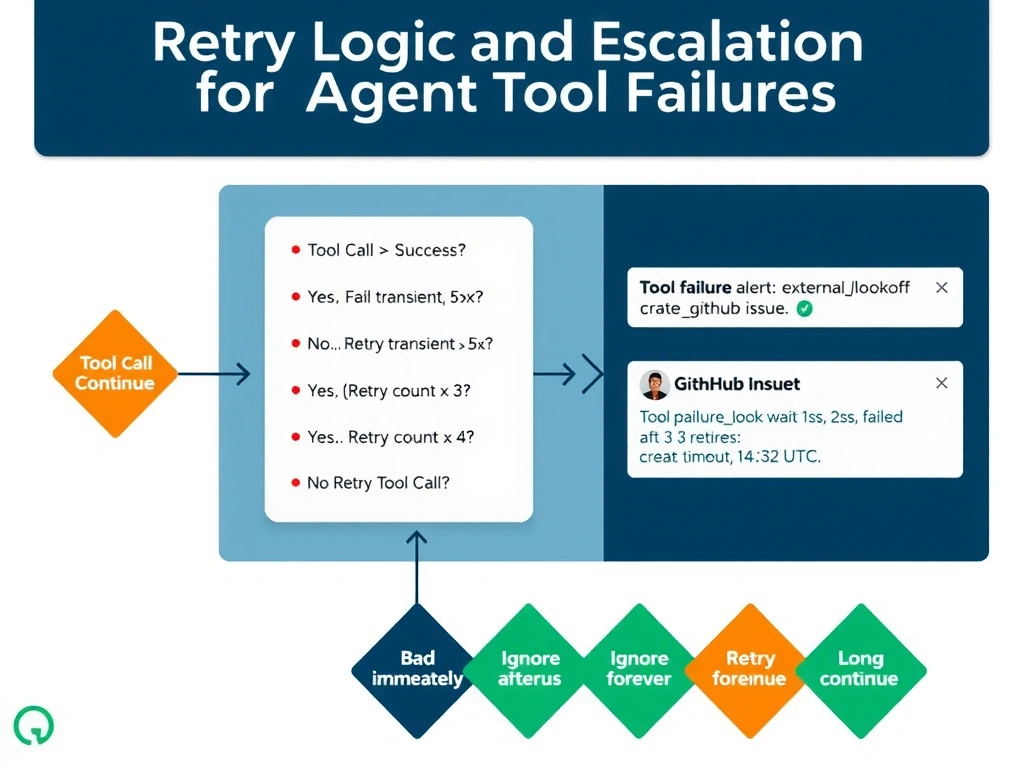
Short Explanation and Infographic
CI pipelines are already the place where test failures appear — it makes sense to plug the agent in right there, not reroute the data somewhere else. A GitHub Actions workflow step that invokes the agent inline gives you real-time analysis without leaving the GitHub ecosystem.
Full explanation below image
Full Explanation
Integrating a GitHub Copilot agent into a CI pipeline via GitHub Actions is the standard pattern for automated, event-driven agent invocation.
Why B is correct: GitHub Actions workflows can include steps that invoke Copilot agents using the agent API or Copilot extension points. The workflow can pass test failure context (logs, failed test names, relevant code) as structured input to the agent. The agent's output (suggested fixes, analysis) can be written back as PR comments, check run annotations, or workflow artifacts. This is a first-class integration pattern.
Why A is wrong: Running agents locally on developer machines introduces inconsistency (different configurations, different models), requires each developer to set up the agent, and produces results that are not automatically captured in the repository's history.
Why C is wrong: Sending test results to an external AI service via webhook moves the analysis outside of GitHub's governance, audit trail, and permission model. It also requires maintaining a separate service and integration layer.
Why D is wrong: Batch daily analysis is fundamentally at odds with CI's purpose of providing fast feedback on individual commits. By the time the agent analyzes failures, the developer has moved on to new work, and the context has stale.