
A workflow compiles a large native codebase and exceeds CPU/memory on standard GitHub-hosted runners. What is a supported way to obtain more powerful GitHub-hosted compute?
Select an answer to reveal the explanation.
Short Explanation and Infographic
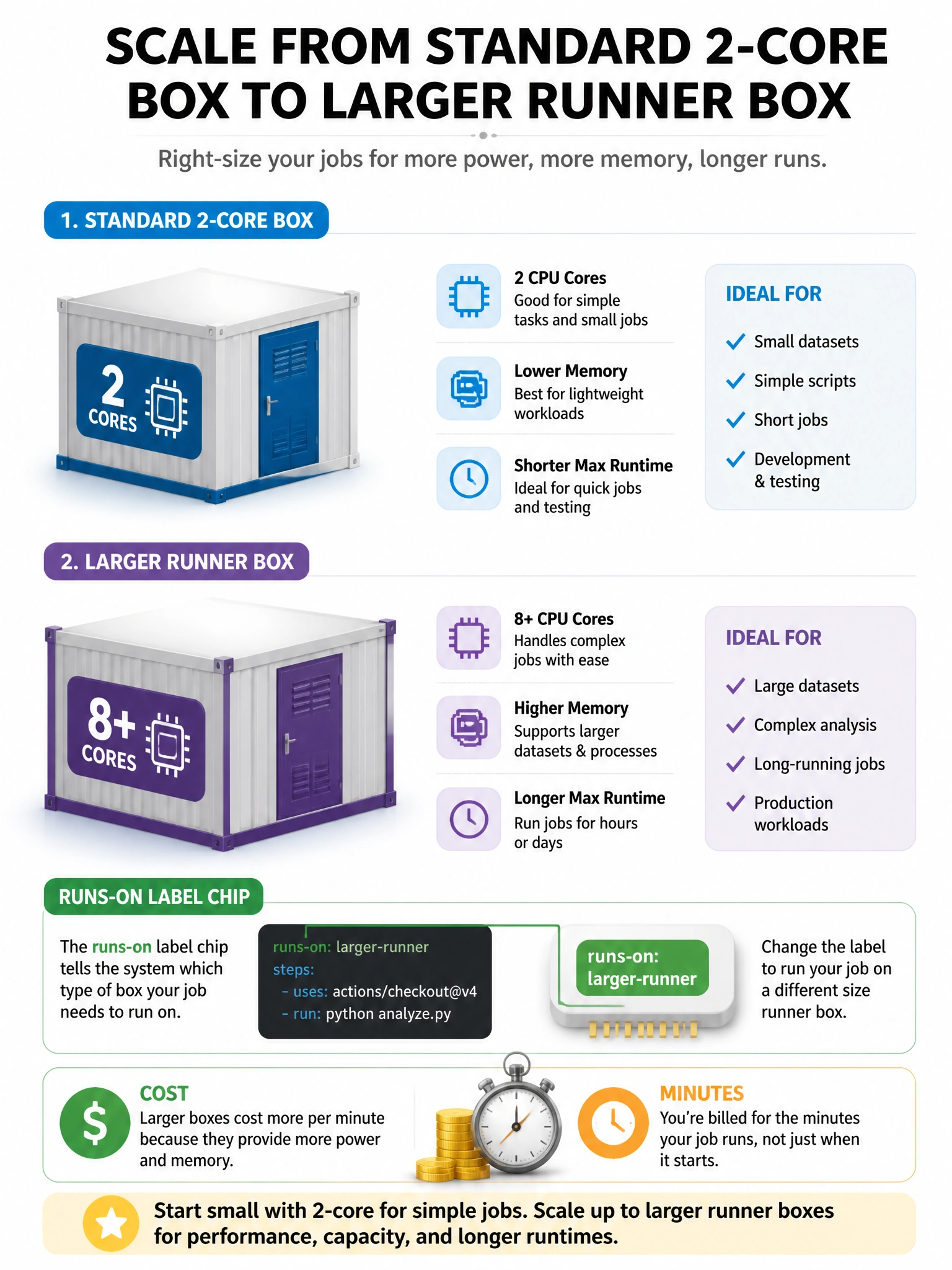
Larger GitHub-hosted runners are selected via runs-on labels your billing plan provides. max-parallel spreads jobs; permissions do not resize VMs; continuum-minutes is fiction.
Full explanation below image
Full Explanation
GitHub offers larger hosted runners (and nested virtualization options depending on product phase and plan) that organizations enable and select with runs-on labels. They provide more vCPU and RAM for heavy builds. max-parallel only controls how many matrix jobs run at once; it does not add cores to one job. Token permissions never change machine size. There is no continuum-minutes key. Alternatives include self-hosted runners sized to your hardware or splitting the build across jobs. Compare minute multipliers and concurrency limits when estimating cost. Always pin labels intentionally so workflows do not unexpectedly schedule onto scarce large runners.