
A flaky integration step occasionally hangs. You want that step to fail after 15 minutes without changing the job’s overall 60-minute default budget unless the hang occurs. Which key should you set on the step?
Select an answer to reveal the explanation.
Short Explanation and Infographic
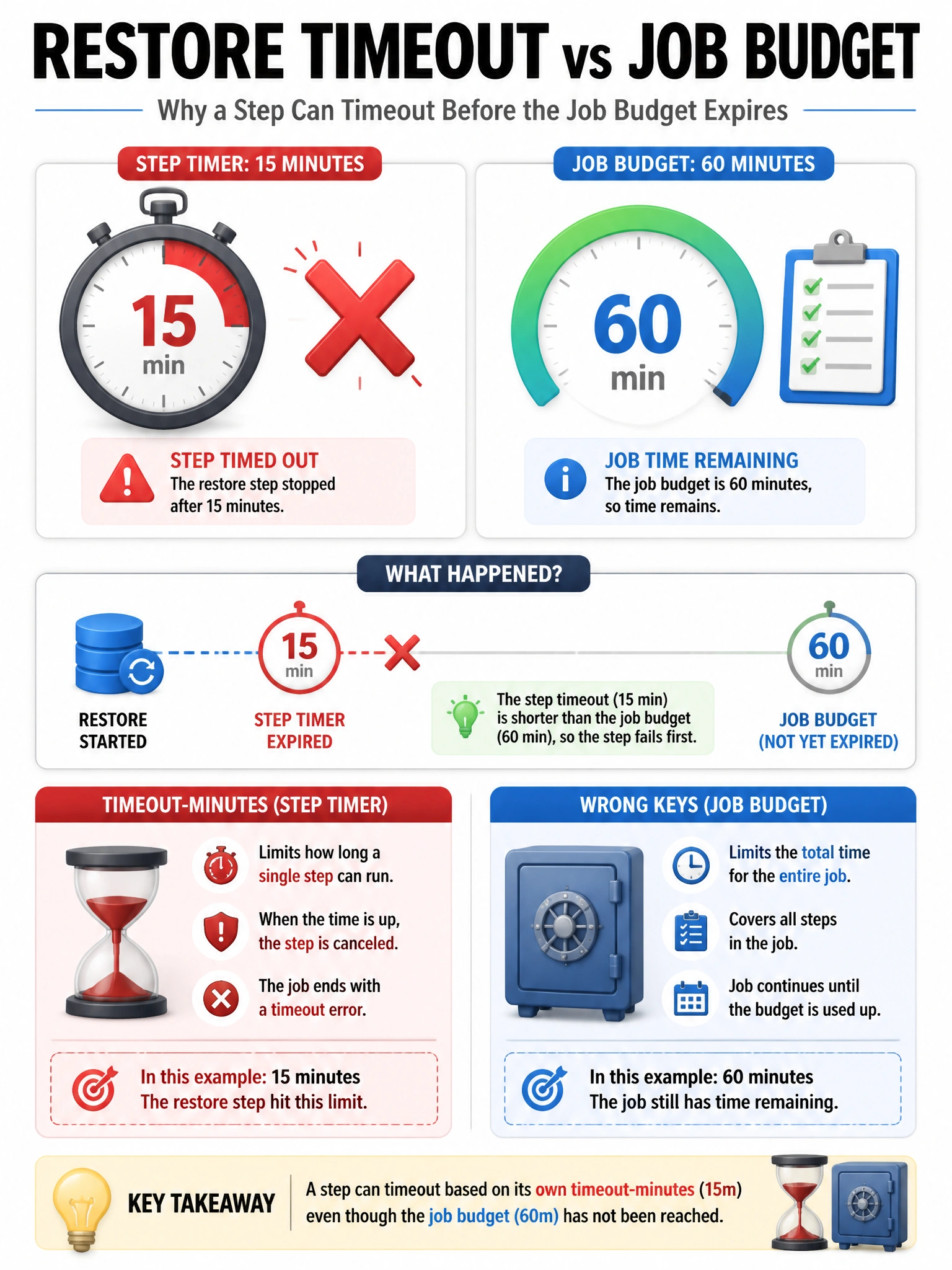
timeout-minutes works on jobs and steps—set 15 on the flaky step to cut hangs short. max-parallel is matrix, cancel-in-progress is concurrency, retention-days is artifacts.
Full explanation below image
Full Explanation
GitHub Actions supports timeout-minutes at job and step granularity. A step-level timeout fails that step when exceeded while leaving a higher job timeout as a backstop for the rest of the work. This is ideal for known hang risks (browser tests, external network calls). max-parallel limits concurrent matrix jobs. cancel-in-progress belongs under concurrency. retention-days applies to artifacts and caches policies, not step runtime. If a step times out, subsequent steps follow normal success/failure/continue-on-error rules. Pair timeouts with good retries only when retries are safe, and monitor which steps hit the limit so you fix root causes rather than only extending timers.