
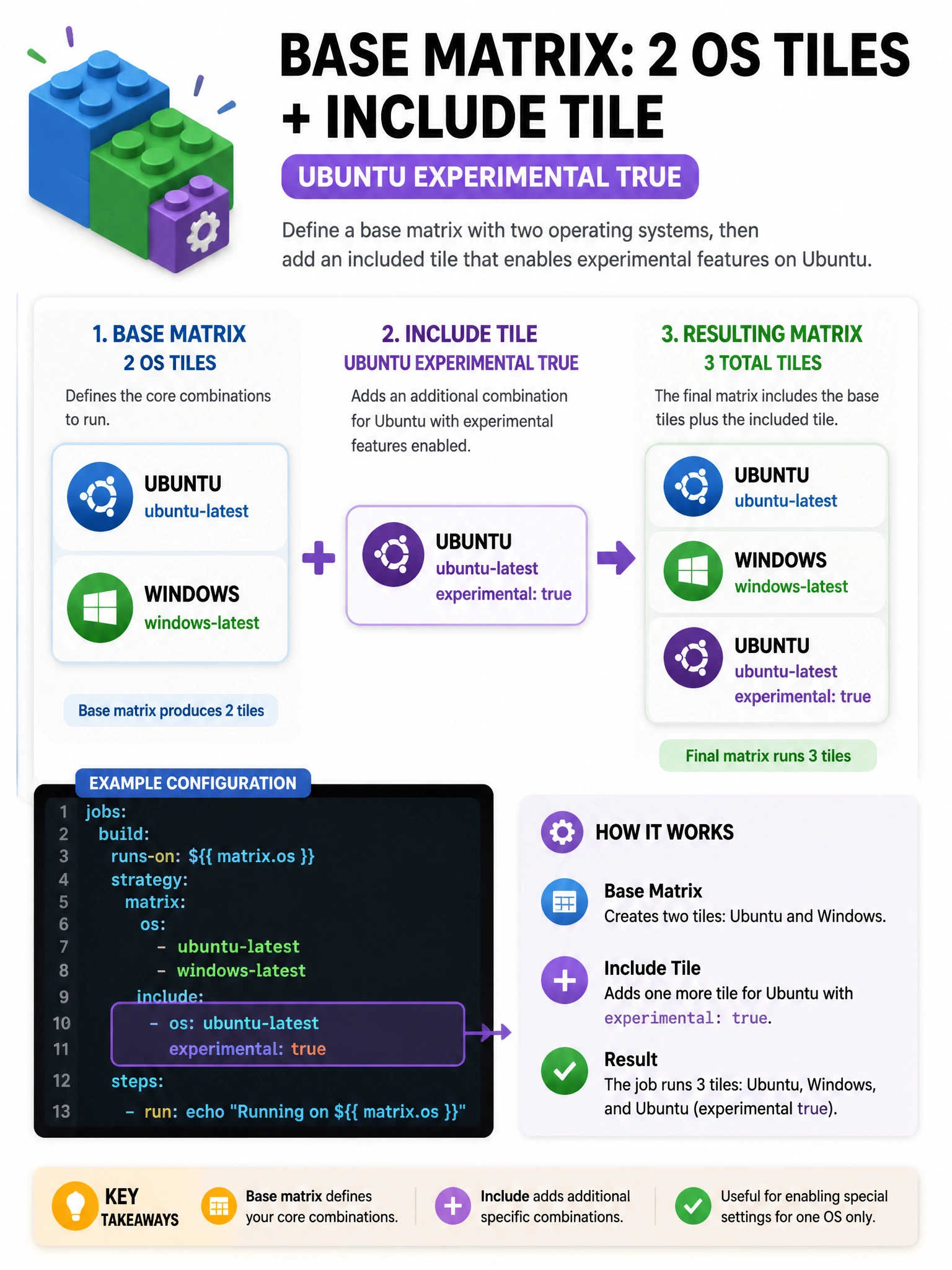
You have strategy.matrix.os: [ubuntu-latest, windows-latest]. You need one additional job that runs ubuntu-latest with an extra experimental: true flag without rewriting the whole matrix by hand. Which key adds that combination?
Select an answer to reveal the explanation.
Short Explanation and Infographic
matrix.include adds or expands combinations (here ubuntu + experimental). exclude removes combinations; fail-fast and concurrency are unrelated to injecting matrix axes.
Full explanation below image
Full Explanation
strategy.matrix.include can add new combinations or attach extra variables to specific legs. Listing os: ubuntu-latest with experimental: true creates (or enriches) that job while leaving the base cartesian product intact depending on how include is used. exclude removes combinations from the product. fail-fast controls cancellation after failures. concurrency coordinates simultaneous workflow runs. For monorepos, include is often paired with a generated matrix from a planning job, but the static include pattern remains exam-relevant. Keep matrix sizes within platform limits and name jobs clearly when experimental flags change behavior.