
In GitHub Enterprise Server, how does a high-availability (HA) replica differ from a node in a multi-node cluster for production traffic?
Select an answer to reveal the explanation.
Short Explanation and Infographic
HA is warm standby. Cluster is active-active service sharing. Don't mix them up when you're sizing or designing DR.
Full explanation below image
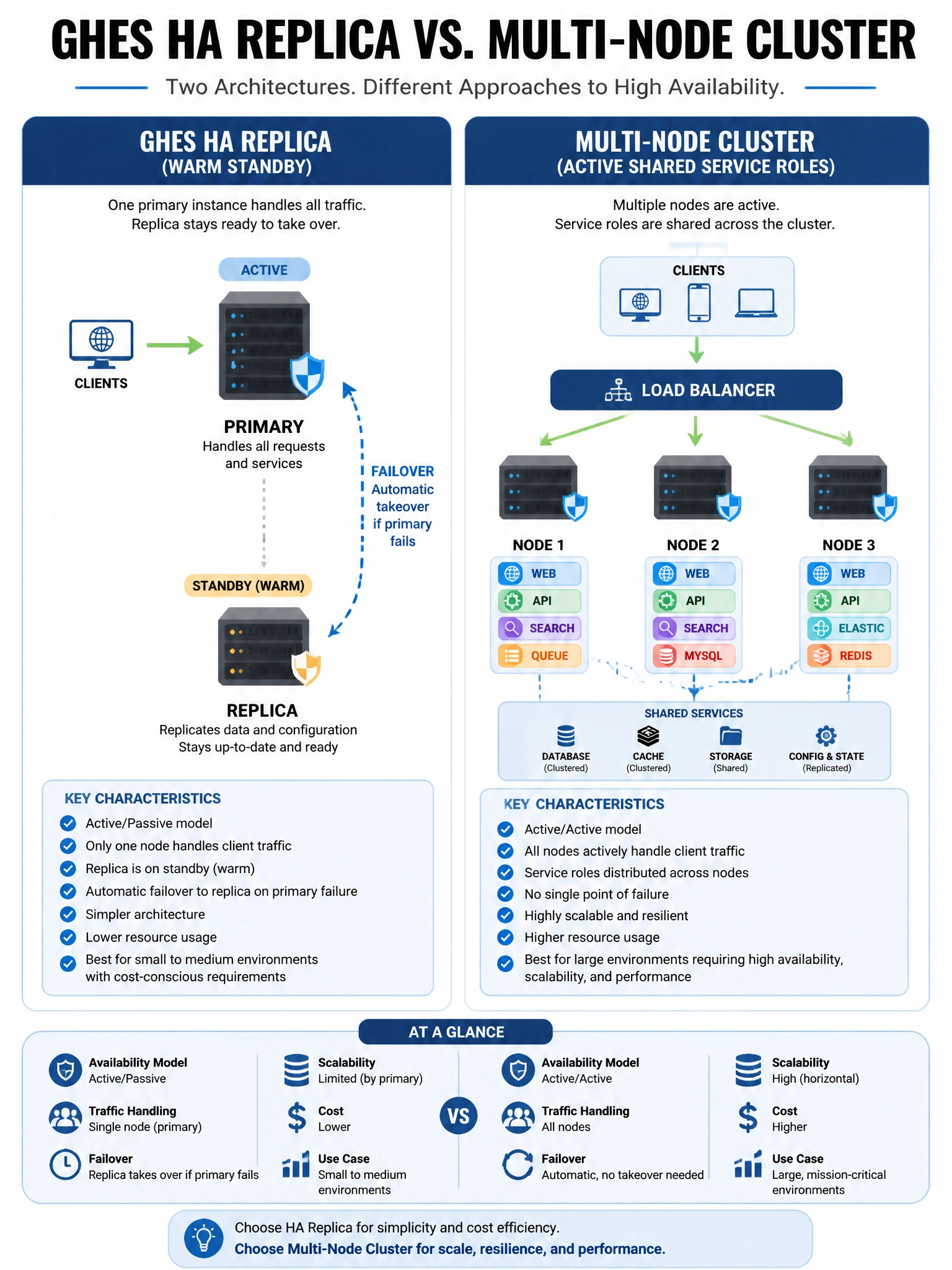
Full Explanation
GitHub Enterprise Server high availability places one or more replica appliances that continuously replicate data from a primary. In normal operation the replica does not serve general user application traffic; it stands ready for promotion during failover. Clustering distributes GitHub services across multiple active nodes so the instance can scale and tolerate node loss without treating every peer as a pure standby. Claiming the replica always owns Git HTTPS while the primary is limited to the Management Console is incorrect. Reversing roles so cluster nodes are only read-only mirrors is also wrong. HA and cluster topologies use different setup paths and operational models, so they are not configured with identical ghe-repl-setup semantics. Administrators must pick HA for simpler DR versus clustering when they need active multi-node capacity and design monitoring and runbooks accordingly.