
What is the GitHub Enterprise license model, and what happens when the user count exceeds the licensed seat count?
Select an answer to reveal the explanation.
Short Explanation and Infographic
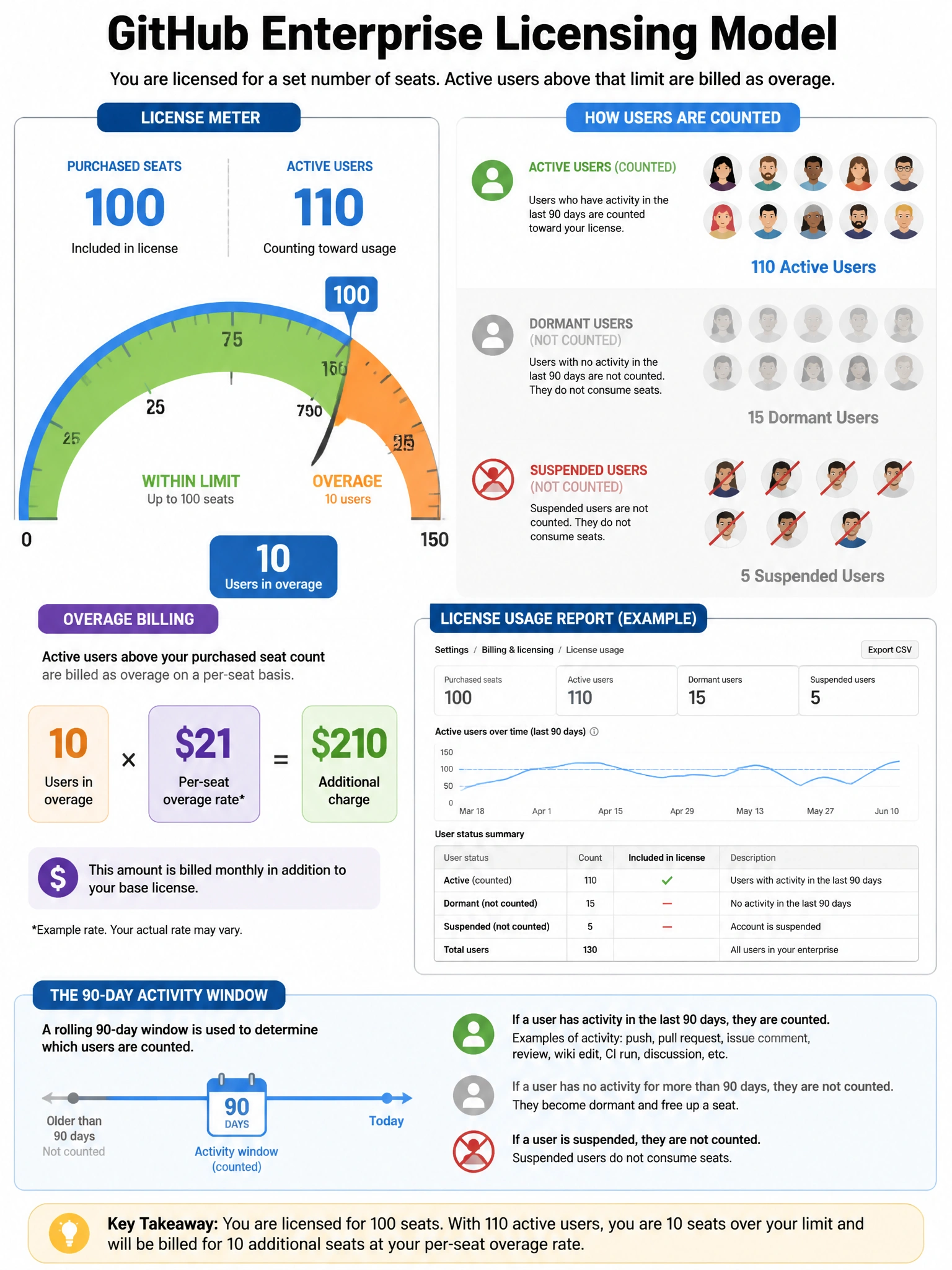
GHES and GHEC both use per-seat licensing based on active users. Go over your license count and GitHub doesn't lock you out — you just accumulate overage charges that get reconciled at your next billing cycle.
Full explanation below image
Full Explanation
GitHub Enterprise licensing is per-seat based on the number of active users (members of organizations within the enterprise account). Key aspects: (1) License Count — you purchase a specific number of user seats. (2) Counting — GHES counts users who have logged in or performed activities within the 90-day period (dormant users don't count, and suspended users don't count). (3) Overage — if active users exceed licensed seats, GitHub bills for overages at the per-seat rate on the next billing cycle. GitHub does NOT block access when limits are reached (graceful overage). (4) License compliance — administrators should regularly review user counts using the license usage report to stay within purchased limits. (5) GitHub adds some seats for specific service accounts by default.