
How do GitHub Actions runner groups help organizations manage self-hosted runner access?
Select an answer to reveal the explanation.
Short Explanation and Infographic
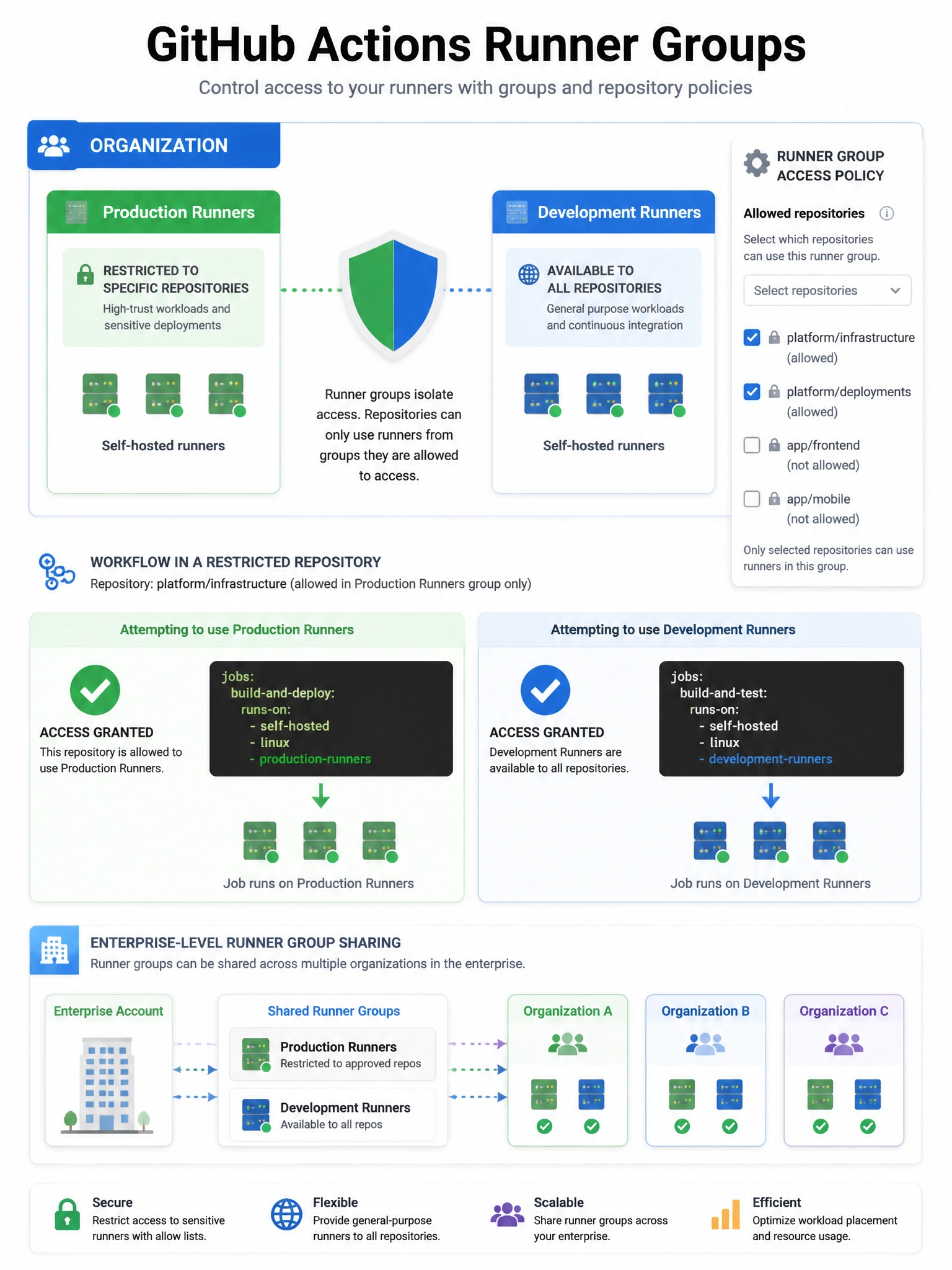
Runner groups are access control for your runners. You can put production runners in a 'Production' group and only let specific repositories or workflows use them. Development repos can't accidentally run on your production infrastructure.
Full explanation below image
Full Explanation
GitHub Actions runner groups are a mechanism to organize self-hosted runners and control access to them. Organizations and enterprises can create multiple runner groups and configure: (1) Which repositories can use runners in each group (all org repositories, selected repositories, or none). (2) Whether workflows from public repositories can use the group's runners. (3) Whether GitHub Actions workflows from GitHub.com can use the runners (enterprise-level setting). This allows administrators to create separate runner pools for different environments (development, staging, production) and ensure only authorized repositories run on specific infrastructure. Runner groups do not provide automatic load balancing or scaling — those are separate concerns managed by the infrastructure.