
What is a GitHub organization's 'fork policy' and what does restricting it accomplish?
Select an answer to reveal the explanation.
Short Explanation and Infographic
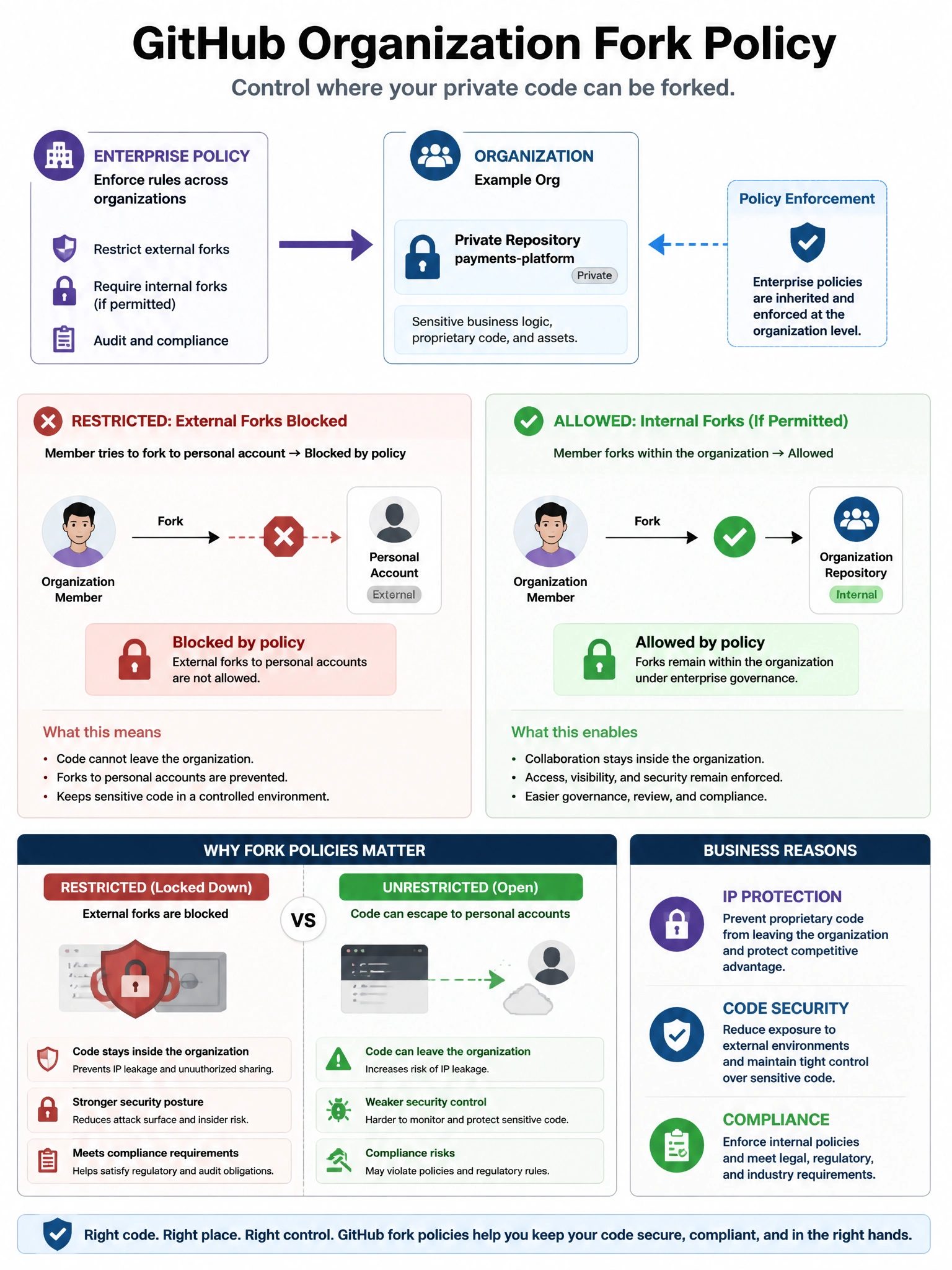
Fork policy is your IP protection lever. For private repos, you might not want engineers forking company code to their personal GitHub accounts. Restricting forking keeps proprietary code inside the organization boundary.
Full explanation below image
Full Explanation
GitHub organizations can configure a fork policy that controls whether private and internal organization repositories can be forked to locations outside the organization. When forking is restricted: (1) Private repositories cannot be forked to members' personal accounts, (2) Private repositories cannot be forked to other organizations, (3) Forking within the same organization may still be permitted depending on settings. Restricting forking is critical for: protecting proprietary source code, ensuring IP stays within the organization's control, preventing code from appearing in external repositories. For enterprises, this policy can be enforced at the enterprise level. Note that public repositories on GitHub.com can always be forked — the restriction only applies to private and internal repositories.