
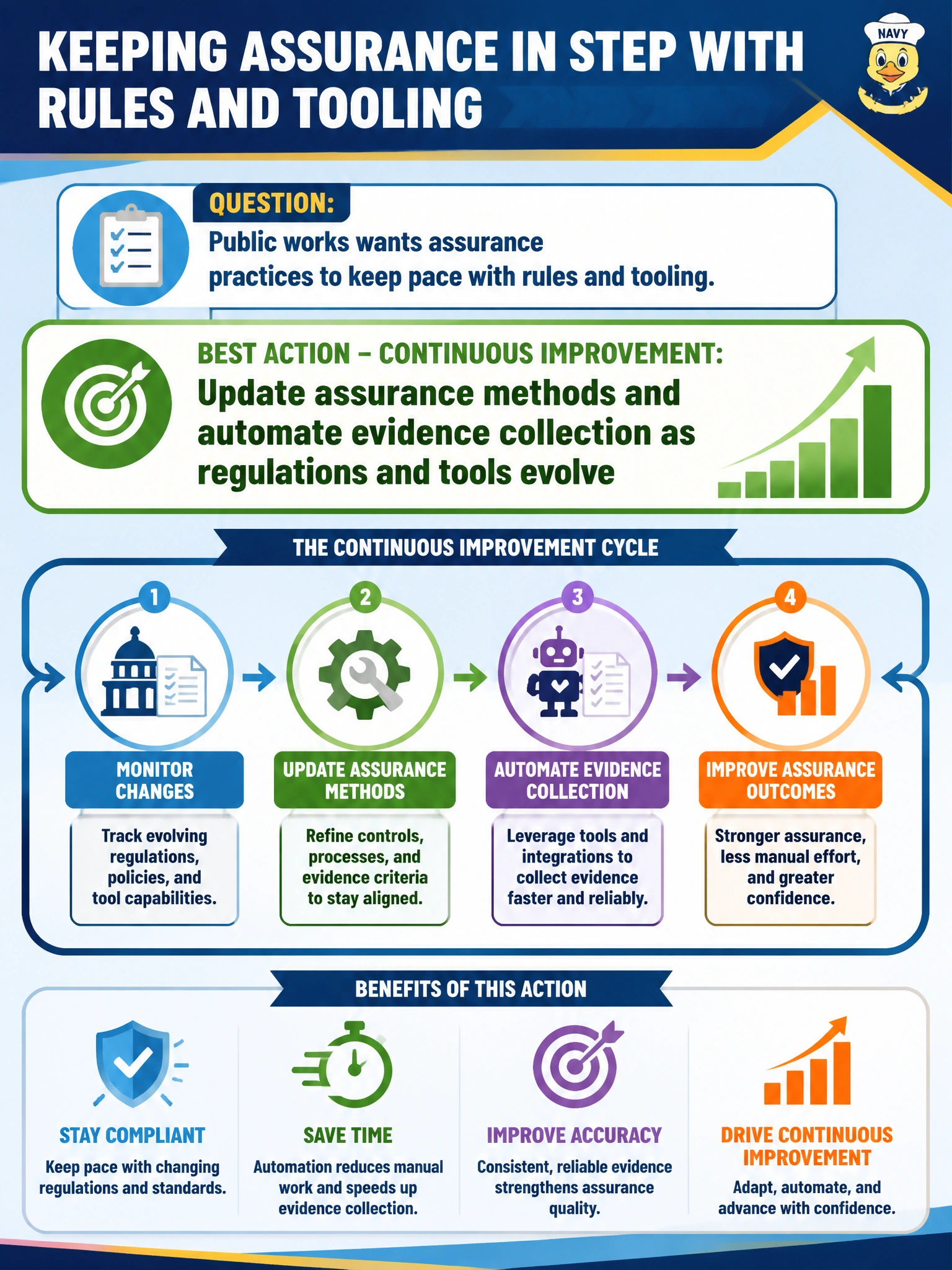
Public works wants assurance practices to keep pace with rules and tooling. Which action best shows continuous improvement?
Select an answer to reveal the explanation.
Short Explanation
Rules and tools move; your assurance playbook should too. Refresh methods and automate evidence pickup so oversight doesn’t fossilize—like updating inspection forms when the code book changes.
Full Explanation
Public works shows continuous improvement in assurance by updating methods and automating evidence collection as regulations and tooling evolve. Refreshing playbooks and reducing manual evidence friction keeps oversight aligned with new rules and with the pace of model and platform change—preventing fossilized checklists from pretending to be modern governance for infrastructure AI.
Freezing the assurance checklist from five years ago with no regulatory refresh guarantees drift from current expectations and emerging standards. Rejecting any tooling that reduces manual evidence gathering effort confuses diligence with labor intensity and slows coverage across a growing AI portfolio. Waiting for a public failure before considering assurance modernization treats preventable resident harm as the trigger for learning.
Exam caveat: continuous improvement for civic AI assurance means proactive method updates and evidence automation as the regulatory and tool landscape moves—not stasis, anti-automation dogma, or failure-driven change. Operational check: schedule periodic assurance-method reviews against new regulations and platforms, pilot evidence automation where controls allow, and retire obsolete checklist items with documented rationale and owner sign-off.