
Courts deploy a public chatbot tier near sealed-case systems. What architecture control best fits?
Select an answer to reveal the explanation.
Short Explanation
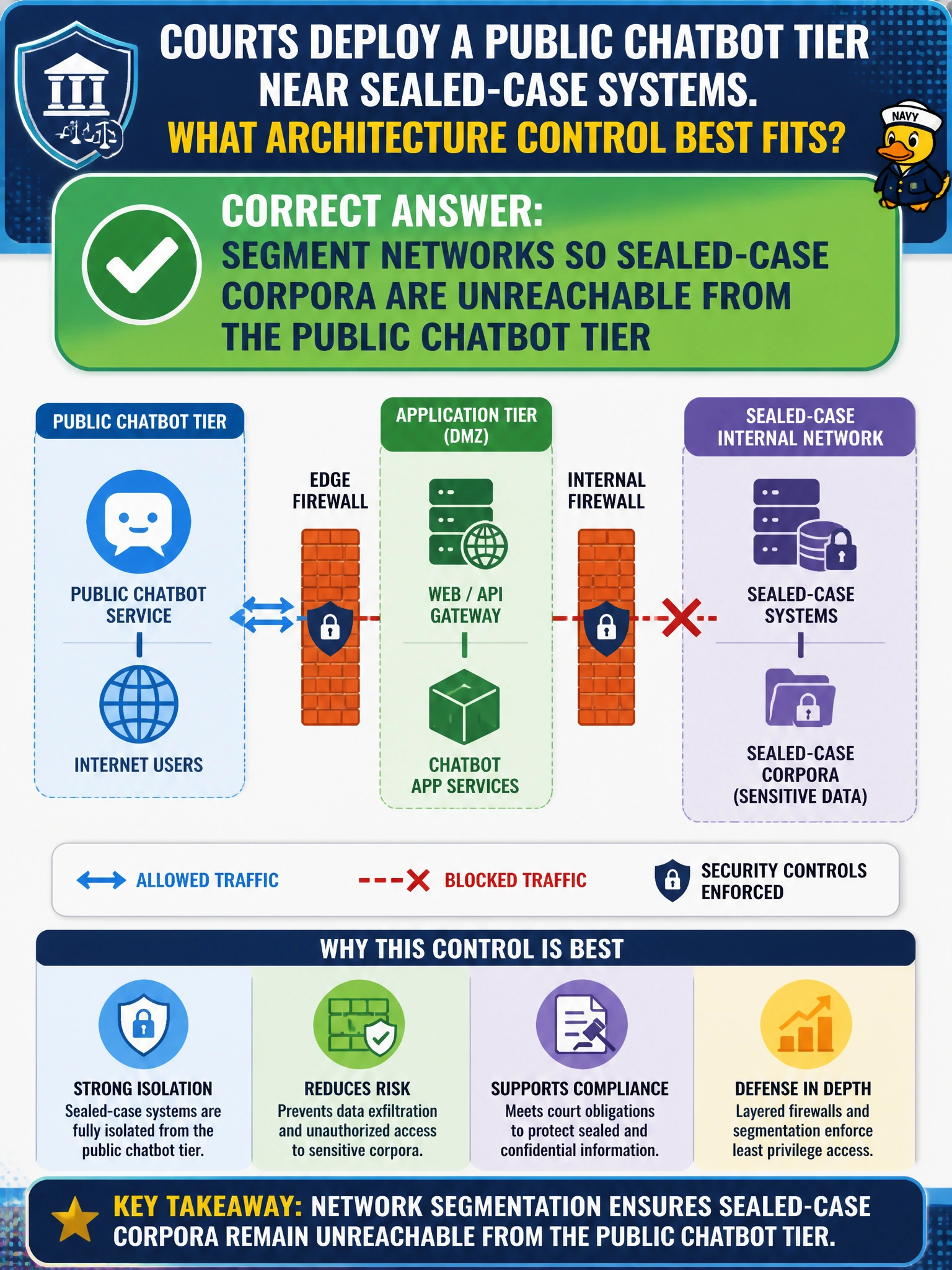
Public chatbots and sealed cases don’t share a hallway. Segment the network so the chatbot tier can’t reach sealed-case corpora.
Full Explanation
Courts deploying a public chatbot tier near sealed-case systems must segment networks so sealed-case corpora remain unreachable from that public tier. Segmentation creates a hard trust boundary: even if the chatbot is prompt-injected, compromised, or misconfigured, it cannot traverse into sealed records that carry statutory confidentiality. Architecture should place sealed stores in isolated zones with deny-by-default paths from internet-facing AI components, plus monitored break-glass procedures if any controlled access is ever justified. For courts, confidentiality failure is not merely a privacy incident—it can violate legal obligations and due process.
Placing sealed-case stores on the same VLAN as the public chatbot for convenience collapses the boundary that architecture exists to enforce. Allowing the chatbot tier unrestricted lateral access to court records systems assumes perpetual chatbot integrity, which public exposure contradicts. Disabling segmentation because chatbots are “assumed never compromised” is wishful thinking incompatible with Zero Trust and court data sensitivity.
Exam caveat: proximity of a public AI tier to sealed data demands isolation, not convenience networking. Assume compromise of the public tier when designing reachability.
Operational check: validate with network policy tests that the chatbot subnet cannot initiate connections to sealed-case databases or file stores; document exceptions, if any, under dual control; and alert on any attempted lateral traffic from the public AI tier.