
311 updates its incident playbook for AI outages that affect residents. What vendor expectation belongs in the contract?
Select an answer to reveal the explanation.
Short Explanation
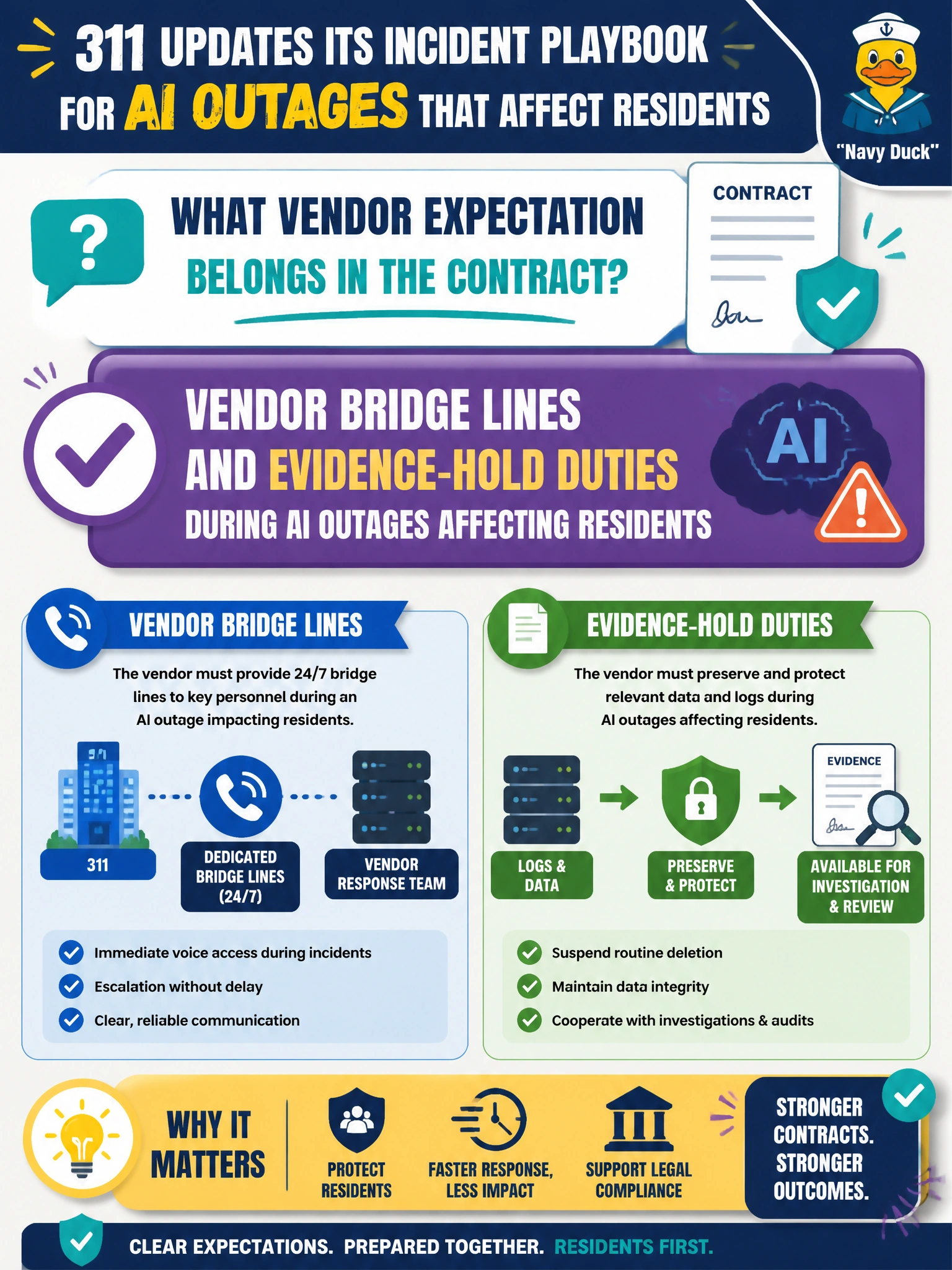
When 311’s AI blinks out, you need a live vendor bridge—not a voicemail black hole. Put bridge access and evidence holds in the contract up front.
Full Explanation
When an AI outage affects 311 residents, you need contractual incident duties rather than goodwill: the vendor must provide a live bridge line and preserve evidence. Bridge participation brings vendor expertise into municipal incident command for triage and accurate public communications; evidence holds prevent log rotation, rebuilds, or disk wipes from destroying forensic and after-action value. Letting the vendor go silent without a bridge or evidence hold leaves the city unable to diagnose root cause or establish what residents experienced. Deferring response for planned marketing work puts vendor convenience ahead of public-service continuity. Requiring residents to contact the CEO personally for every update is not scalable or an operational incident-response design; public updates should flow through city channels, supported by vendor technical participation. Exam caveat: because the issue is contractual expectations for AI outages affecting residents, focus on bridge access and evidence preservation, not generic SLA refunds alone; marketing contacts are not incident response. Practical check: include named bridge numbers or URLs, response-time SLAs, evidence-hold triggers, and joint after-action requirements in the vendor agreement. Then tabletop a 311 outage and verify that the vendor joins the bridge and freezes relevant telemetry within the contracted window.