
An assessor’s office decides whether to renew an AI valuation-assist vendor. What decision basis best fits?
Select an answer to reveal the explanation.
Short Explanation
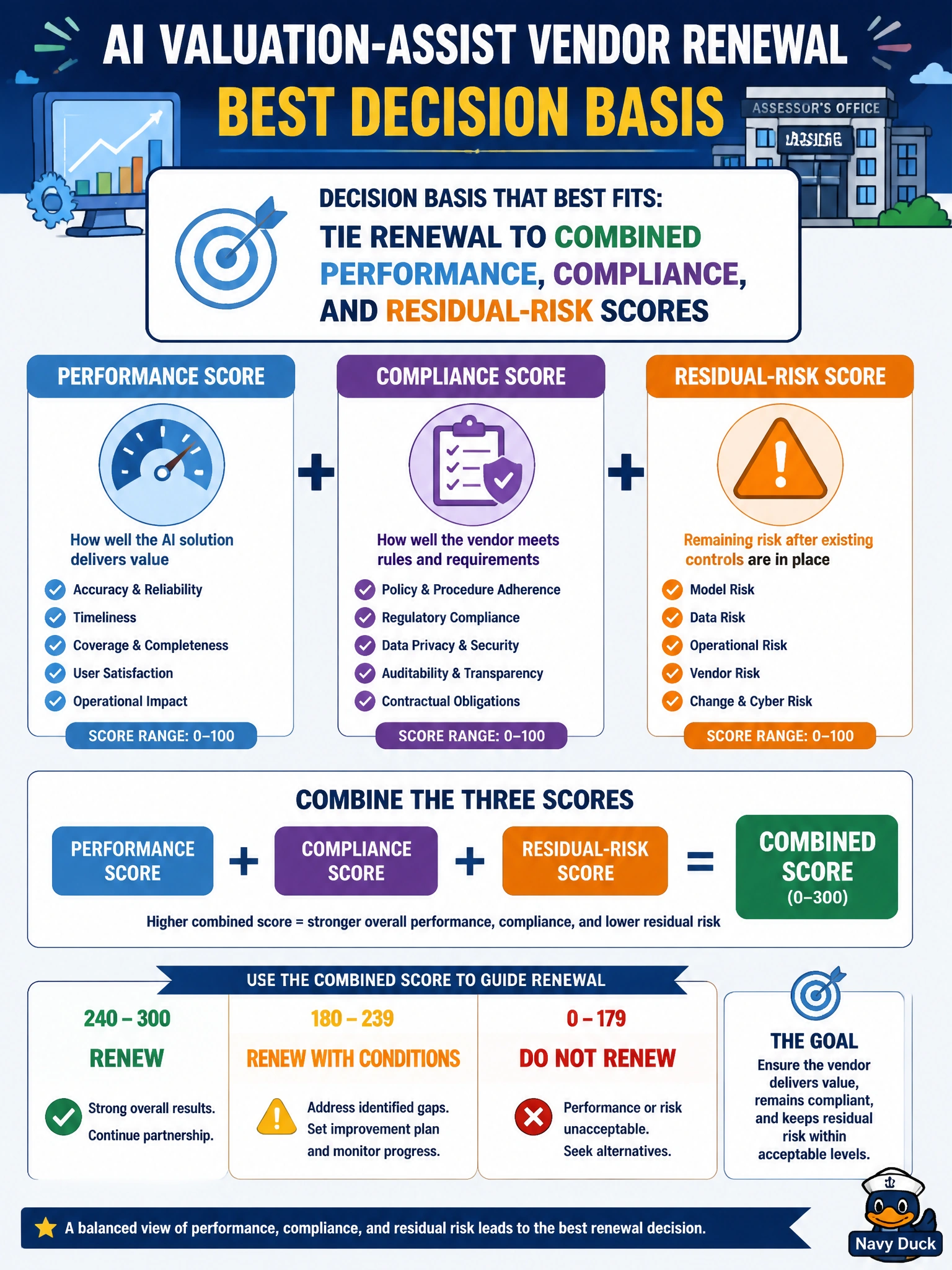
Pens and popularity aren’t renewals criteria. Score performance, compliance, and residual risk together—then decide.
Full Explanation
An assessor’s office deciding whether to renew an AI valuation-assist vendor needs a combined, evidence-based decision—not gifts or popularity. Tie renewal to combined performance, compliance, and residual-risk scores is correct because renewal should reflect how well the tool performed for municipal valuation work, whether the vendor met compliance duties, and how much residual AI risk remains after controls. Combined scoring supports an accountable renew-or-replace decision that counsel and GRC can defend.
Renew solely because the vendor sent branded pens fails by concept: promotional gifts are not performance, compliance, or risk evidence. Renew solely because the sales rep is locally popular fails by concept: personal popularity is not a municipal renewal criterion for valuation AI. Ignore residual risk if last year’s invoice was paid on time fails by concept: payment hygiene does not measure leftover AI risk to taxpayers or the assessor’s reputation.
Exam caveat: combined scoring still requires defined weights and thresholds; a strong performance score cannot silently erase unresolved compliance or residual-risk failures unless an authorized owner accepts that tradeoff in writing.
Operational check: before assessor AI renewal, compile performance metrics, compliance evidence, and residual-risk scores into one renewal scorecard; present the combined result to the decision owner; document renew, remediate-then-renew, or replace; and archive the scorecard with the procurement file.