
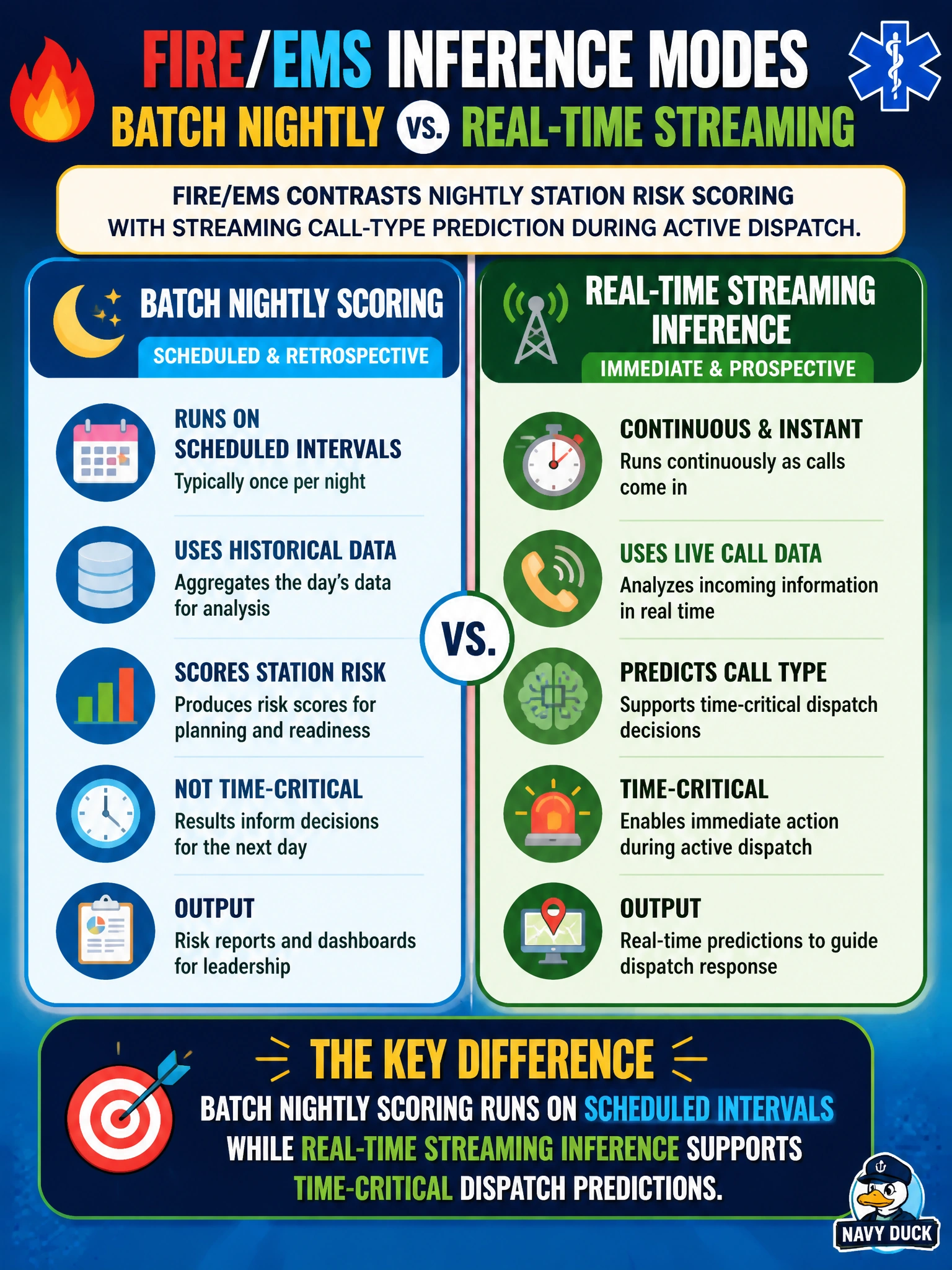
Fire/EMS contrasts nightly station risk scoring with streaming call-type prediction during active dispatch. Which statement correctly distinguishes the inference modes?
Select an answer to reveal the explanation.
Short Explanation
Nightly station risk scoring is like a morning briefing packet; streaming call-type prediction is like live radio during the run. One is scheduled batch, the other is real-time—and Fire/EMS governance should name which mode each system uses.
Full Explanation
Fire/EMS contrasting nightly station risk scoring with streaming call-type prediction during active dispatch should distinguish batch nightly scoring on scheduled intervals from real-time streaming inference that supports time-critical dispatch predictions. Mode drives latency budgets, availability design, and how failures present to crews.
Why the other options fail by concept: Saying batch and real-time inference are the same because both produce numbers ignores timing and operational use. Claiming real-time streaming can only run once per night and never during active calls reverses the definition of streaming dispatch support. Declaring batch scoring illegal for public safety so only streaming is allowed invents a prohibition; planned batch risk products remain common and legitimate when used appropriately.
Exam caveat: A single agency may run both modes. Do not govern them with one SLA. Batch scores informing morning staffing differ from millisecond-sensitive call-type assists that must degrade safely if the stream fails.
Operational check: Label each Fire/EMS model by inference mode in the inventory, define separate uptime and staleness metrics, and test failover (e.g., dispatch continues with rule-based fallback if streaming prediction drops). Review nightly batch jobs for completion and freshness before shift briefings.