
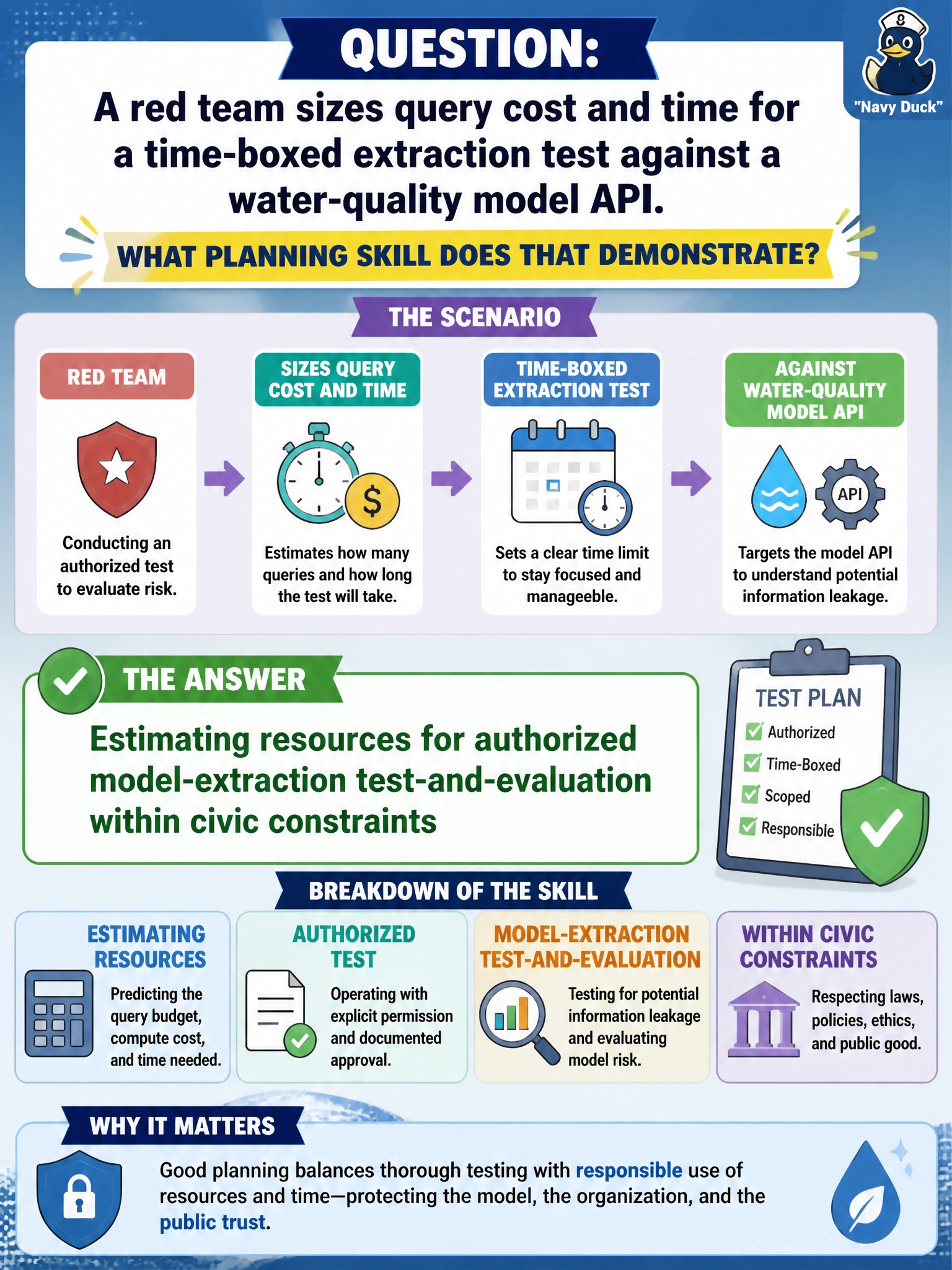
A red team sizes query cost and time for a time-boxed extraction test against a water-quality model API. What planning skill does that demonstrate?
Select an answer to reveal the explanation.
Short Explanation
Extraction tests burn tokens and calendar—budget both before you start poking the API.
Full Explanation
Sizing query cost and time for a time-boxed extraction test against a water-quality model API demonstrates estimating resources for authorized model-extraction test-and-evaluation within civic constraints. Effective T&E planning accounts for token and API spend, wall-clock windows, compute, analysis labor, and staffing so assessors finish within authorization and budget rather than running open-ended probes that overrun municipal cost controls.
Calculating the target's layer count and parameter size is attacker-side model analysis, not the planning skill a red team needs to size its own time-boxed engagement against a civic API. Benchmarking the API's uptime SLA is useful operational context but doesn't estimate the query volume, cost, or elapsed time the extraction test itself will consume. Estimating query budgets for targeted membership-inference testing of the seasonal water-quality model API is a different testing objective and not the planning skill for scoping an authorized extraction test. The skill being demonstrated is resourcing the test itself—queries, time, and budget—within the civic constraints the engagement has to respect.
Exam caveat: resource estimates should include false-start risk, environment setup, and analysis time after queries, not only raw API calls. Underestimating can truncate tests and falsely imply low extractability when the budget simply ran out.
Operational check: produce a written extraction T&E plan with query budget, time box, success metrics, abort criteria, and cost ceiling approved by water-utility stakeholders before testing begins, then track actual spend against the plan.