
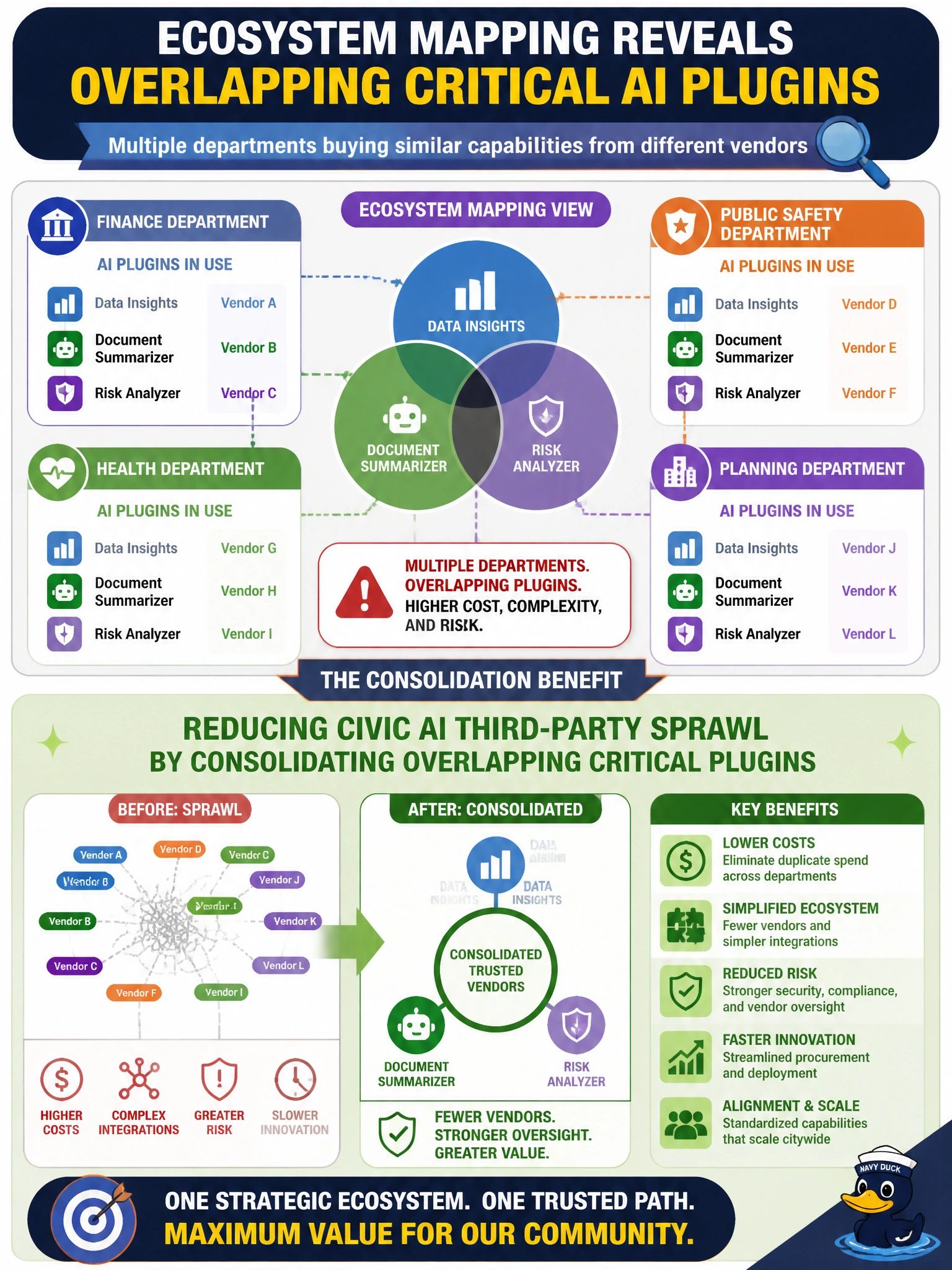
Ecosystem mapping shows multiple departments buying overlapping critical AI plugins from different vendors. What consolidation benefit should leadership cite?
Select an answer to reveal the explanation.
Short Explanation
Five plugins doing the same job is sprawl—more doors to watch. Consolidate the critical ones.
Full Explanation
Ecosystem mapping that reveals multiple departments buying overlapping critical AI plugins from different vendors supports a consolidation benefit: reducing civic AI third-party sprawl. Overlapping plugins multiply attack surface, contracts, patch burden, and allow-list complexity across the municipality. Leadership should cite consolidation and standardized allow lists as risk reduction—not decentralized vendor management for license renewals. Decentralized vendor management does not shrink third-party sprawl.
Decentralized vendor management for license renewals fails by concept: keeping renewals fragmented does not reduce plugin count. Maintaining parallel vendor integrations is an interoperability workaround, not portfolio rationalization. Preserving separate critical plugin procurement workflows is workflow autonomy, not overlap reduction. Distractors emphasize fragmented ownership over ecosystem reduction.
Exam caveat: consolidation must preserve necessary functional diversity—merging to a single vendor without residual capacity or exit options can create concentration risk; prefer a minimal approved set with clear owners. Operational check: inventory critical plugins by capability, identify duplicates across departments, select a primary approved plugin per capability with security review, deprecate redundant vendors on a timeline, and update the city allow list to match the consolidated set.