
During a test, an assessor bot's logs show memory reads of another caseworker's private notes. What failure is indicated?
Select an answer to reveal the explanation.
Short Explanation
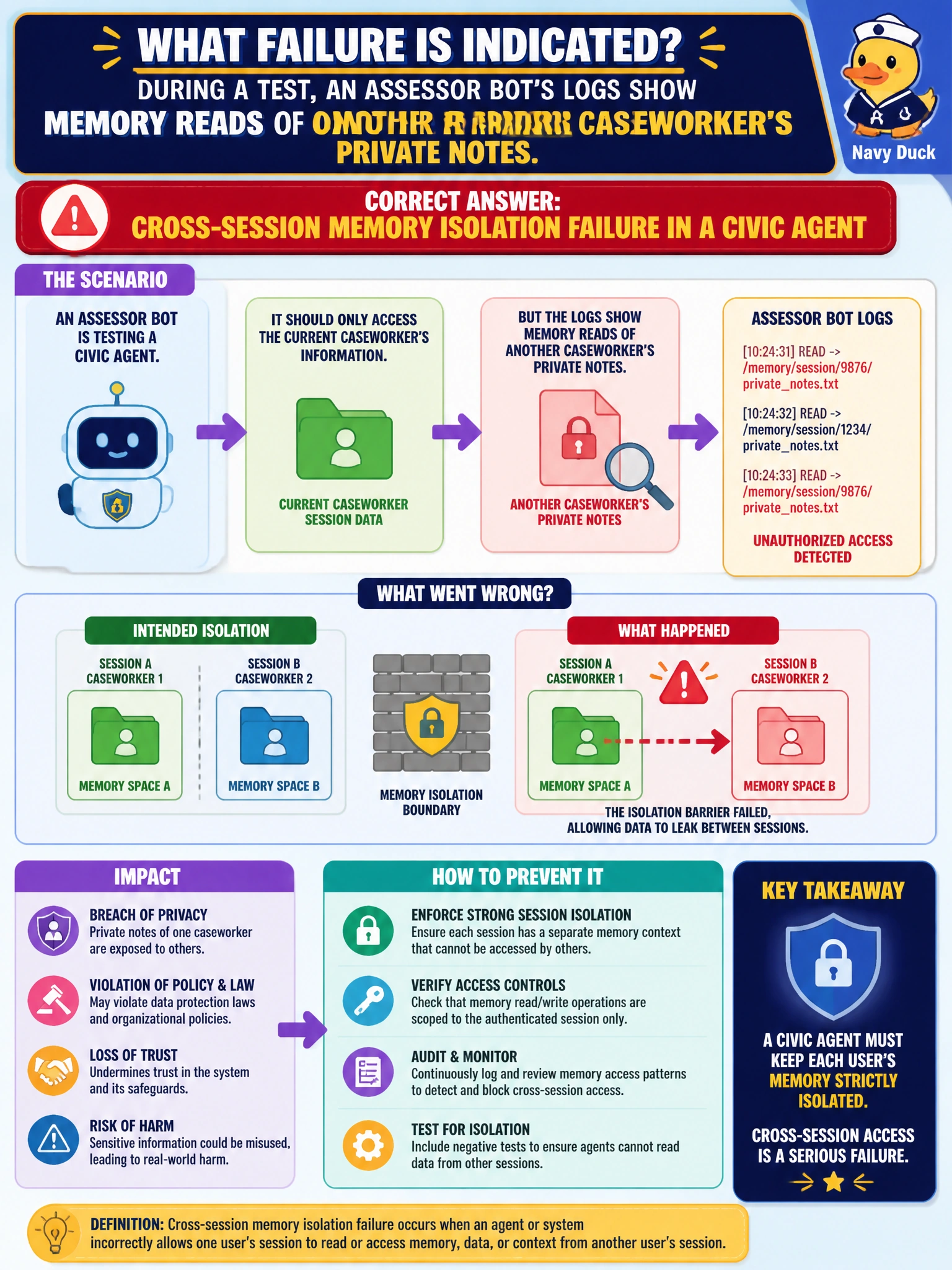
One caseworker's private notes leaking into another's bot session is a memory fence that fell down. You should call it cross-session isolation failure—it's not prompt-cache reuse, excessive tool scope, or training-data memorization.
Full Explanation
Assessor-bot logs that show memory reads of another caseworker's private notes indicate a cross-session memory isolation failure in a civic agent. Agents that retain conversation state, retrieval caches, or tool scratchpads must enforce strict tenancy and session boundaries so one worker's case notes cannot appear in another's context window or memory store. In municipal social services, leaked notes can expose protected personal data, undermine due process, and violate retention and confidentiality rules even when the underlying model itself was not compromised in a classic sense. Authorized tests that observe cross-user memory reads prove the isolation control failed and should be severity-rated as a confidentiality and integrity defect in the agent platform. Reusing prompt caches across concurrent assessments, granting excessive tool scope that reaches other case files, or relying on training-data memorization of prior records do not restore logical memory fences between agent sessions. Exam items often contrast physical office privacy with true session isolation; pick the technical isolation failure. Caveat: isolation must cover vector stores, shared tool caches, and multi-agent scratchpads—not only the chat UI thread ID—because leakage frequently occurs one layer below the conversation surface. Operational check: run two authenticated caseworker sessions with distinct sensitive notes, attempt cross-retrieval via the agent, and confirm telemetry shows zero unauthorized memory reads across session or tenant keys.