
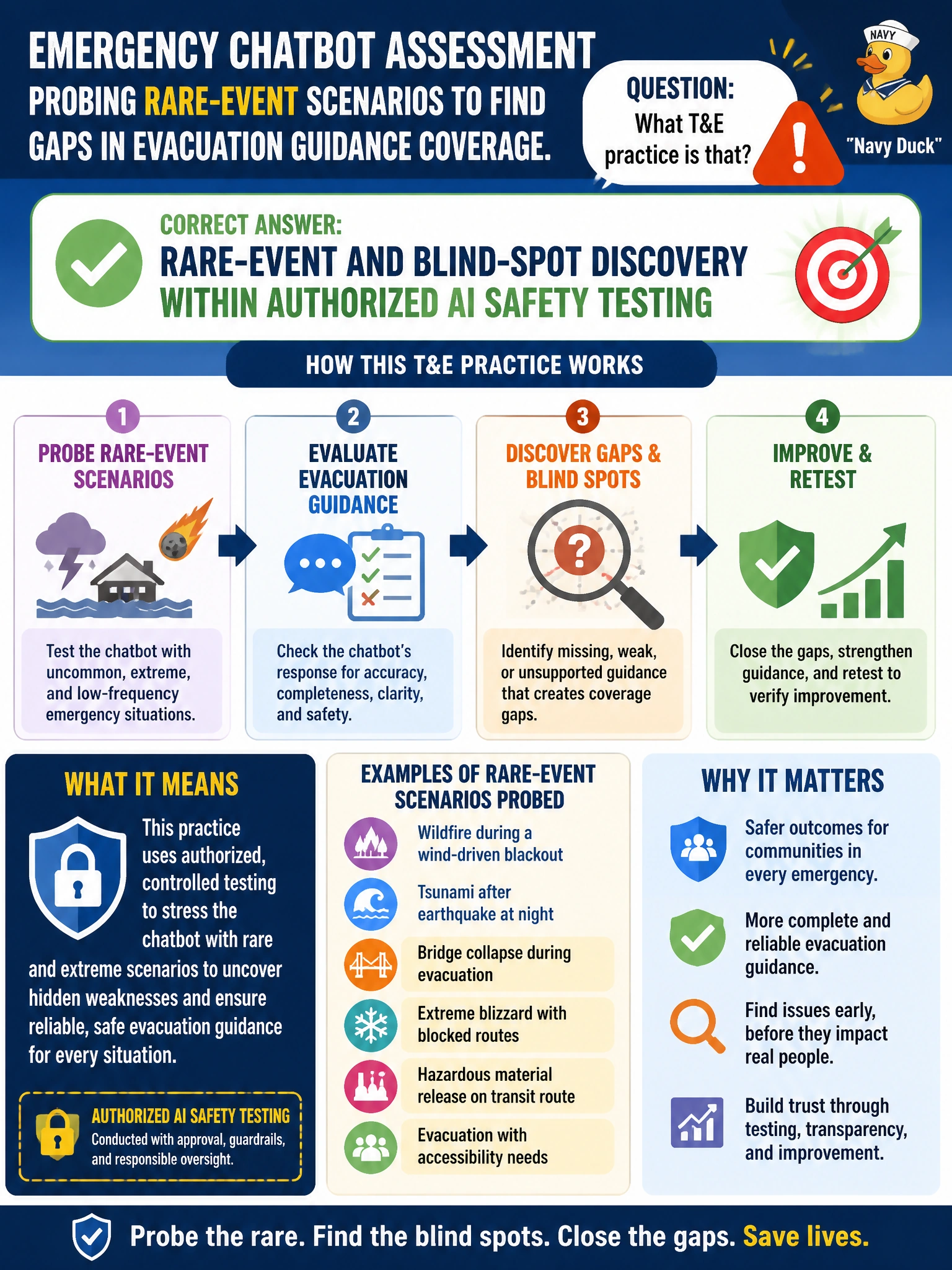
An emergency chatbot assessment probes rare-event scenarios to find gaps in evacuation guidance coverage. What T&E practice is that?
Select an answer to reveal the explanation.
Short Explanation
Rare-event probes are like checking the exit maps for the weird corners nobody walks—authorized safety T&E looking for blind spots in guidance, not regression-testing scenarios you've already validated.
Full Explanation
Probing rare-event scenarios to find gaps in evacuation guidance coverage during an emergency chatbot assessment is rare-event and blind-spot discovery within authorized AI safety testing. The practice stresses uncommon but plausible situations to reveal missing guidance, unsafe refusals, overconfident fabrications, or uncovered branches in civic emergency content before those gaps appear in a real incident. Correct T&E framing seeks coverage holes and unsafe edge behavior, not facilities shopping or memorabilia tasks. Regression testing of previously validated evacuation scenarios only re-checks what the chatbot already passed and will not surface new blind spots. Routine functional validation using representative everyday evacuation inquiries only exercises common paths and cannot reveal rare-event blind spots or missing guidance in uncommon evacuation scenarios. Throughput and latency measurement under expected peak query volume measures system performance under load rather than evaluating rare-event coverage gaps or unsafe emergency guidance behavior; this does not describe rare-event or blind-spot discovery. Exam caveat: rare-event probes remain inside authorized safety T&E scope; they evaluate coverage and safe behavior, not live disruption of emergency operations or publication of panic-inducing false scenarios. Operational check: maintain a rare-event scenario library for evacuation and shelter questions, score missing or unsafe answers with clear oracles, feed gaps to content and policy owners, retest after knowledge updates, and include blind-spot discovery results in the emergency chatbot's release evidence package for EOC stakeholders.