
A purple team needs to report how injection could lead to a tool call and then a ticket update on a civic agent. How should they document it for leadership?
Select an answer to reveal the explanation.
Short Explanation
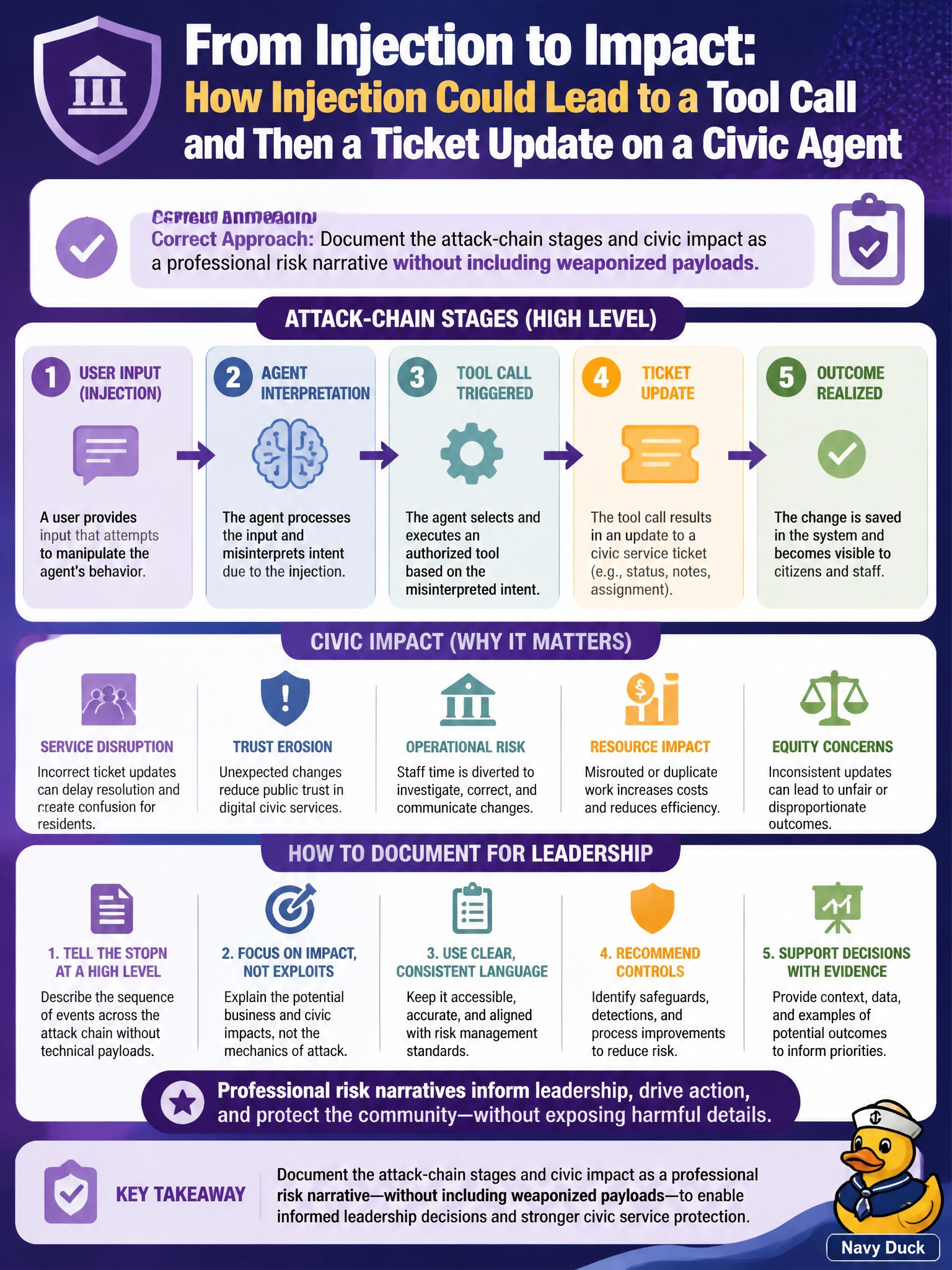
Leaders need the storyboard—injection to tool call to ticket change—and the blast radius, not an appendix stuffed with session tokens or a public replay guide. Don't split the chain into helpdesk tickets or post exploit steps for residents; write it like an incident narrative and keep the ammo locked up.
Full Explanation
When a purple team must report how injection could lead to a tool call and then a ticket update on a civic agent, they should document the attack-chain stages and civic impact as a professional risk narrative without including weaponized payloads. Leadership needs the storyboard—injection → tool invocation → ticket mutation—and the blast radius for residents and operations so controls (tool allowlists, human approval, output validation) can be funded. Professional reporting separates evidence held in secured repositories from executive narratives that must not spread working exploit material.
Attaching redacted tool-call logs with full session tokens in the appendix fails conceptually and operationally: even redacted logs expose live session tokens and turn validation material into a secrets-leakage channel. Recording the injection event and ticket update as separate helpdesk tickets fails because it fractures the causal chain into support tasks, leaving leadership without the staged narrative needed to fund controls. Distributing the step-by-step exploit replay guide on the civic engagement portal fails as unsafe disclosure: it publishes a replayable attack to residents instead of delivering a controlled risk briefing to leadership.
Exam caveat: Executive AI risk reporting wants staged attack chains and civic impact without live payloads or credentials. Avoid live-token appendices, public replay guides, and helpdesk-ticket splits that hide the chain.
Operational check: write a chain narrative with preconditions, stages, and impact; store payloads only in controlled evidence vaults; strip secrets from slides; and include recommended control gates between injection, tool call, and ticket update so leadership can prioritize fixes.