
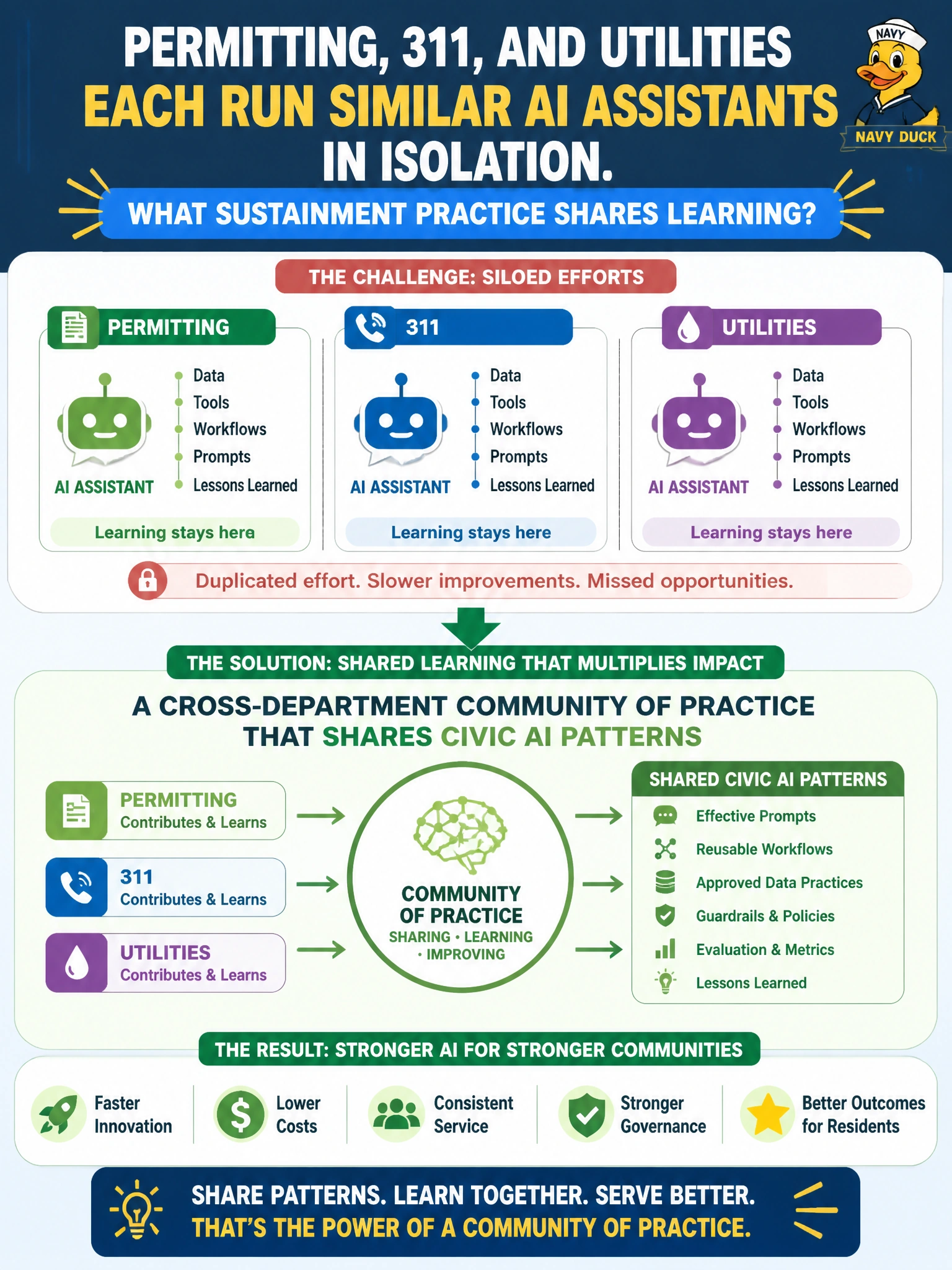
Permitting, 311, and utilities each run similar AI assistants in isolation. What sustainment practice shares learning?
Select an answer to reveal the explanation.
Short Explanation
Don’t reinvent the chatbot wheel in three silos. Stand up a community of practice so permitting, 311, and utilities trade what works.
Full Explanation
When permitting, 311, and utilities each run similar AI assistants in isolation, the sustainment practice that shares learning is a cross-department community of practice that shares civic AI patterns. Communities of practice reduce duplicated mistakes on evaluation design, content stewardship, escalation paths, and equity checks while preserving departmental ownership of resident services. Shared patterns accelerate safe reuse across the municipal enterprise and make central oversight coherent. Forbidding departments from discussing AI patterns with each other fails by enforcing silos that multiply cost and produce inconsistent resident experiences for similar requests. Requiring every department to invent unique processes with zero reuse fails efficiency and makes citywide risk and value reporting nearly impossible. Centralizing all conversation only through vendor account managers fails because vendors are not a substitute for peer municipal learning and may discourage comparisons that threaten renewals. Exam caveat: both extreme isolation and vendor-mediated "sharing" appear as distractors; a peer civic community of practice is the governance-friendly mechanism. Operational check: charter a civic AI CoP with a facilitator from the AI program office, meet on a fixed cadence, publish reusable playbooks, and track which patterns departments adopt.