
Critical chatbot operations knowledge lives only with the vendor’s engineers. What sustainment practice should the city require?
Select an answer to reveal the explanation.
Short Explanation
If only the vendor knows the switches, you’re renting your own flashlight. Demand knowledge transfer so city staff can keep the lights on.
Full Explanation
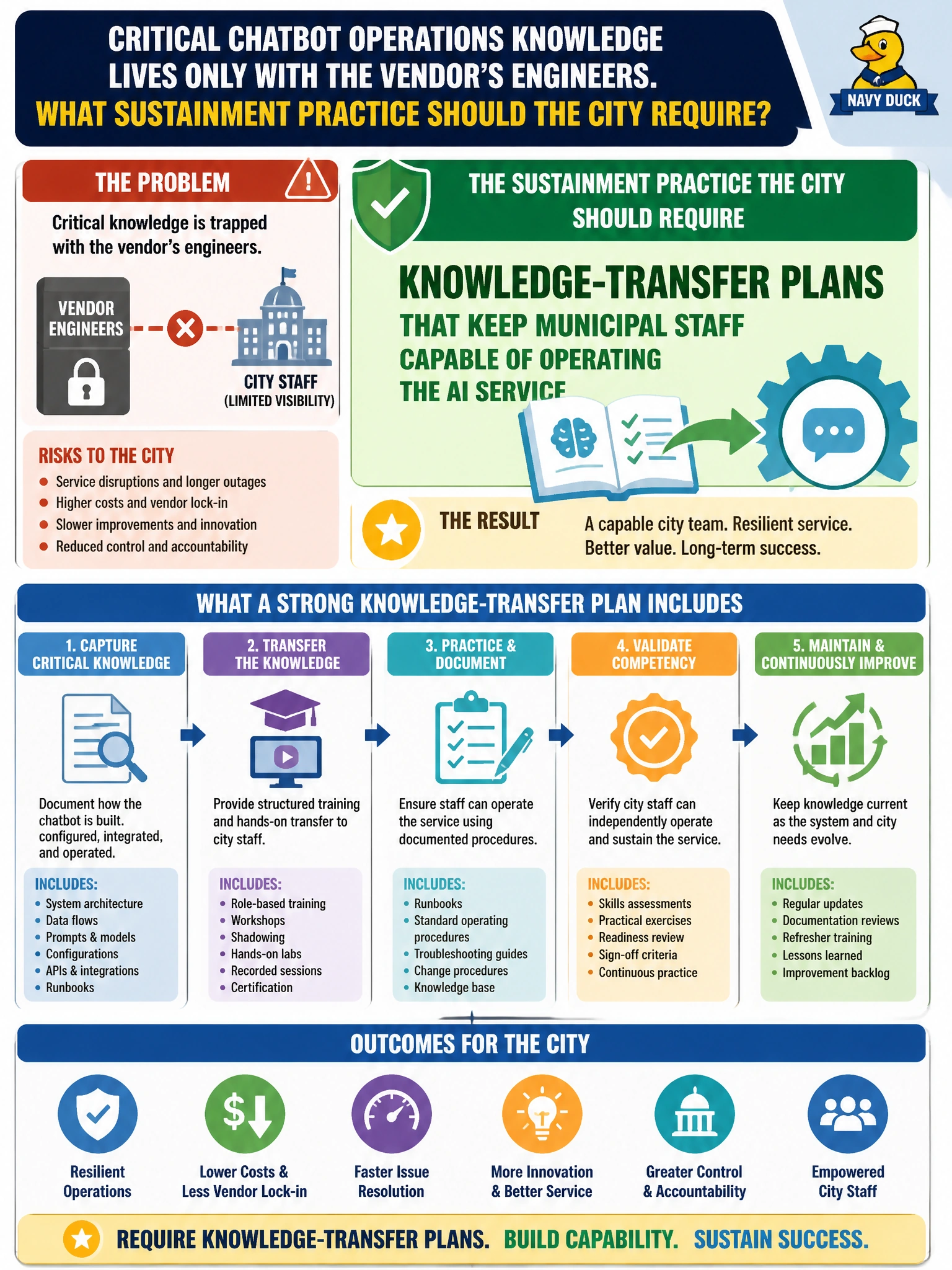
When critical chatbot operations knowledge lives only with the vendor's engineers, the city should require knowledge-transfer plans that keep municipal staff capable of operating the AI service. Public services cannot depend on a black box only outsiders can restart, tune, or explain after an incident. Knowledge transfer covers runbooks, prompt/content change procedures, monitoring playbooks, escalation contacts, and hands-on drills with city staff. Exclusive reliance on the vendor with no internal documentation fails because contract disputes, staff turnover, or delayed response leave residents without service and the city without auditability. Deleting runbooks to reduce the city's document footprint fails by confusing minimalism with risk reduction and destroys institutional memory. Rotating vendors monthly so no one retains operational memory fails because churn maximizes knowledge loss and configuration error. Exam caveat: "vendor best practices" distractors may imply outsourcing equals sustainment; civic ownership of operating knowledge remains required. Operational check: put knowledge-transfer deliverables and acceptance tests in the contract, schedule shadow operations with city stewards, store runbooks in city-controlled systems, and verify a city employee can execute critical procedures without vendor screenshare.