
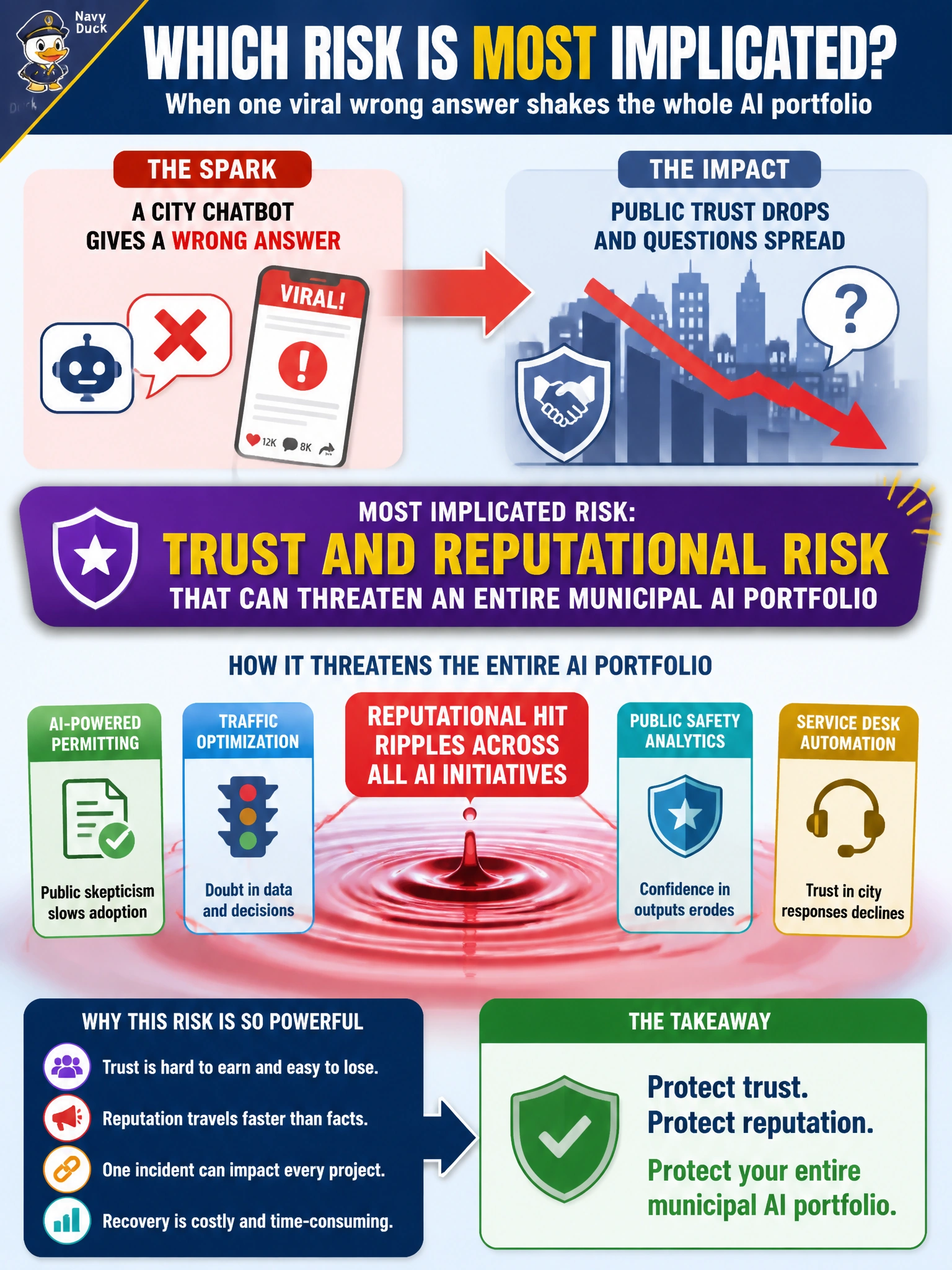
After a viral wrong answer from a city chatbot, public trust drops and the wider AI portfolio is questioned. Which risk category is most implicated?
Select an answer to reveal the explanation.
Short Explanation
One viral wrong answer can make every AI project look guilty by association. That is trust risk—reputation is a shared city asset, so quality controls protect the whole portfolio.
Full Explanation
After a viral wrong answer from a city chatbot causes public trust to drop and the wider AI portfolio to be questioned, the risk category most implicated is trust and reputational risk that can threaten an entire municipal AI portfolio. Public failures are rarely siloed in residents’ minds; one visible error becomes a referendum on the city’s competence with AI. The correct category works because it explains portfolio contagion: quality, disclosure, and escalation failures in one service can freeze funding and sponsorship for unrelated projects.
Claiming the risk only affects the wallpaper in the IT closet fails because reputational harm is external and political, not facilities décor. Guaranteeing that viral errors increase resident confidence fails conceptually—the stem describes trust dropping, which is the opposite effect. Limiting risk to the chatbot’s idle animation speed fails because animation cosmetics are irrelevant to factual accuracy and public confidence after a high-visibility mistake.
Exam caveat: trust risk is mitigated by more than apologies—content governance, citation to authoritative sources, clear ‘AI-assisted’ labeling, human escalation, and kill switches matter; over-claiming chatbot authority worsens contagion. Operational check: after an incident, publish corrected information, pause or constrain the bot if needed, run a root-cause on retrieval/content controls, and brief portfolio sponsors on cross-project implications before resuming expansion.