
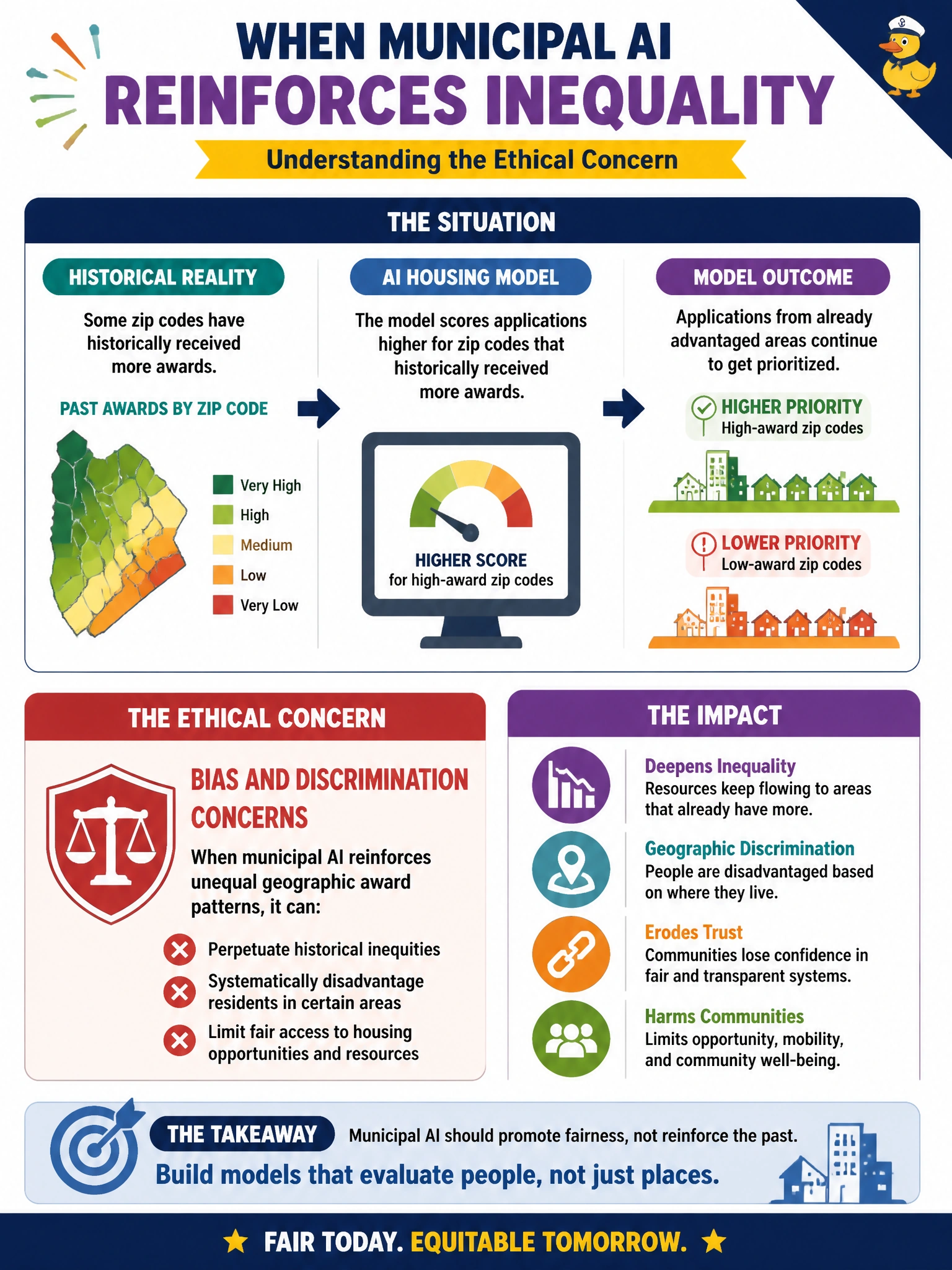
A housing model scores applications higher for zip codes that historically received more awards, risking bias amplification. What ethical concern is raised?
Select an answer to reveal the explanation.
Short Explanation
When yesterday’s winners keep winning in the model, you’re looking at bias amplification. Historical zip patterns can lock neighborhoods out again. You'll confuse the issue if you're picturing penalties for incomplete coordinate inputs, because that's about missing location data while this scoring is boosting historically favored zips again.
Full Explanation
Historical award geography can encode inequity. Scoring housing applications higher for zip codes that historically received more awards raises bias and discrimination concerns: the model amplifies past allocation patterns rather than evaluating current need or eligibility on neutral grounds. Neighborhoods previously under-awarded can be locked out again, turning descriptive history into a normative preference inside municipal AI decision support. Focusing on bias and discrimination concerns when municipal AI obscures demographic shifts in geographic datasets is misplaced, because the ethical concern at issue is bias amplification in who is scored higher based on geographic history, not whether stale data hides changing neighborhood demographics. Pointing to bias and discrimination concerns when municipal AI misaligns geographic boundaries and census tracts is off-target, because the scenario involves actively scoring higher for historically favored zips rather than mapping errors between zip codes and census geography. Invoking bias and discrimination concerns when municipal AI penalizes incomplete geographic coordinate inputs misses the point, because the scenario is about active bias amplification in scoring higher for historically favored zips, not about disadvantaging applicants with missing or malformed location data. Exam caveat: removing a zip feature does not automatically eliminate proxy bias (income, credit, or other correlates may remain). The tested concern is bias amplification via historical geography, not a claim that one feature fix solves fairness. Operational check: audit score contributions by geography; compare award rates across neighborhoods before and after model use; involve equity and housing policy owners before deploying any geographic historical signal as a scoring feature.
Prefer to study offline? Printable PDF study book + test engine ($7.50, unofficial). These questions stay free here.