
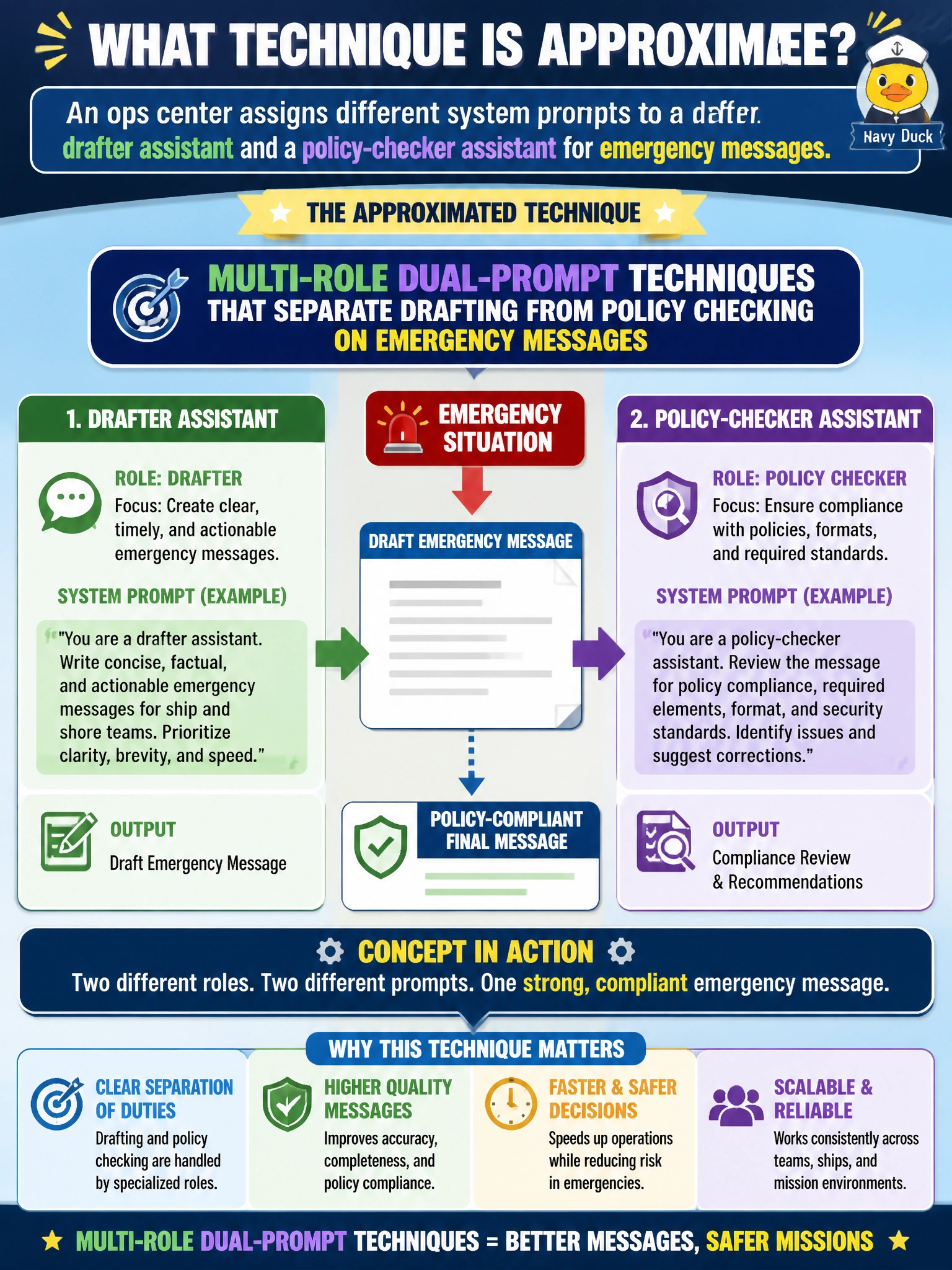
An ops center assigns different system prompts to a drafter assistant and a policy-checker assistant for emergency messages. What technique is approximated?
Select an answer to reveal the explanation.
Short Explanation
One bot drafts, another checks policy—two roles, two prompts. That dual setup approximates review for emergency messages. When you've got a shared prompt for both roles you'll still have one instruction set, not two different prompts, few-shot exemplars don't give you distinct drafter and checker roles, and consensus voting just blends outputs without a dedicated policy check.
Full Explanation
Emergency messaging benefits from separated roles in prompting. Assigning different system prompts to a drafter assistant and a policy-checker assistant approximates multi-role dual-prompt technique: one role optimizes clarity and speed of the alert draft; the other enforces policy constraints (required elements, prohibited claims, approval gates). Separation reduces the chance that a single prompt both invents wording and rubber-stamps it.
Dual-role shared-prompt techniques that separate drafting from policy checking on emergency messages fail because a shared prompt gives both assistants the same instructions, not two assistants with different system prompts for drafter versus policy-checker. Dual-prompt few-shot exemplar techniques that separate drafting from policy checking on emergency messages fail because exemplars guide style but do not create distinct drafter and policy-checker assistants with different system prompts. Dual-prompt consensus voting techniques that separate drafting from policy checking on emergency messages fail because voting aggregates parallel outputs toward consensus rather than assigning different system prompts for drafting versus policy checking.
Exam caveat: dual prompts approximate human writer/reviewer workflows; they do not replace official authorization to release emergency messages. Policy-checker output is advisory until an authorized PIO or incident lead approves.
Operational check: maintain distinct system prompts for draft versus check; require the checker to list missing mandatory elements; block release until a human clears checker findings against the emergency communications plan.
Prefer to study offline? Printable PDF study book + test engine ($7.50, unofficial). These questions stay free here.