
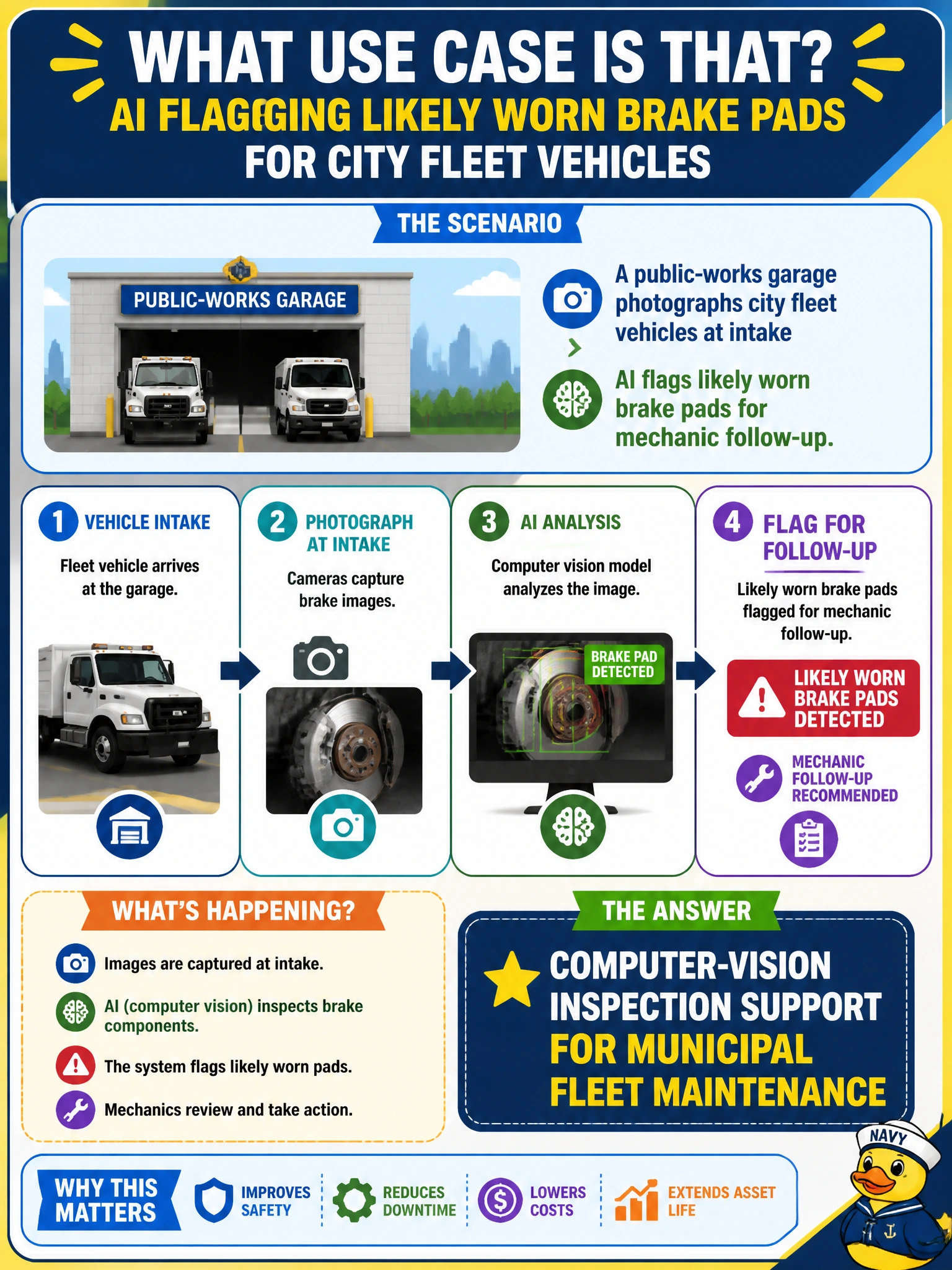
A public-works garage photographs city fleet vehicles at intake and wants AI to flag likely worn brake pads for mechanic follow-up. Which use case is that?
Select an answer to reveal the explanation.
Short Explanation
The intake camera is like a second set of eyes on the brake pads—vision AI waves a flag, then a mechanic still confirms the call. That is industrial-style inspection mapped to civic fleet work. You'll see prognostic forecasting, diagnostic analysis, and ongoing monitoring don't catch current wear when you're flagging worn brake pads.
Full Explanation
When a public-works garage photographs city fleet vehicles at intake and wants AI to flag likely worn brake pads for mechanic follow-up, the matching use case is computer-vision inspection support for municipal fleet maintenance. Models trained or tuned on visual wear indicators can highlight candidate defects in intake photos so technicians prioritize inspection, which maps manufacturing-style visual QC onto civic fleet workflows. The mechanic still confirms wear, safety criticality, and repair disposition; the system does not certify roadworthiness by itself. Computer-vision prognostic support for municipal fleet maintenance predicts future failure or remaining useful life rather than inspecting brake-pad wear in intake photos for mechanic follow-up. Computer-vision diagnostic support for municipal fleet maintenance determines the underlying cause of a reported fault rather than flagging currently visible brake-pad wear in intake photos for mechanic follow-up. Computer-vision monitoring support for municipal fleet maintenance provides ongoing continuous tracking over time rather than flagging brake-pad wear in a point-in-time intake photo for safety follow-up. Exam caveat: Industrial and infrastructure AI often appears as vision-based inspection assist. Correct answers keep a human-in-the-loop for safety-critical judgments; distractors pull from prognostic forecasting, diagnostic analysis, or monitoring themes. Operational check: Treat model flags as work orders for verification, calibrate false-positive rates so mechanics trust alerts, store photos with vehicle IDs for audit, and prohibit automatic "pass/fail" without technician sign-off before the vehicle returns to service.
Prefer to study offline? Printable PDF study book + test engine ($7.50, unofficial). These questions stay free here.