
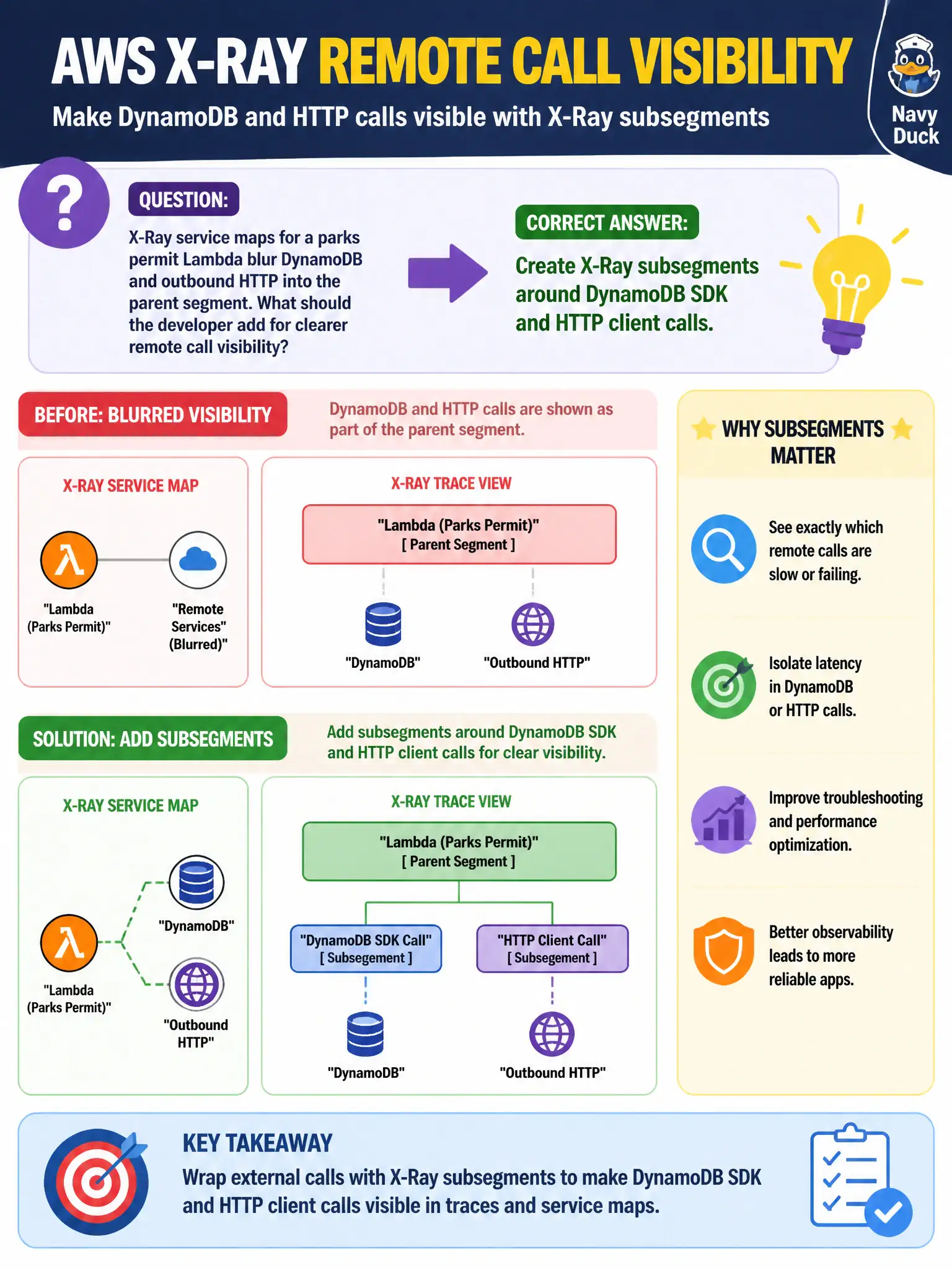
X-Ray service maps for a parks permit Lambda blur DynamoDB and outbound HTTP into the parent segment. What should the developer add for clearer remote call visibility?
Select an answer to reveal the explanation.
Short Explanation
Think of the parent segment as the whole grocery trip and subsegments as each aisle stop. Wrap DynamoDB and HTTP client calls so the map shows those hops clearly. Suddenly you see which remote stop ate the clock.
Full Explanation
When traces for a parks permit Lambda blur DynamoDB and outbound HTTP into the parent segment, the developer should create X-Ray subsegments around DynamoDB SDK and HTTP client calls. Subsegments carve remote work out of the parent so service maps and timelines show where time went. Without them, municipal developers see one opaque blob instead of clear remote call visibility.
Removing all instrumentation so maps stay simple destroys the diagnostic value needed during incidents.
Storing every request body in an annotation without wrapping remote calls neither times dependencies nor follows annotation best practices for large payloads.
Enabling VPC Flow Logs instead of application tracing shows network flows, not DynamoDB SDK timing inside the function.
Exam caveat: Subsegments are how developers annotate remote calls for clearer X-Ray timelines on Associate questions.
Operational check: Add subsegments around DynamoDB and HTTP calls, deploy to a test alias, open a trace, and confirm separate timing for each remote dependency before promoting the parks permit function. Keep the civic/municipal context in mind: parks permitting mixes database and vendor HTTP; blurred segments slow root-cause analysis.