
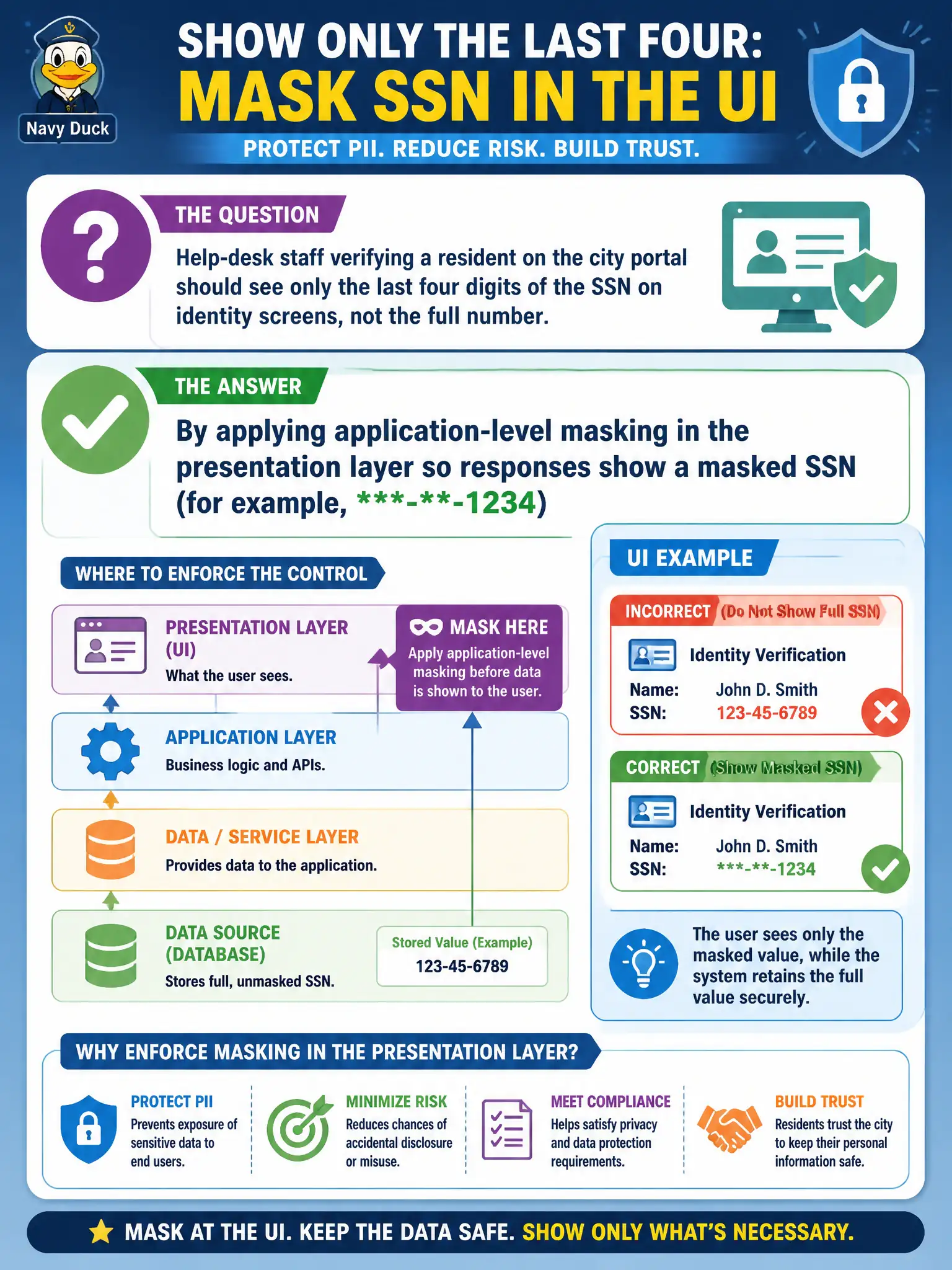
Help-desk staff verifying a resident on the city portal should see only the last four digits of the SSN on identity screens, not the full number. Where should that control be enforced for the UI?
Select an answer to reveal the explanation.
Short Explanation
The help desk needs a peek at the last four, not the whole vault combination on screen. Mask in the app UI — show *--1234 — instead of shipping full SSNs to browsers or inboxes.
Full Explanation
Help-desk staff verifying a resident on the city portal should see only a masked SSN such as *--1234 on identity screens. That control belongs in the application presentation layer: responses returned to the UI apply masking so agents never receive the full number in ordinary verification workflows. Masking at display time is a classic municipal privacy pattern—support can confirm the last four digits without turning every help-desk session into a full SSN disclosure.
Disabling HTTPS so intermediaries can truncate SSNs in transit fails because removing TLS increases interception risk and is not a legitimate display-masking control. Storing only the last four in KMS and discarding the real SSN forever before enrollment completes fails conceptually when the city still needs the full SSN for lawful backend purposes; the question is about UI display, not destroying source data. Emailing full SSNs to agents and asking them to remember only four digits fails because it expands distribution of cleartext SSNs.
Exam caveat: masking in the UI does not replace authorization—APIs that still return full SSNs to the browser can be inspected despite a pretty mask in React. Operational check: inspect network responses for identity screens, confirm only masked values leave the server for help-desk roles, and reserve full-SSN access for separately authorized backend jobs.