
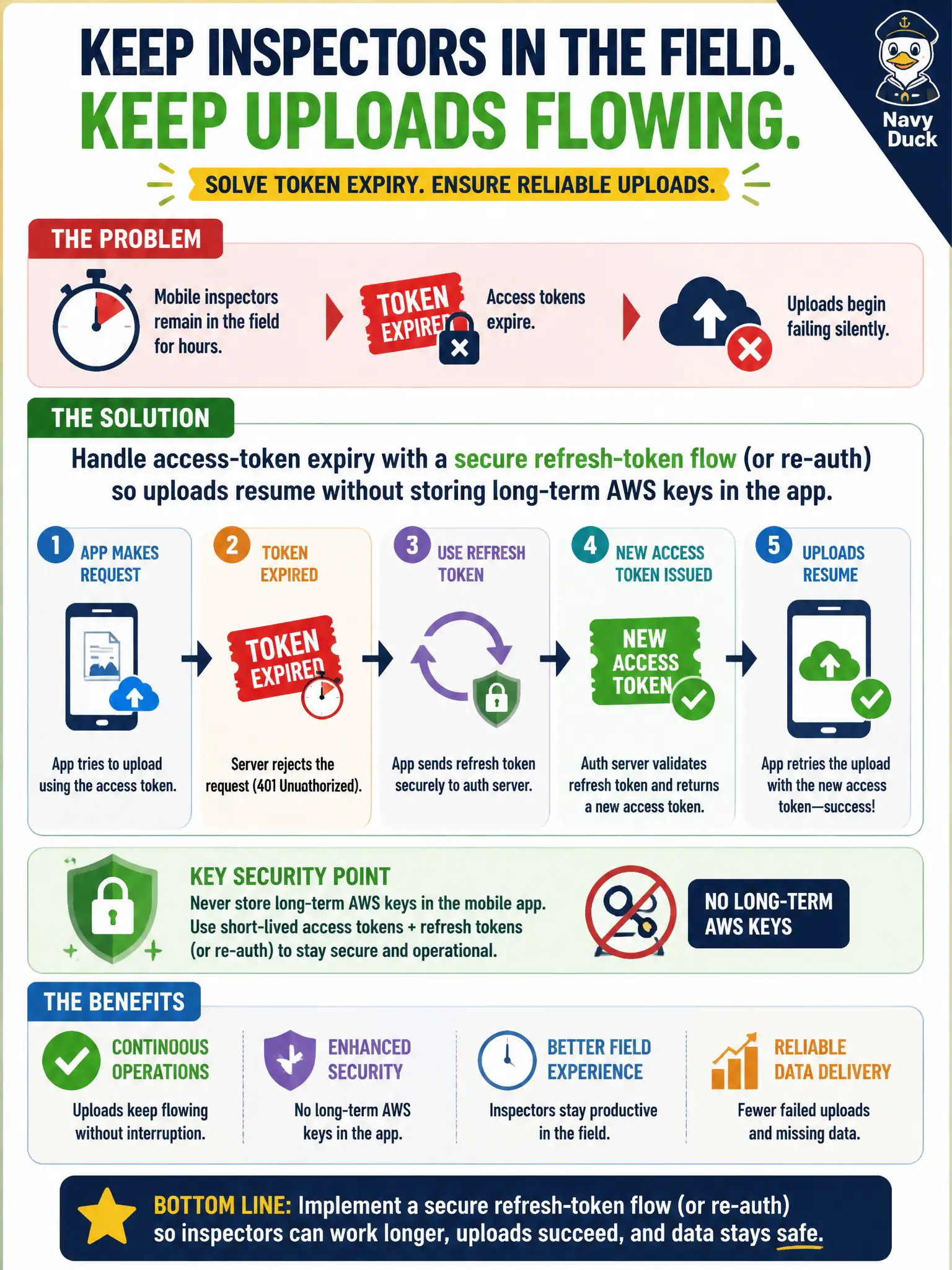
Mobile inspectors remain in the field for hours; access tokens expire and uploads begin failing silently. What should the client implement?
Select an answer to reveal the explanation.
Short Explanation
Field tablets need a refresh handshake when the access token times out—like renewing a parking permit mid-shift. Do not bake IAM keys into the app or pretend expiry never happens. Silent retries with a dead token just fill the logs with ghosts.
Full Explanation
Mobile inspectors working for hours will outlive typical OAuth access-token lifetimes. The client must handle expiry with a secure refresh-token flow or an interactive re-authentication so uploads resume with a new access token—without embedding long-term AWS access keys in the mobile binary. Many “silent upload failures” in the field are simply ignored 401 responses from expired bearer tokens.
Disabling token expiry permanently for all citizen and staff apps weakens session security across the city’s mobile estate. Embedding a long-term IAM access key in the app binary is unsafe, difficult to rotate, and bypasses Cognito session controls. Ignoring 401 responses and retrying the same expired access token indefinitely cannot succeed and surfaces as intermittent field defects.
Exam caveat: store refresh tokens in platform-secure storage, respect revocation and refresh rotation, and never log tokens; Cognito identity pools may still exchange refreshed user tokens for temporary AWS credentials when S3 uploads require SigV4. Operational check: let an access token expire in a test build, trigger an upload, confirm the app refreshes or prompts re-auth, and verify the upload completes with no static AKIA keys present in the application package.