
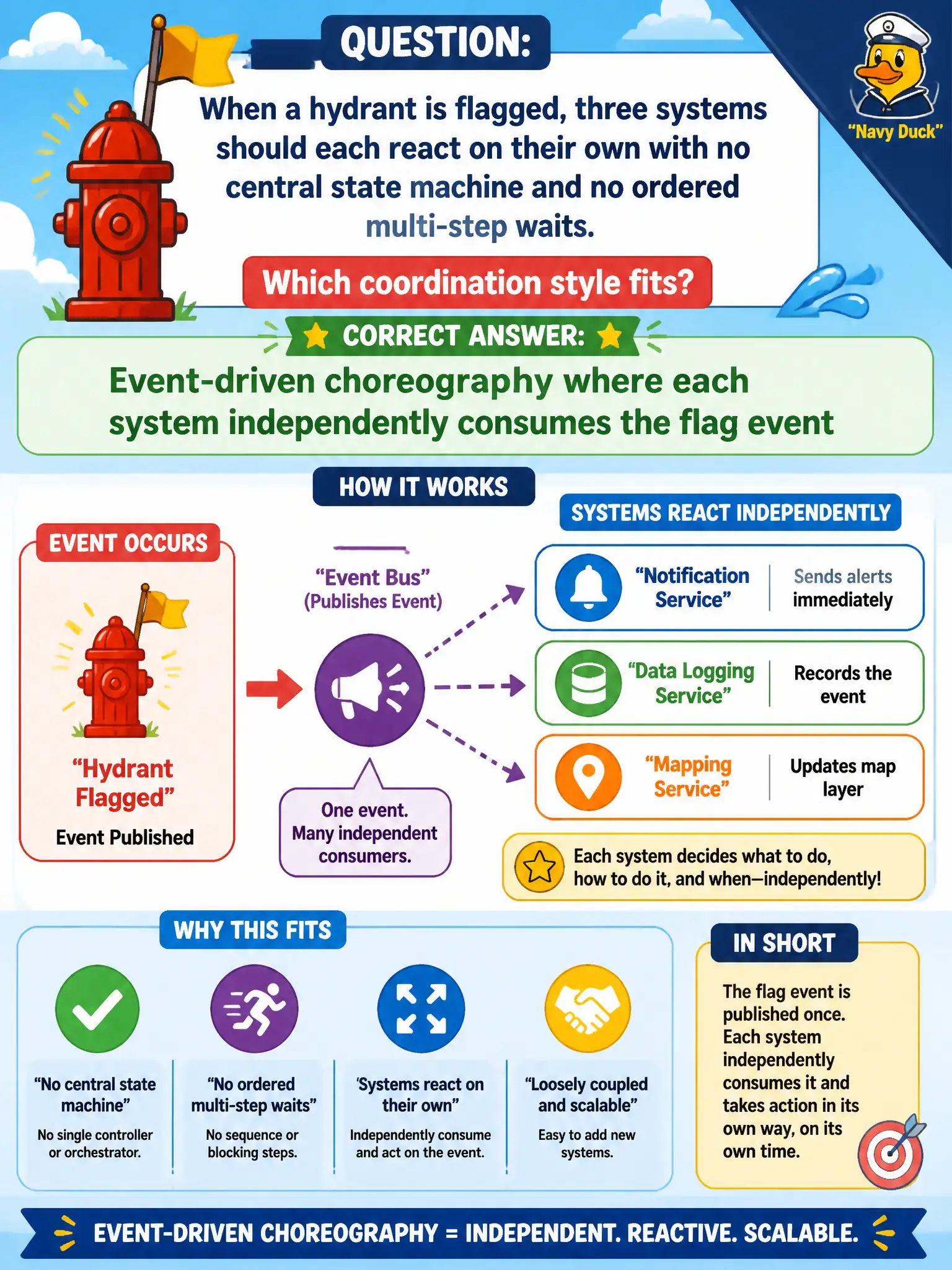
When a hydrant is flagged, three systems should each react on their own with no central state machine and no ordered multi-step waits. Which coordination style fits?
Select an answer to reveal the explanation.
Short Explanation
Three neighbors each hearing the same smoke alarm and grabbing their own extinguisher—that's choreography. Publish the hydrant flag and let each system own its reaction without a central conductor. Step Functions shines when you need ordered waits; SSH cron and lock-step DynamoDB turns add coupling you don't need here.
Full Explanation
When a hydrant is flagged and three systems should each react on their own with no central state machine and no ordered multi-step waits, use event-driven choreography where each system independently consumes the flag event. Work-order, GIS update, and public-notify services subscribe and act without a conductor. Extensibility is high: a fourth consumer for council dashboards can subscribe later without rewriting the flag publisher.
Step Functions orchestration with a single state machine owning every reaction contradicts “no central state machine.” A monolithic EC2 cron that SSHes into all three systems in a fixed sequence is brittle polling/orchestration by remote control. A DynamoDB lock table that forces the three systems to take turns writing imposes artificial serialization the scenario does not need.
Exam caveat: if later you need compensated multi-step transactions with a single audit timeline, revisit orchestration. Choreography requires clear event contracts and per-consumer DLQs.
Operational check: publish hydrant-flagged events; verify three independent consumers; add a fourth subscriber with no publisher change; and ensure duplicate events do not create duplicate work orders.