
A multi-step business-grant approval needs wait states for human review, parallel document checks, and clear success and fail paths. Which AWS service should orchestrate that workflow?
Select an answer to reveal the explanation.
Short Explanation
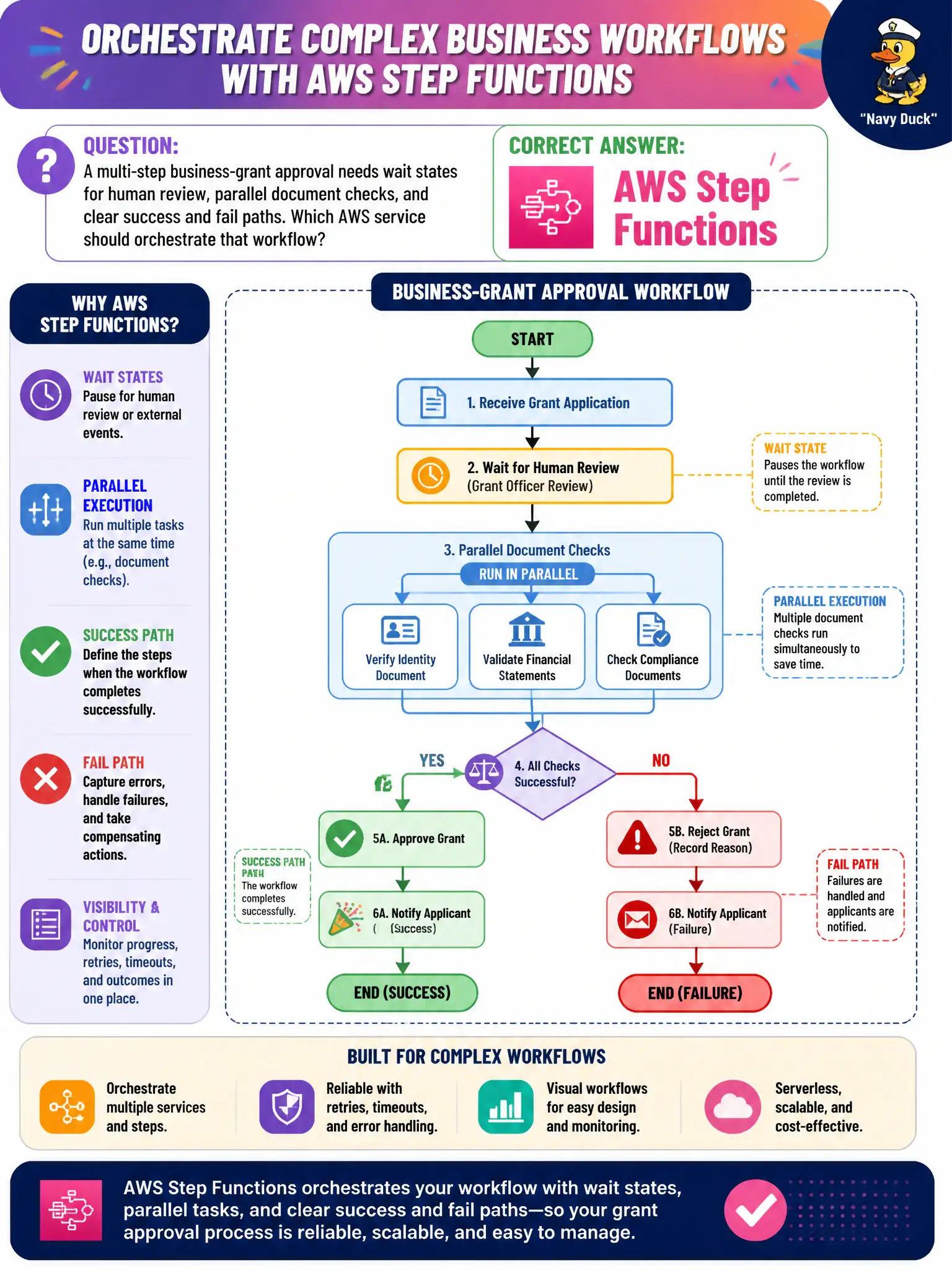
Picture a city clerk's checklist with sticky notes for "waiting on signatures" and two inspectors working at once. Step Functions owns that long-running state machine—waits, parallels, and success/fail branches—without you inventing it in queues alone. SQS, alarms, and bare S3 events are messengers, not the orchestra conductor.
Full Explanation
A multi-step business-grant approval that needs wait states for human review, parallel document checks, and clear success and fail paths should be orchestrated with AWS Step Functions. State machines express sequential and parallel branches, wait for callbacks or Task Tokens during clerk review, retry per state, and expose execution history for auditors. That matches how grant offices already think about stages without inventing a custom orchestrator on EC2.
Amazon SQS alone with visibility timeouts as the only control plane can buffer tasks but does not natively model parallel branches, human wait states, and a single inspectable workflow graph. CloudWatch Alarms restarting EC2 instances on each approval stage confuse infrastructure healing with business orchestration. Chaining S3 event notifications with no central state loses end-to-end visibility and makes compensation logic harder.
Exam caveat: Express versus Standard workflows trade duration, history, and exactly-once semantics—choose Standard for long human waits and auditable grant histories. Step Functions still calls your Lambdas/APIs; it does not replace domain services.
Operational check: model human review as a wait/callback state; run document checks in parallel; define explicit Fail/Succeed terminal states; grant auditors read access to execution history; and alert on executions stuck past SLA.