
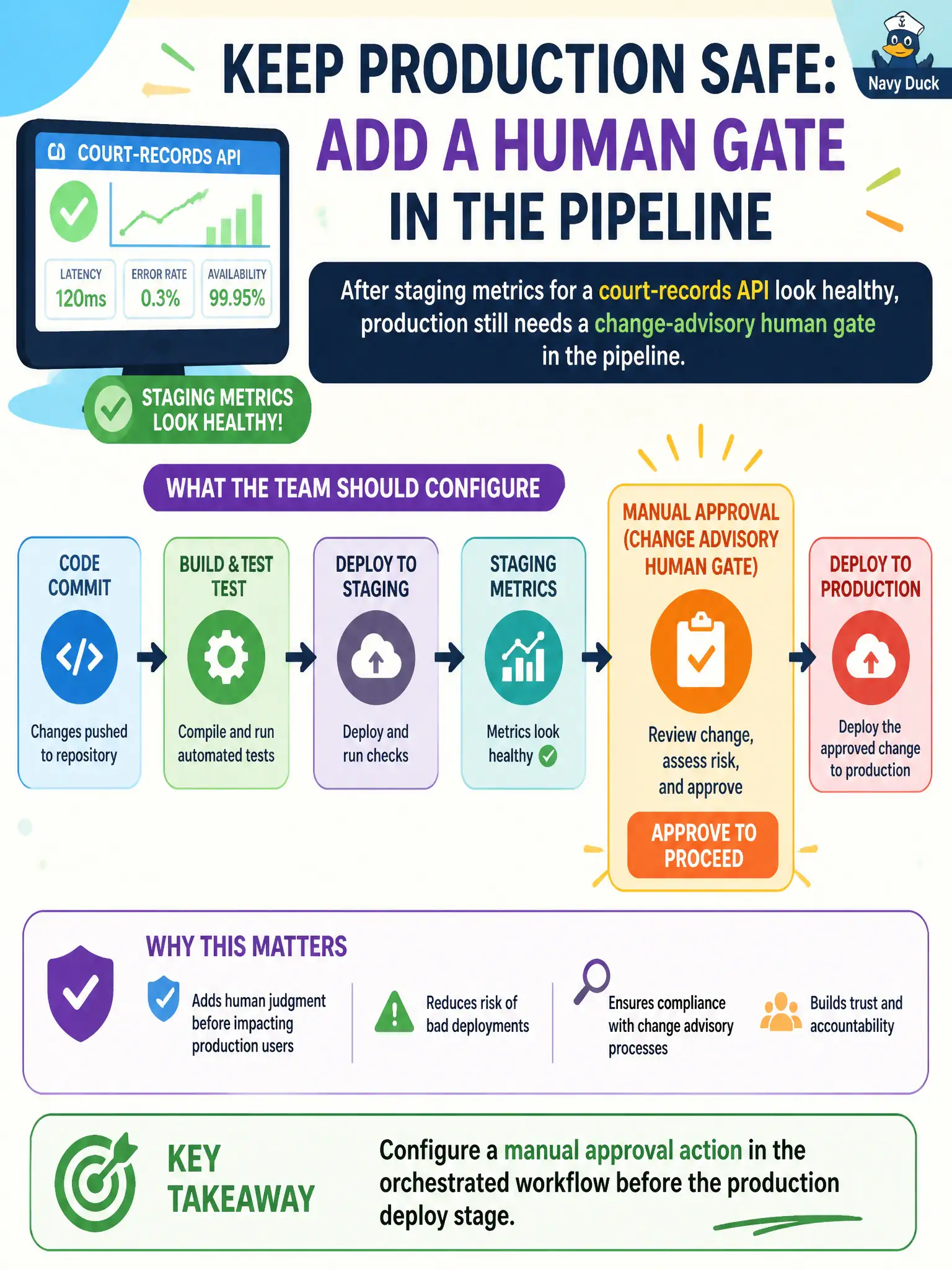
After staging metrics for a court-records API look healthy, production still needs a change-advisory human gate in the pipeline. What should the team configure?
Select an answer to reveal the explanation.
Short Explanation
Healthy staging meters are great—but courts still want a human stamp before production. Park a manual approval action in the pipeline so change-advisory gets a say.
Full Explanation
Even when staging metrics for a court-records API look healthy, many municipalities still require a change-advisory human gate before production. In an orchestrated workflow such as CodePipeline, that gate is a manual approval action placed before the production deploy stage. Healthy automated signals inform the approver; they do not replace accountability for court-adjacent systems that hold sensitive civic records.
Automatic production deploy on every staging metric datapoint with no human review violates the stated change-advisory requirement and can promote on noisy transient greens. Removing all pipeline stages so production updates by unchecked cron copy destroys controlled promotion and auditability. Requiring developers to approve only their own laptop sync as the gate bypasses the shared pipeline, peer review, and durable approval history.
Exam caveat: manual approval actions are first-class pipeline features; do not confuse them with automated CloudWatch alarms, which notify operators but do not by themselves authorize a deploy stage transition.
Operational check: insert a manual approval before production, confirm staging success alone does not promote court-records production, verify approver identity is logged in pipeline history, and only then allow the production deploy action to run.