
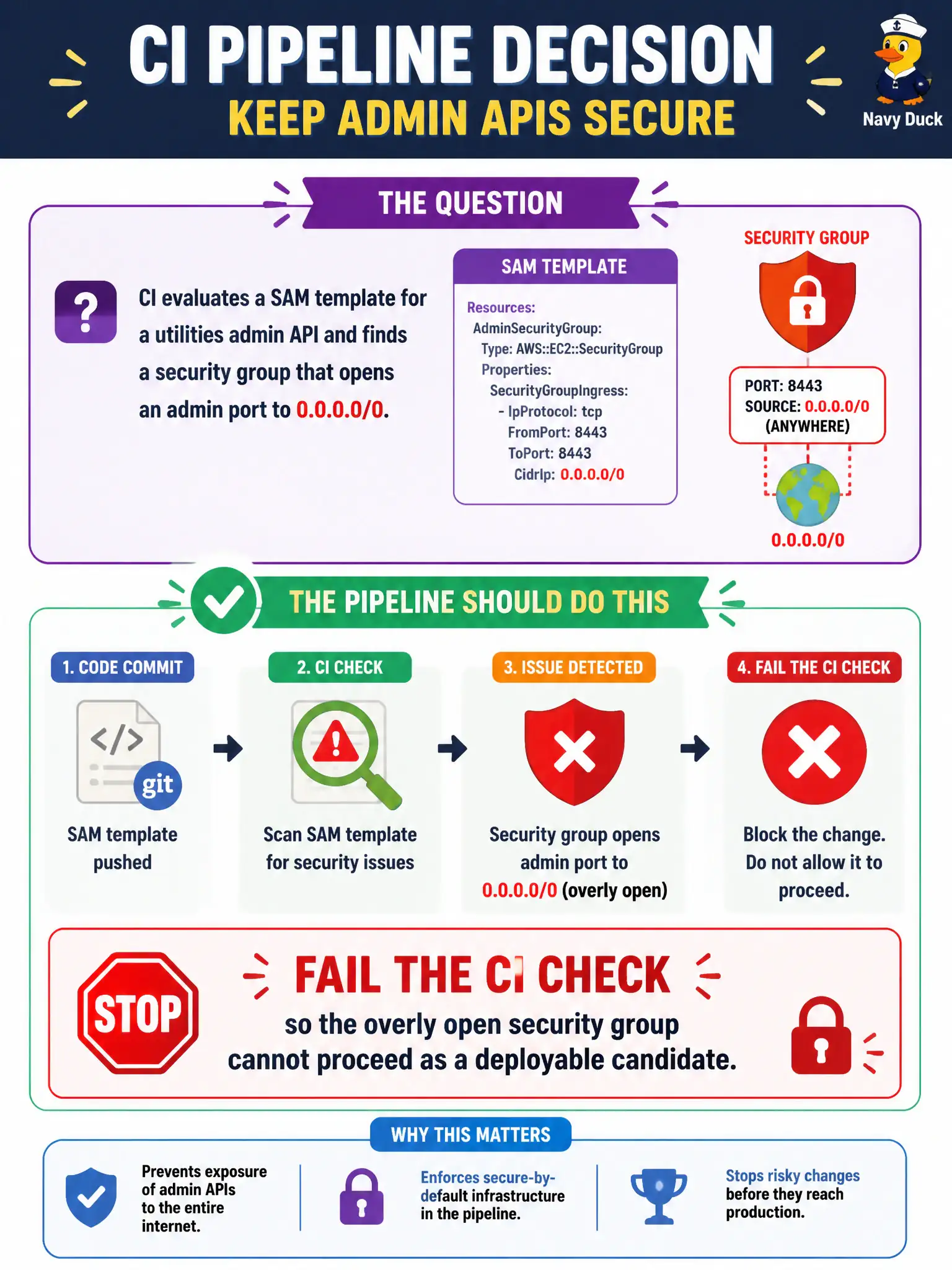
CI evaluates a SAM template for a utilities admin API and finds a security group that opens an admin port to 0.0.0.0/0. What should the pipeline do?
Select an answer to reveal the explanation.
Short Explanation
Wide-open admin ports are unlocked city-hall windows facing the street. CI should fail that SAM template, not shrug. Making it more open or waiting for an incident is the wrong kind of brave.
Full Explanation
When CI evaluates a SAM template for a utilities admin API and finds a security group that opens an admin port to 0.0.0.0/0, the pipeline should fail the CI check so the overly open security group cannot proceed as a deployable candidate. Automated infrastructure policy checks during deployment testing catch unsafe IaC patterns before municipal admin interfaces are exposed to the internet. Warning-only gates are not gates; Domain 3 expects failures that stop packaging and promotion.
Warning in logs but still packaging and promoting the template unchanged fails because the unsafe rule still ships to later environments. Auto-rewriting the rule to 0.0.0.0/0 on every port to keep connectivity simple fails conceptually by widening exposure under the guise of helpfulness. Ignoring infrastructure policy in CI because security reviews happen only after production incidents fails by design.
Exam caveat: policy-as-code rules should distinguish intentional public listeners (rare and documented) from admin ports that must never be world-open. Operational check: introduce a deliberate 0.0.0.0/0 admin rule in a branch, confirm CI fails, remediate to a restricted CIDR or managed prefix list, and only then allow packaging to continue.