
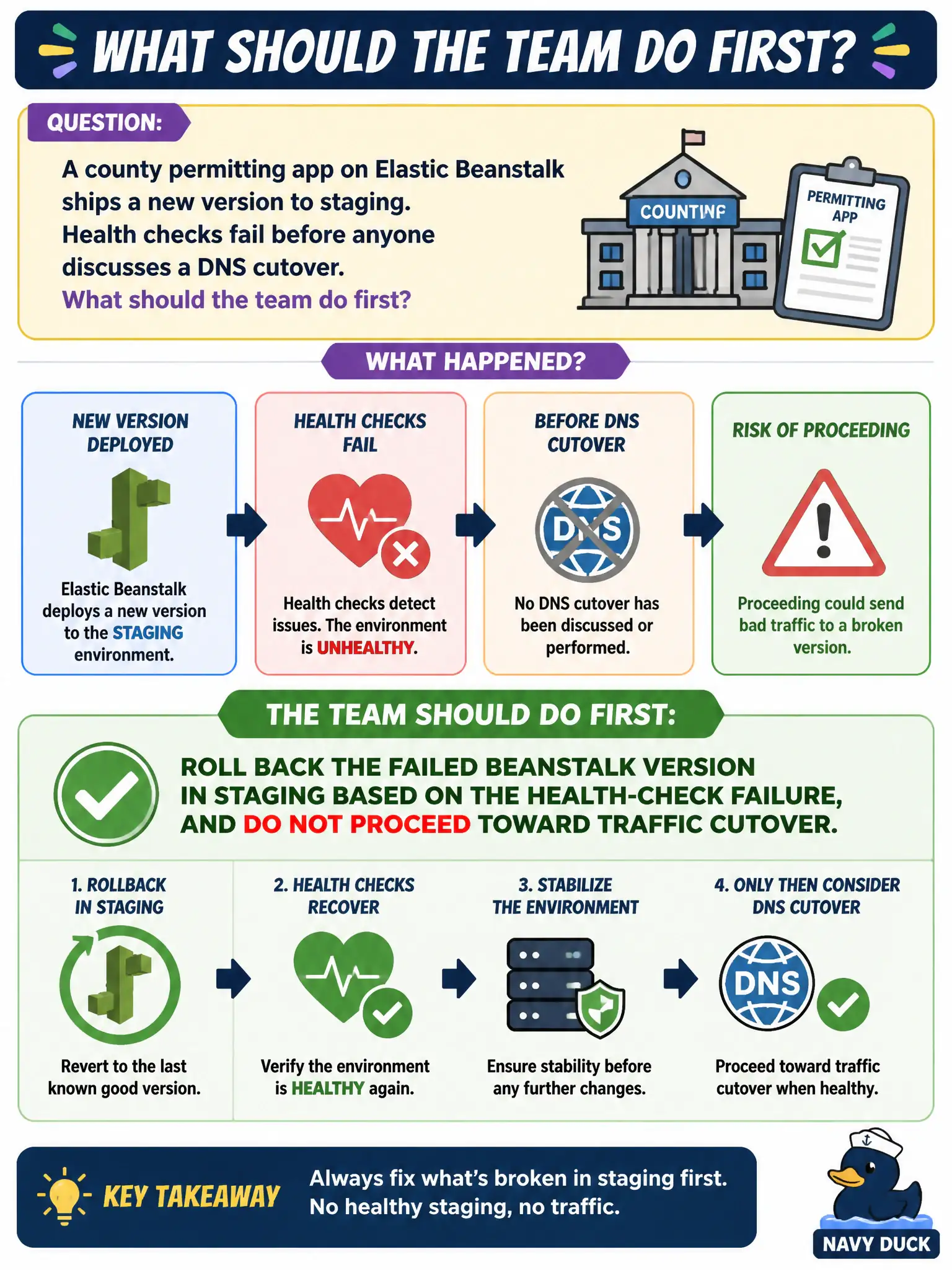
A county permitting app on Elastic Beanstalk ships a new version to staging. Health checks fail before anyone discusses a DNS cutover. What should the team do first?
Select an answer to reveal the explanation.
Short Explanation
Staging is the dress rehearsal—if the costume tears, you do not walk onto the main stage. Failed Beanstalk health checks mean roll back there and stop any cutover talk. Flipping DNS early or marking Healthy by hand just hides the fire.
Full Explanation
When a county permitting app on Elastic Beanstalk ships a new version to staging and health checks fail, the team should roll back the failed Beanstalk version in staging based on that failure and not proceed toward traffic cutover. Failed health checks are a stop sign for municipal promotion: fix or roll back in the lower environment before DNS or citizens are involved. Domain 3 expects health-driven rollback discipline rather than optimism that production will somehow be healthier.
Updating Route 53 to point citizens at staging so real traffic can confirm the failure mode fails by using residents to diagnose a known unhealthy environment. Forcing the environment Healthy in the console so the pipeline can promote anyway fails conceptually by falsifying the signal the platform already gave. Deleting the staging environment and recreating production directly from a developer laptop zip fails as an uncontrolled leap that abandons Beanstalk versioning entirely.
Exam caveat: ensure rollback targets the previous known-good Beanstalk application version artifact, not an unrelated older build with security gaps or missing patches. Operational check: on health-check failure, execute Beanstalk rollback, confirm health returns to OK, block pipeline promotion automatically, and file a defect before any DNS cutover discussion.