
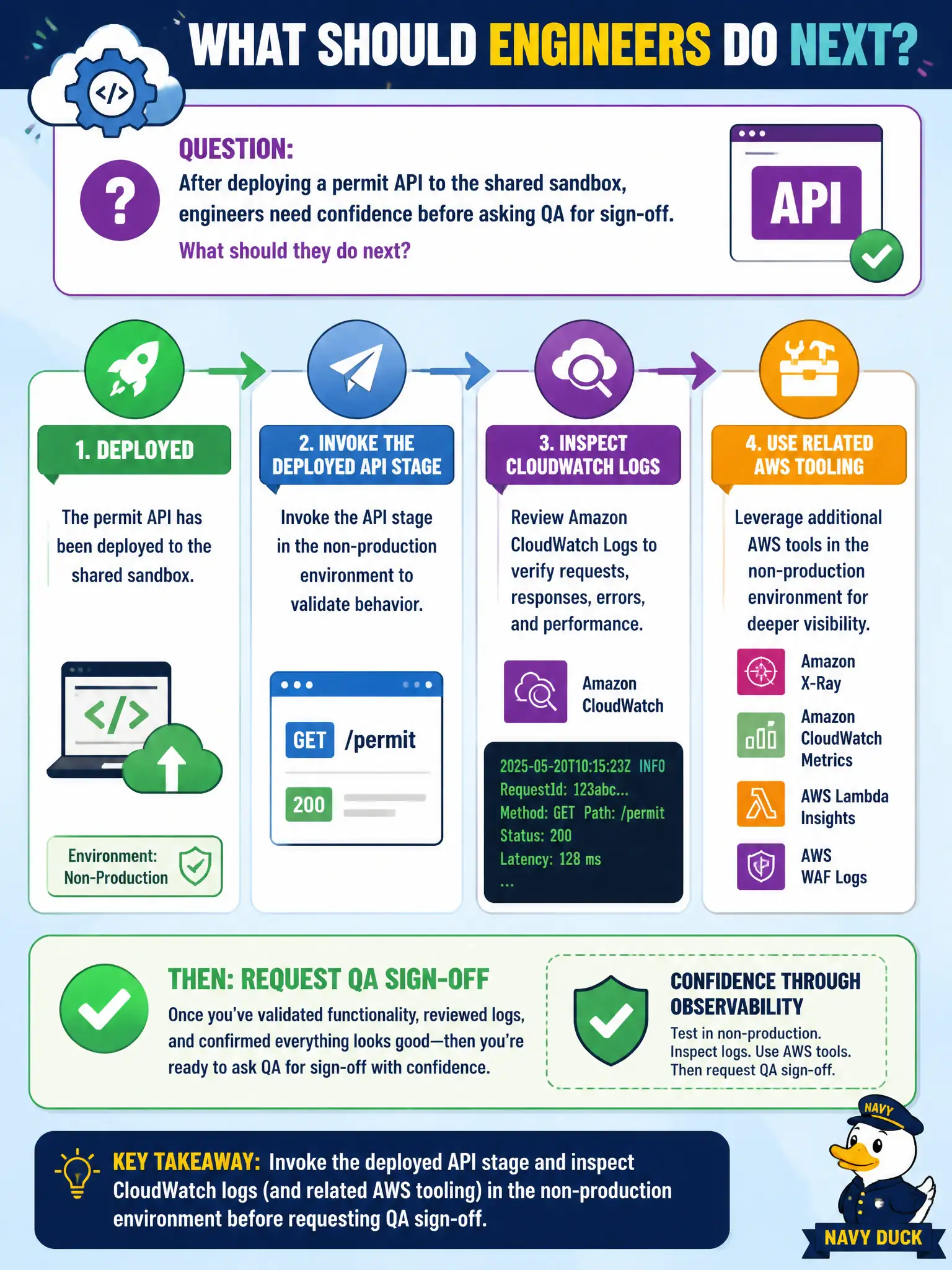
After deploying a permit API to the shared sandbox, engineers need confidence before asking QA for sign-off. What should they do next?
Select an answer to reveal the explanation.
Short Explanation
Deployed beats theoretical. Hit the sandbox stage, watch CloudWatch, and only then ping QA—municipal permits deserve that smoke check. Template reading alone will not catch a bad IAM permission at runtime.
Full Explanation
After deploying a permit API to the shared sandbox, engineers should invoke the deployed API stage and inspect CloudWatch logs and related AWS tooling in the non-production environment before requesting QA sign-off. Hands-on validation of the deployed municipal candidate catches wiring, IAM, serialization, and runtime issues that laptop unit tests miss. Confidence before QA is earned against the real sandbox stage, not only against source files or template prose.
Skipping sandbox validation and opening the change ticket straight to production fails by moving unproven changes toward citizens and auditors. Only running unit tests on the laptop and never calling the deployed sandbox endpoint fails conceptually—unit tests do not prove deploy wiring or stage configuration. Validating solely by reading the SAM template without invoking anything fails because templates do not execute runtime behavior or log paths.
Exam caveat: use synthetic permit payloads and non-production credentials; sandbox invokes must not touch production data stores even if endpoints look similar. Operational check: call the sandbox stage with a fixture request, confirm expected status codes and payloads, read CloudWatch logs for errors or stack traces, then attach that evidence to the QA request.