
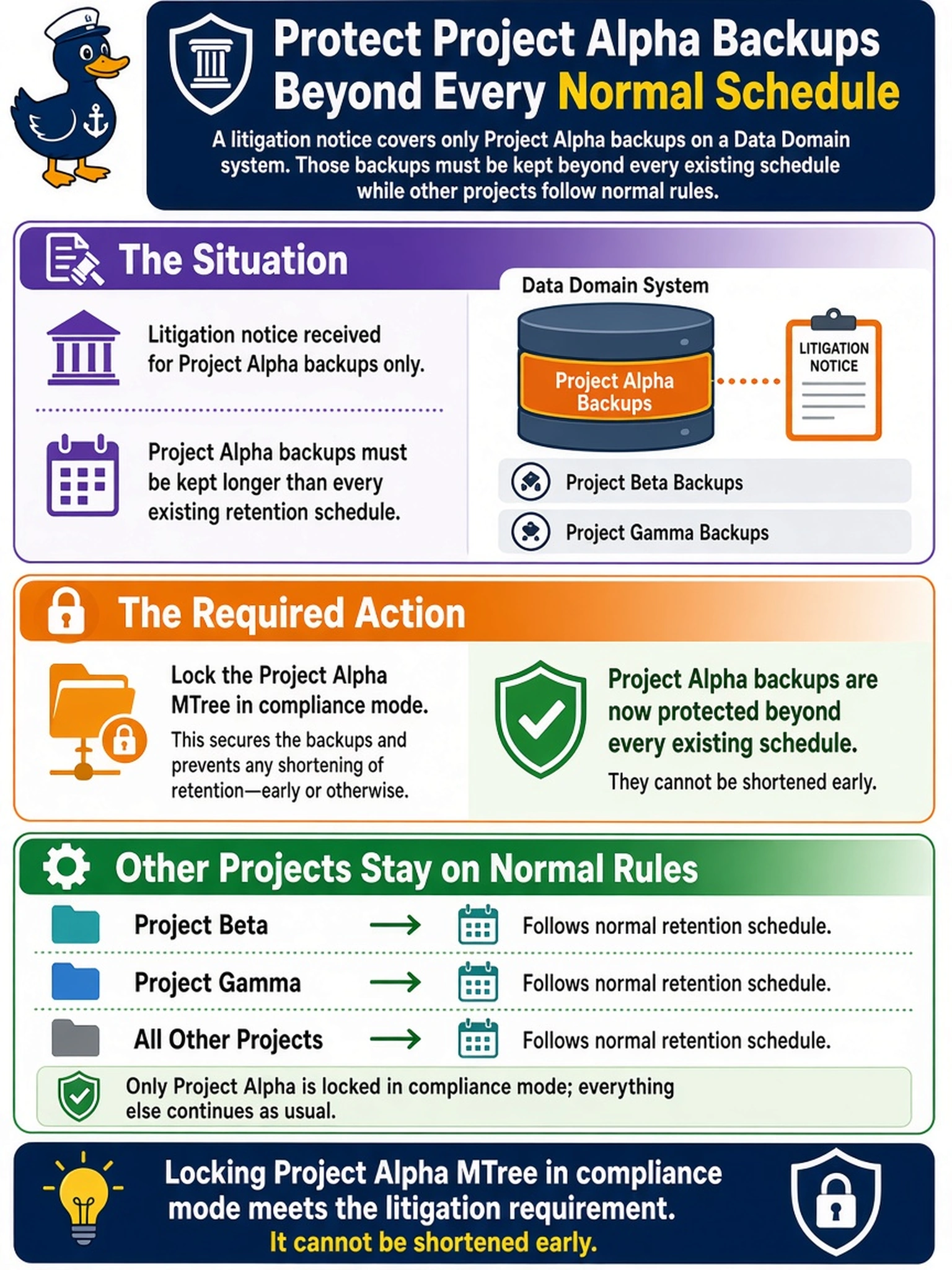
A customer receives a litigation notice covering only Project Alpha backups on a Data Domain system. You must keep those backups beyond every existing schedule while leaving other projects on normal rules. Which action meets this requirement?
Select an answer to reveal the explanation.
Short Explanation
Think of a litigation hold like a sticky note on one folder, not the whole filing cabinet. You lock only the Project Alpha path in compliance mode so even an accidental release can't shorten it. The trap is trying to solve one lawsuit by changing the rules for everyone else.
Full Explanation
Data Domain retention locks are scoped to a storage path such as an MTree, so a litigation hold can protect only the dataset that is under notice. Compliance-mode locking makes the retention period immutable until it expires, which is why an incorrect release of the hold cannot make backups eligible for deletion earlier than the locked period. This scoped, non-reversible approach satisfies the requirement to extend one project without changing normal rules for other projects. Placing a litigation hold on the entire Data Domain system is wrong because it would affect every MTree and leave unrelated projects under unnecessary protection. Raising the global retention policy for every backup stream and client during the litigation period is wrong because it changes the default rules for all backup streams and clients rather than targeting the noticed dataset. Applying an administrative retention lock to the noticed MTree, allowing removal before expiry, is wrong because it is intended to be manageable and removable, so it does not guarantee protection if the litigation hold is later released incorrectly. Exam caveat: wording may vary between MTree, storage unit, or dataset path, but the tested concept is scoped compliance retention versus global policy. Operational check: confirm the target MTree has a compliance-mode retention lock with the required expiry, then verify unrelated MTrees still show normal retention settings.