
A mail relay was configured on a new Data Domain so it can send alerts, but nobody has ever seen an email from the box. What is the honest way to close out the mail path during bring-up testing?
Select an answer to reveal the explanation.
Short Explanation
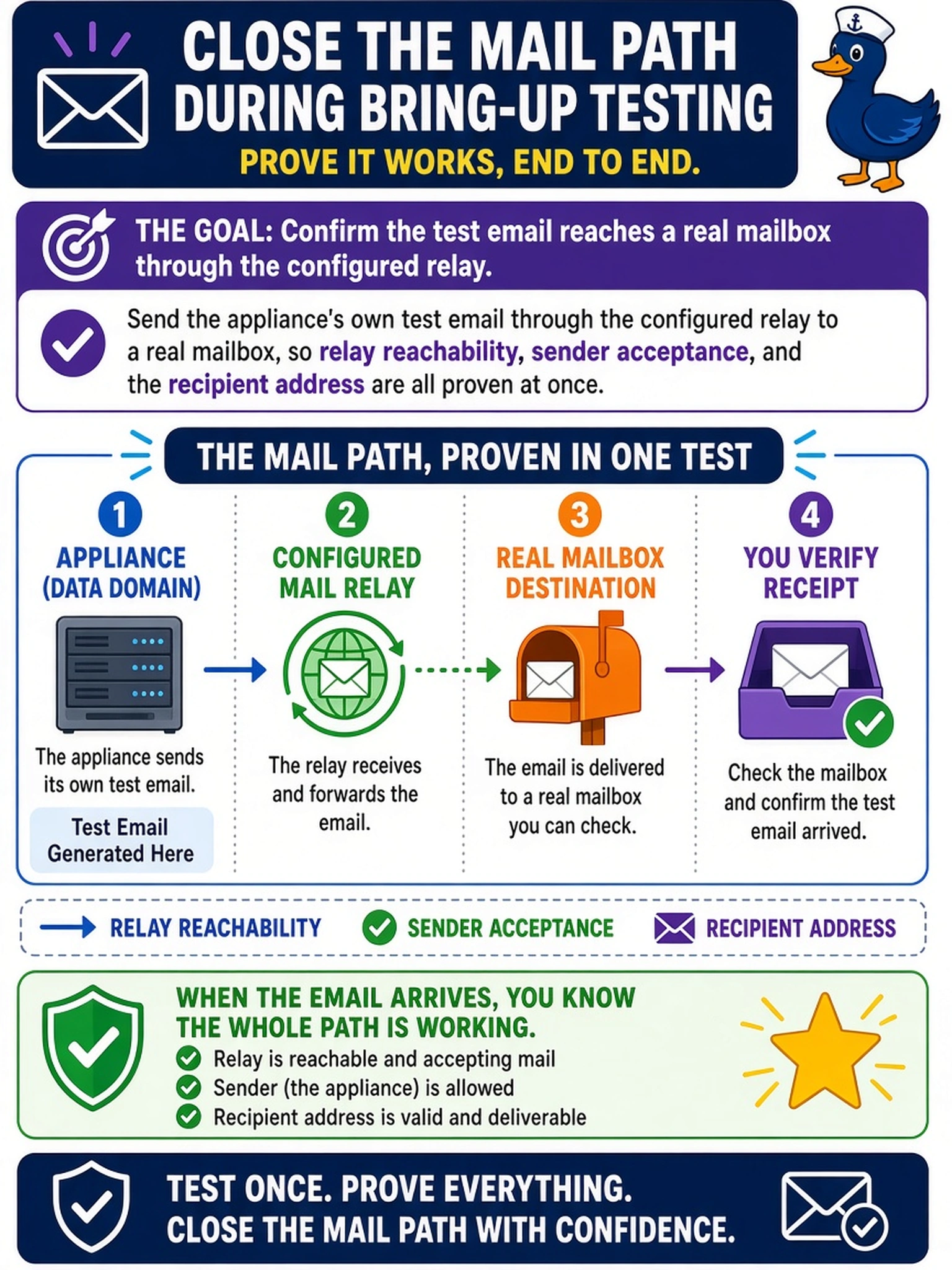
You can't sign off a smoke alarm you've never heard beep. The appliance has a send-a-test-email function - use it, point it at a mailbox someone actually reads, and watch it land. Copying settings from a site that works is just guessing with extra steps.
Full Explanation
Successful mail requires three things to line up: a TCP path to the relay on its submission port, a relay that accepts the appliance as a permitted sender, and a valid destination address in the alert configuration. The built-in test message walks the whole chain in one action, and delivery to a real inbox is the observable end of it - which is exactly what the acceptance line asks for. DNS resolution proves only one early step of a longer path: a resolvable name still fails behind a firewall drop, a relay allow-list that omits the appliance address, or a rejected sender policy. Deliberately causing hardware damage to watch a real alert is reckless - it opens a genuine incident, may page out-of-hours staff, and trades a safe synthetic test for manufactured risk; the test message exists precisely so faults stay imaginary. Cross-checking settings against another site compares inputs, not outcomes: two identical configurations behind different firewalls or allow-lists deliver very differently, and only your own relay's acceptance answers your own question. Exam caveat: relays often require TLS or an explicit sender allowance, so an early test email catches policy blocks before anyone depends on alerts. Operational check: a test email received in the operations mailbox, timestamped, with any relay error from the appliance event log attached if the first attempt fails.