
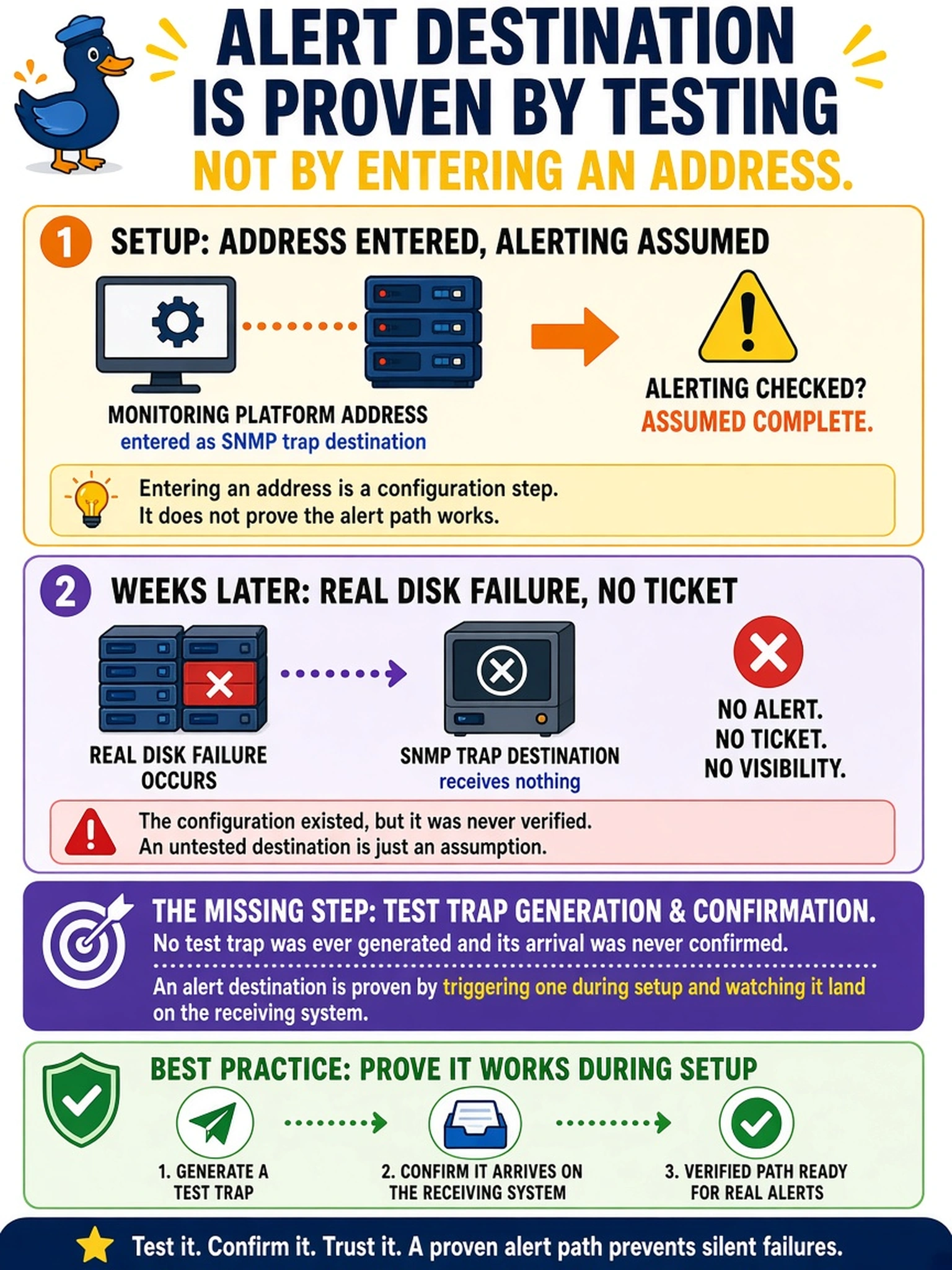
An engineer enters the monitoring platform's address as the SNMP trap destination during setup and considers alerting complete. The first real disk failure weeks later produces no ticket at all. Which step turned a configuration into an assumption?
Select an answer to reveal the explanation.
Short Explanation
A typed-in trap destination is a voicemail box nobody has ever called — the first real alarm is the worst day to discover the line is dead, and that's exactly what 'configured but untested' means. Send a test trap now. Don't call the task done until you've seen it land on the far side.
Full Explanation
An alert destination is configuration until it is tested, at which point it becomes a capability. The completion rule for any notification path — trap destination, mail relay, log target — is identical: generate a test event now and confirm the receiving system displays it, because the far side's firewall state, listener process, and acceptance rules are invisible to the appliance and fail silently by default. A trap server that has never received one is nothing more than a typed address. DNS registration for the trap destination fails by mechanism — traps are sent to the configured destination; no name lookup gates emission, and even a resolvable name proves nothing about delivery. Sharing a community string so the receiver 'can authenticate traps' misreads the protocol: trap authentication is configured on both ends from the same shared parameters, and the failure mode in this story is reachability or listener state, which only a live test exposes. Claiming the appliance side is always ready inverts the lesson — the appliance half is the only half the engineer can see, and it is the path and receiver that remain unproven. Exam caveat: where a platform offers no explicit test-trap function, trigger a benign, recoverable event instead. Operational check: send the test trap, see it appear in the monitoring console with the correct source identification, and record the verified destination in the deployment record.