
An adult patient with suspected interproximal caries refuses bitewing radiographs due to radiation concerns, even after the dental assistant explains the low diagnostic dose. What is the most appropriate next step for the dental team?
Select an answer to reveal the explanation.
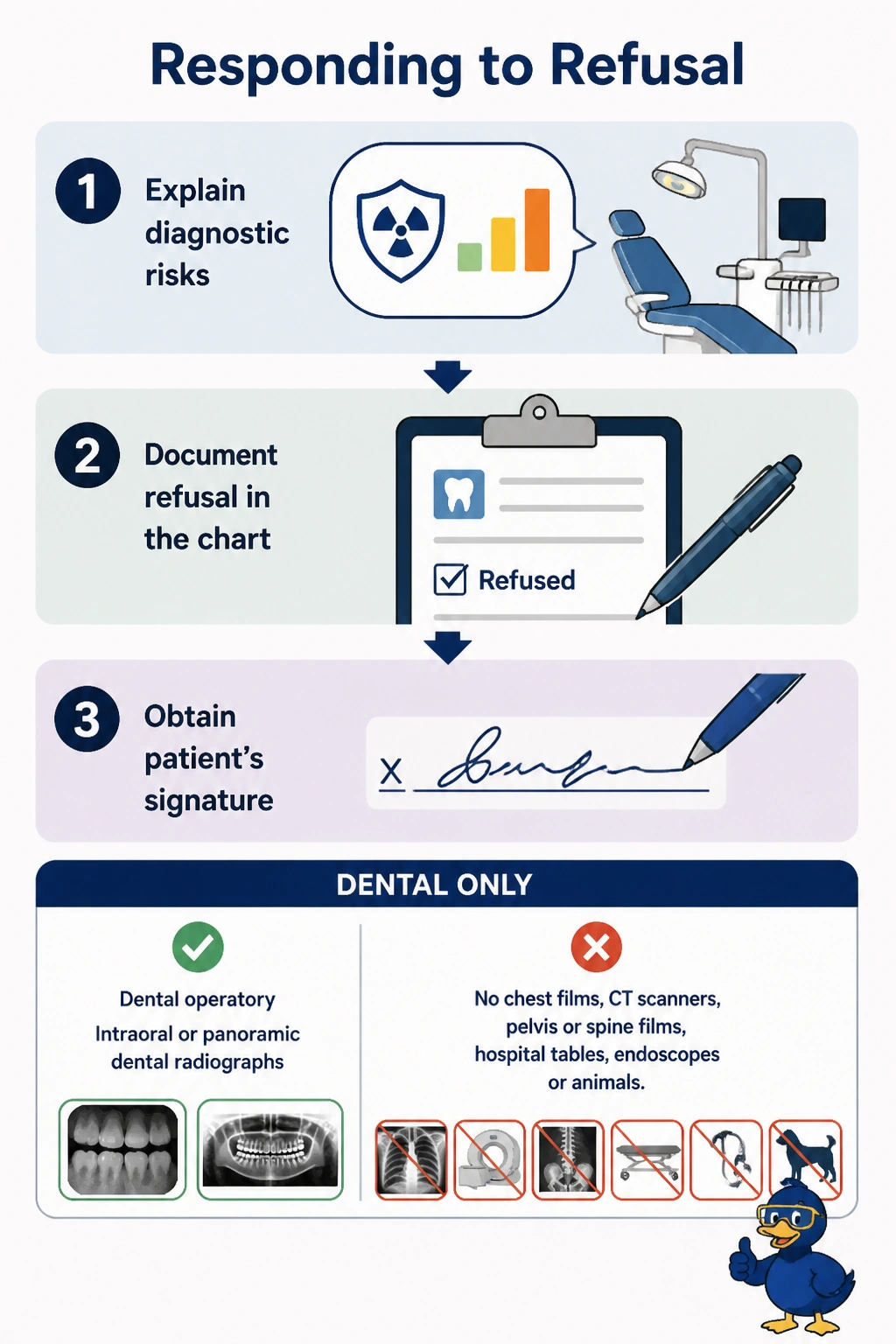
Short Explanation
You can ask questions about the risks and benefits, but you still have the right to decline bitewings after the discussion. Informed refusal means documenting the risks explained and obtaining your signature—not exposing images without consent or relying on a verbal refusal alone.
Full Explanation
Patients have the legal and ethical right to make informed decisions about care, including declining diagnostic radiographs. When a patient refuses bitewings, explain the diagnostic risks, document the refusal, and obtain the patient’s signature so the record reflects that caries or other pathology could be missed with limited diagnostic information. Exposing bitewings with reduced exposure time without further discussion still violates patient autonomy and informed-consent requirements, even when the radiation dose is low. A blanket liability waiver releasing the practice from all future clinical care is inappropriate because a broad waiver cannot absolve providers of their professional responsibilities. Substituting a panoramic radiograph on the assumption that extraoral imaging requires no separate consent is also inappropriate: radiographic exposure requires patient consent, and a panoramic image cannot replace bitewings for detecting early interproximal caries. A signed refusal does not permanently excuse the clinician from recommending needed radiographs at future visits if clinical findings change. As a practical check, verify that the chart identifies the specific images declined, the risks explained, the date, and the patient’s signature.
Prefer to study offline? Printable PDF study book + test engine ($7.50, unofficial). These questions stay free here.